Autumn can be seen as a miserable season by many – marking the start of cooler/colder, wetter weather in most parts of the UK – but not us gardeners. It’s a time of plenty and replenishment, lots to do to get the garden ready for winter and plan ahead for the following spring and summer. It’s full of exciting times as we decide what new plants to grow, where they’re going to go and make any substantial changes to our garden layout.
Anything you can do over the coming months will ensure there’s less to do in spring and reduce the workload at what can be a bit of a manic time.
Personally, I’ve started scouring seed catalogues and getting my orders in, tidying up the garden a bit – but only cutting back and removing anything that won’t add something to the look of the garden in winter – and sowing overwintering vegetables in my cold frame. Last year, I sowed overwintering peas there and had delicious bumper crops in late spring and early summer; definitely something that I’m repeating. But don’t repeat it, unless you have a frost-free frame or live in one of those beautifully mild coastal regions.
Plant of the month – Japanese anemones
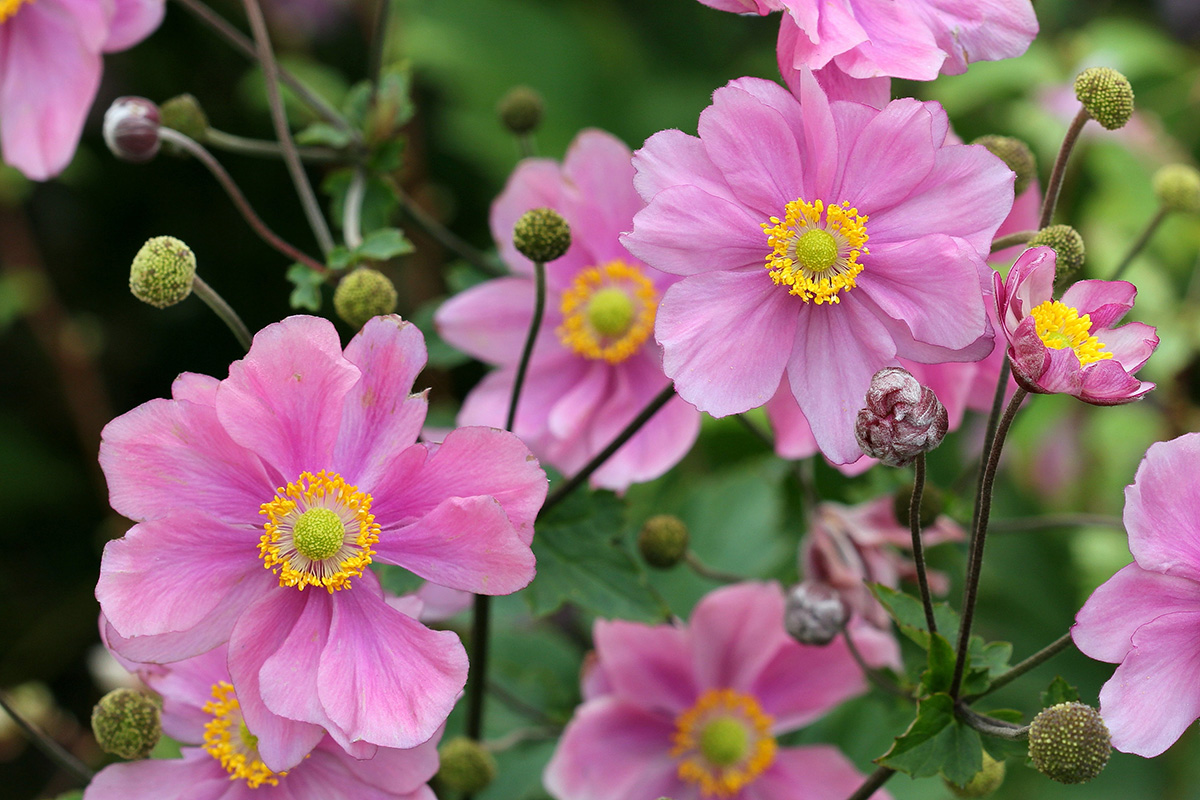
There are numerous plants that light up our gardens at this time of year, and high among those stars are the incredibly hardy Japanese anemones, varieties of Anemone hybrida and A. hupehensis.
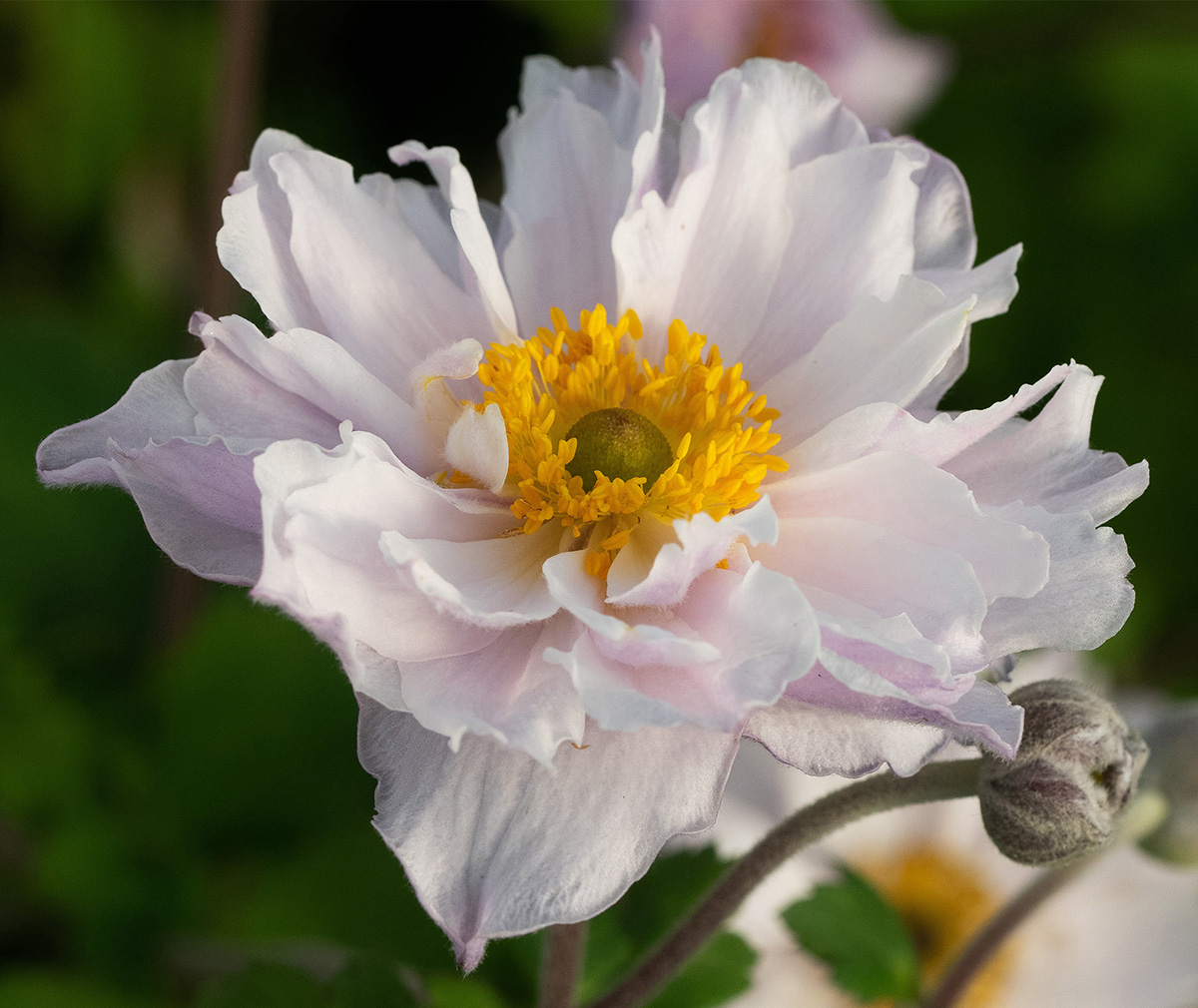
Their fresh green leaves appear in spring, producing a ground-covering mound of foliage, the thin, sturdy, upright stems rising above to a height of anything from 60-100cm and carrying the usually saucer-shaped flowers. The foliage dies back to the ground over winter. Their flowers usually begin to open in August, although some early varieties or in warmer areas they might start blooming in July. But the most colourful displays happen throughout September and October, and often up until the first severe autumn frost. Depending on variety, these much desired blooms can be white, shades of pink to deep magenta, with a central boss of golden stamens, and are either single, semi-double or double.
Once established, they spread rapidly (so keep an eye on them and stop them going where they’re not wanted) making large clumps with masses of flowers among the attractive foliage.
Japanese anemones are the perfect complement to other shade-loving plants, like ferns, hostas and other late-flowering perennials, but they often look their best when allowed to create a large clump to brighten up wherever they’re grown.
To enlighten a shady corner, you simply can’t beat the glowing white flowers of ‘Honerine Jobert’, one of the most popular varieties. ‘Frilly Knickers’, as its name suggests, bears ruffled, frilly, semi-double white flowers that are flushed with pale-lilac/lavender and a distinct lilac banding on the reverse. Most varieties tend to come in shades of pink, such as the soft pastel ‘Königin Charlotte’ (‘Queen Charlotte’). This produces semi-double flowers with equally attractive dark stems. If you prefer deep pink blooms, A. hupehensis var japonica ‘Pamina’ has these in spades, attractive double flower heads with a slight frill. It’s also more compact, and works well in a large container. ‘September Charm’ is covered in silvery-pink single flowers with a darker reverse to the petal that catches the light perfectly when planted in the right place.
Where to grow
Japanese anemones prefer reliably moist, but free-draining soil in light, dappled shade or sun. They dislike soil that is overly wet in winter and won’t flower profusely in deep shade or in very dry conditions.
How to care for it
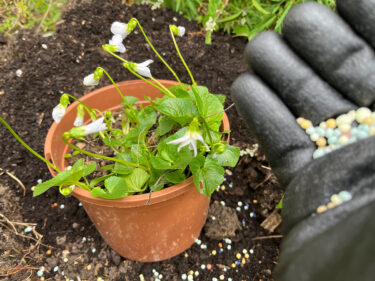
That’s easy! Mulch around the plant annually in spring and ideally add a slow-release or controlled-release feed (such as Easy Feed) at the same time. Once established, they are unlikely to need regular watering, except in prolonged dry periods or during drought to keep the soil consistently moist.
There’s usually no need to deadhead faded flowers and, if you prefer, you can remove the old flower stems and tatty foliage in late autumn.
Be creative – Long-term containers
There’s no doubt that summer bedding plants are brilliant for producing vibrant displays for months on end. But what happens when the summer display is over? Yes, there is a smattering of autumn-spring bedding to replace them, but the choice is quite limiting.
If you feel your patio lacks structure and colour, especially during the colder months of the year, then this is the perfect time to plant up containers with permanent plantings. These include small trees, shrubs, herbaceous perennials and climbers.
Just make sure the containers are large enough – particularly deep enough for larger rootballs and tall plants – and use John Innes No 3 Compost or a 50:50 mix with a multi-purpose compost, such as Easy Compost.
As patio plants are highly visible all year round, look out for plants that give interest for as long as possible. Obviously, evergreens are a great choice providing foliage, interest and structure all year round, but also consider long-flowering shrubs, plants that produce fabulous autumn foliage colours, autumn berries and fruit and colourful or interesting stems for winter. Plants with a combination of interests throughout the different seasons will ensure your patio is colourful and interesting for months on end – and you don’t have to plant it up every year!
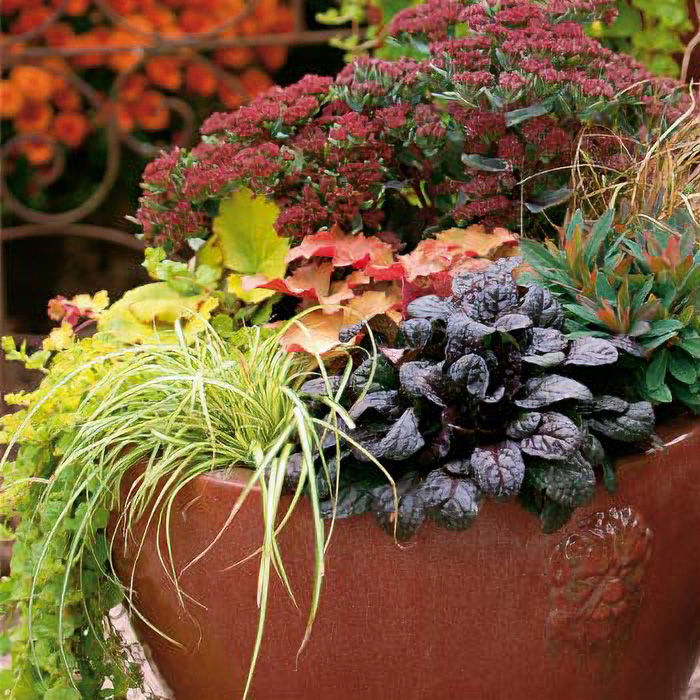
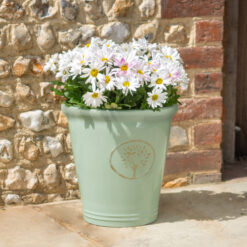
For the best displays for the most impact, plant densely, like the container shown in the image. This contains heucheras, ajuga, Hylotelephium (sedum), euphorbia, Japanese sedge Carex oshimensis ‘Evergold’ and Lysimachia nummularia ‘Aurea’. This may mean moving and splitting plants in future years, but that’s a small price to pay for such a wonderful display. And if you’re splitting perennials, you’ll make lots of new plants for brightening up another part of the garden.
This month’s myth busting – Not pruning to protect plants
There are several plants that it is often wrongly recommended to prune in autumn. These include some spectacular stalwarts of our summer gardens, such as so-called “hardy” fuchsias, penstemons and shrubby salvias, such as Salvia microphylla, Salvia greggii and varieties like ‘Amistad’. All of these plants are not reliably winter hardy and pruning in autumn is a definite no-no, as the cut stems can be subject to damaging frosts. I refer to “hardy” fuchsias as “hardier” fuchsias, as they’re hardier than bedding fuchsias that need frost-free overwintering, but can be killed or severely damaged in a very cold winter!
The correct advice is to leave well alone at this time of year and then cut them back in around mid-spring. The reason usually given for this is that leaving the stems in place protects the growth lower down. This isn’t strictly true. Because these plants are best hard pruned to produce strong growth that flowers profusely, cutting back in autumn would leave few growth buds that could be damaged or killed by frost after making the pruning cuts, leaving nothing to shoot in spring.
So, wait until the growth buds start to break in spring, pick up the secateurs, be brave and cut back the previous year’s stems hard. Give a feed of a controlled-release fertiliser mulch the soil around them, then sit back and enjoy another summer of beautiful blooms.
The other plant that is generally given mythical pruning advice is the wonderful hydrangea. Apparently, leaving the faded flower heads in place over winter protects the flower buds below them, which can be damaged by freezing temperatures and frost. Give me a break! How on earth do those delicate, lacy, filigree structures protect anything from anything, let alone a freezing, penetrating frost? Think about it. However, it is a good idea to leave the old flower heads in place over winter – they’re perfect for supporting horticultural fleece over the plant, which WILL protect the flower buds from cold winter weather!
Timely tasks
Here are two jobs you really should get on with this month.
Lift tender bedding
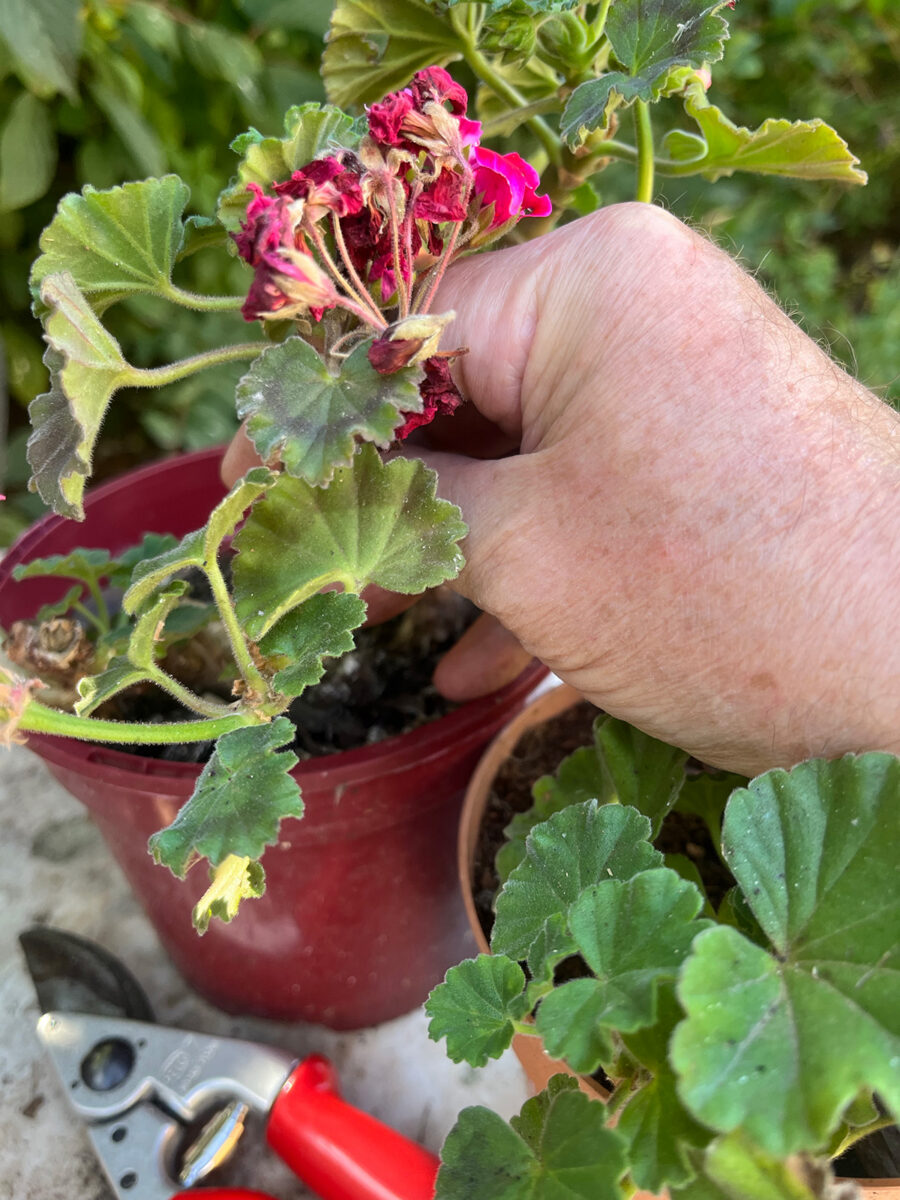
Sad as it may be, it’s time to start putting some areas of the garden to bed, ready for the colder winter weather.
Before temperatures drop too low and the first severe frosts appear, dig up tender bedding perennials for overwintering frost free. These include half-hardy fuchsias, marguerites, New Guinea busy Lizzies, osteospermums, pelargoniums, perennial trailing petunias and many more.
Carefully lift them with a fork, tidy them up – removing all dead, diseased, dying or damaged growth – and cut them back by around half if necessary to keep them compact and bushy. Pot them up individually in pots just big enough to accommodate their rootballs, with some new potting compost between the roots and the edge of the pot. Give them a light watering to settle the compost and roots.
Move them into a cool greenhouse, conservatory or similar well-lit, frost-free place. Keep the compost just moist (pelargoniums prefer to be kept slightly dry) throughout winter, and certainly don’t overwater them.
You could take the risk and leave them in situ, especially if you live in a mild part of the country. Having horticultural fleece to hand may give adequate protection during cold spells, but remember to remove it during the day when weather conditions allow.
Move plants
October marks the start of “moving season”. Depending on soil moisture content, it is the perfect month for moving deciduous small and young trees, shrubs, herbaceous perennials and climbers that are growing in the wrong place or have grown too big for their space. Moving season lasts until the end of February. If the soil is still very dry this month, wait until later.

Old trees and shrubs may not establish well after moving, and may not be worth the risk. But if you have to do it, you have to do it – just bear in mind there is a chance they won’t re-establish. If moving herbaceous perennials, this is also the perfect time to split poor flowering clumps and propagate them.
Wait until they have dropped all their leaves, which signals that they are now dormant and safe to move. Water the soil around the plant thoroughly the day before moving to make sure the roots are fully charged with water. Where possible, prune back up to half of the top growth of shrubs. Moving plants puts a huge stress on the roots and you can reduce this stress by reducing the amount of stems and leaves the plant carries.
Dig up as big a rootball as possible that you or you and a friend can manage to lift. Replant in well-prepared soil with lots of added bulky organic matter plus controlled-release fertiliser, so that the rootball sits at the same level as it was originally, covered with no more than an inch of soil.
Tall shrubs and trees will need staking to keep the roots secure while they re-establish.
Water in well after moving and for the first spring and summer.