Many of my early memories are peppered with fond thoughts of kicking crispy multicoloured fallen leaves along the ground with scuffed school shoes and removing the yellowing foliage of sweet chestnut leaves to make fish skeletons. I will never forget a primary school trip to Sheffield Park; I am sure that laid the foundations for my fascination with trees. I found the sight of the kaleidoscope of towering trees reflected in the mirror-like lake mesmerising. Later, as a mum, taking my son to wander around Westonbirt Arboretum when he was small, it felt like life had come full circle. I loved seeing his enthusiasm and excitement in this natural playground, as I had done at his age. I hope it has left an impression on him.
What is the science behind leaves changing colour?
Leaves are packed with the green pigment chlorophyll, which is a photochemical that captures light energy and converts it to food through the process known as photosynthesis.
As days lengthen and temperatures drop throughout autumn, this sends a signal to trees to prepare for winter dormancy. Trees stop producing chlorophyll and break down their remaining stores. Once the dominant green chlorophyll has dissipated, it reveals the yellow and orange carotenoids that were present all the while but can finally shine through.
Another revelation is anthocyanins; these water-soluble molecules are formed as high concentrations of sugars are trapped in stems, producing red and purple colours in leaves. Once again, the absence of chlorophyll allows us to witness this spectacular phenomenon.
Bring this joy into your own garden by planting a fabulous tree with colour-changing leaves to ignite your autumn garden. Here are five fabulous trees for autumn colour.
Staghorn sumac, Rhus typhina
I used to work in a beautiful walled garden in Somerset that had an extensive collection of unusual, specialist plants and trees. I always marvelled at the graceful, established but equally invasive staghorn whose rainbow palette was a spectacular sight. It stood majestically like an umbrella showering the garden in a multitude of multicoloured leaves.
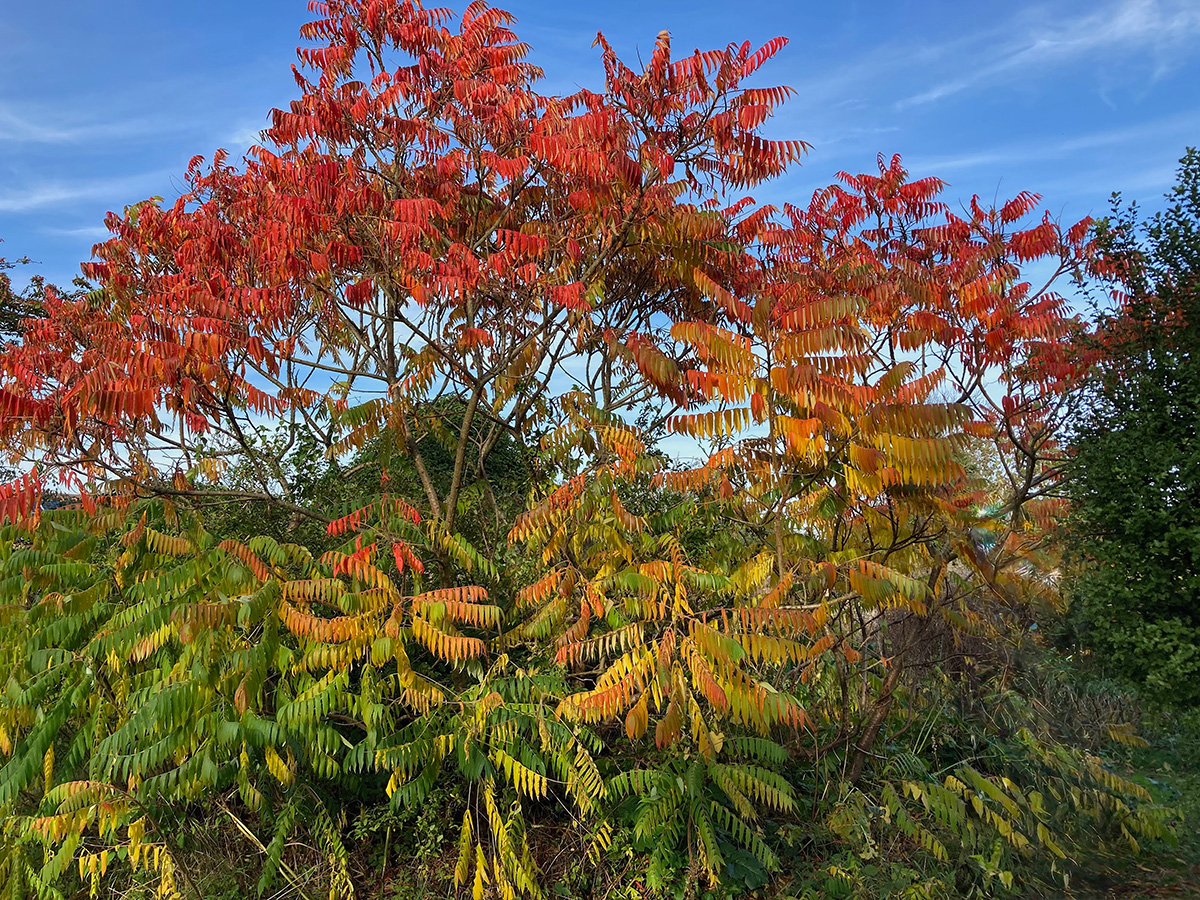
One of my jobs was to pull up spreading suckers to keep them from creeping into the surrounding beds and lawns. I easily did so, and I gladly accepted a sucker to take home for my garden. Some people may lift an eyebrow at this choice, but the sucker has been growing for over five years in my garden, and it is still a slim, single-trunk baby, so do not be put off by introducing a staghorn to your garden. They are an asset both visually for you and provide your garden wildlife with valuable food and shelter.
Staghorn’s velvety, hairy branches, reminiscent of stag antlers, are hard to resist stroking. Defined as a large deciduous shrub or small tree, staghorn eventually reaches around 4 to 8 meters in height and width. They require little human intervention unless they start popping up where you do not want them to grow. If you have space, or an area where you can contain growth, enjoy this fiery visual feast.
Mountain ash/rowan, Sorbus aucuparia
Since hiking through the French Alps and the Lake District many years ago, I’ve been in awe of mountain ash, also known as rowan or sorbus. These resilient trees are tough, tolerating fluctuating temperatures, harsh wind, rain, UV rays and altitude, often clinging to ledges and cliffs, scrubby moorland, or you’ll find their roots firmly planted by mountain streams. Rest assured, if you plant one of these trees in your garden, it is likely to thrive. Once established, just leave it be as nature intended.
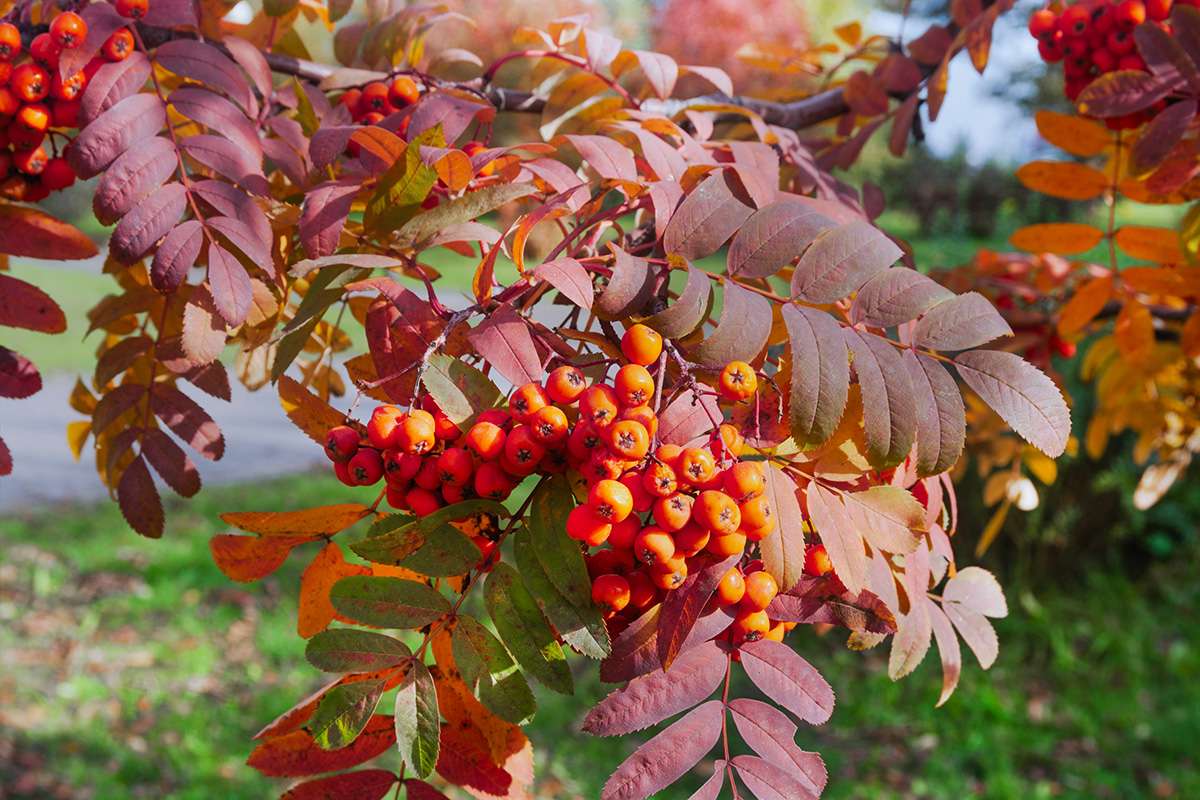
Radiating fiery shades of yellow, orange, red, and purple from its leaves in autumn, rowan shines and provides local birds with essential winter energy with an ample feast of berries.
Katsura tree, Cercidiphyllum japonicum
The Katsura tree is not only visually stunning but has another superpower to be marvelled at: it emits an exquisite scent of burnt sugar in autumn, reminiscent of candy floss and toffee apples – very apt for the time of year. If the scent is not enough to attract you, then be prepared to be wowed by the vibrant autumn foliage. Gorgeous heart-shaped leaves turn into bonfire flames, creating a focal point that cannot be ignored.
I never forget the first time I saw a katsura tree; it was while I was studying my RHS diploma at Cannington, and our enthusiastic tutor showered us with his knowledge and love of this tree. I couldn’t believe a tree could smell so inviting. First impressions count; this tree has always enticed me with its intoxicating allure.
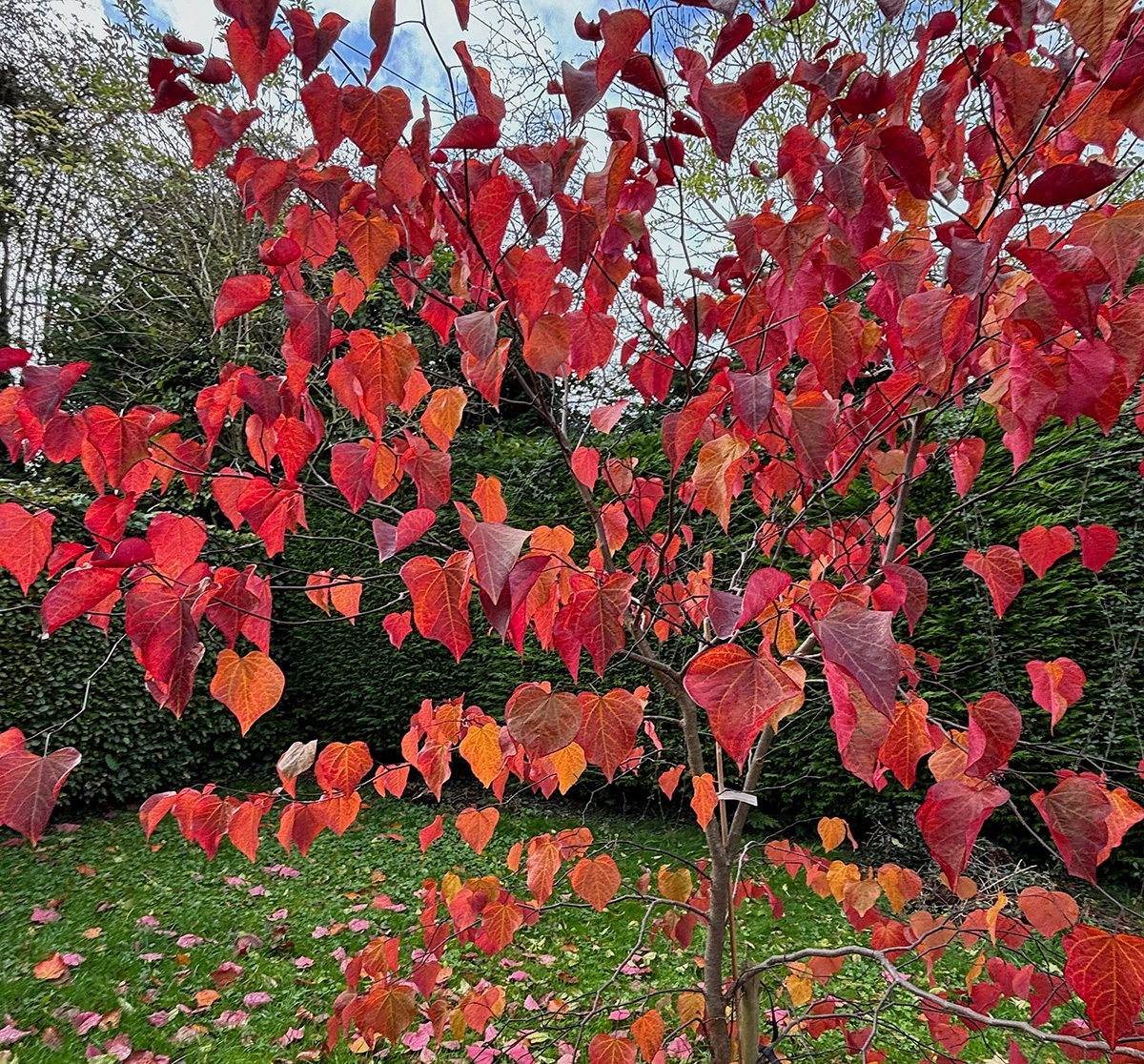
In the wilds of China and Japan, katsura is a tall feature rocketing to 30-45 metres, but UK garden climates limit growth, making it a suitable choice for medium to large gardens. Dwarf and weeping cultivars are available, so even small gardens can enjoy the magical scent and colour of this truly special tree, which you may even smell before you see it.
Maidenhair tree, Ginkgo biloba
I was given my gorgeous ginkgo by a Japanese friend who was looking to introduce more traditional English plants to their garden. An exciting plant and tree swap ensued. Our ginkgo has had its roots firmly in the ground for many years now but remains petite, which leads me to believe ours is a dwarf specimen, ideal for a small to medium-sized garden.
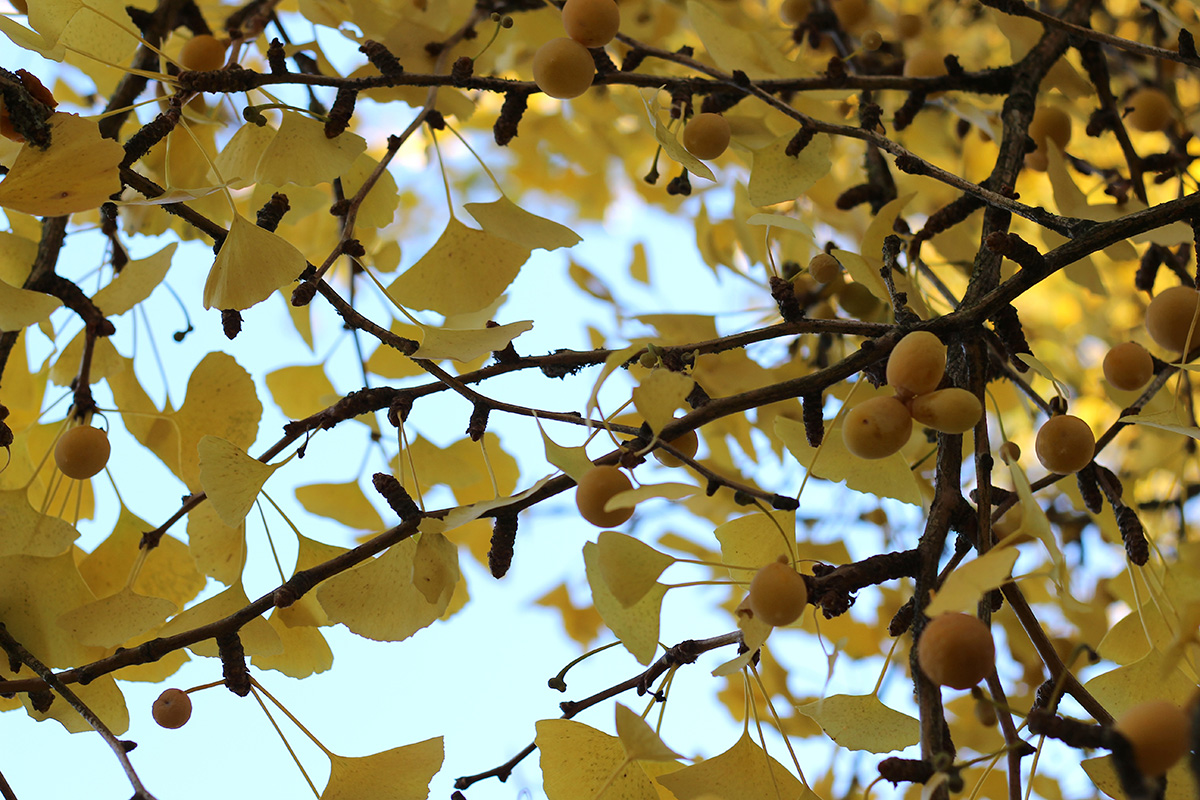
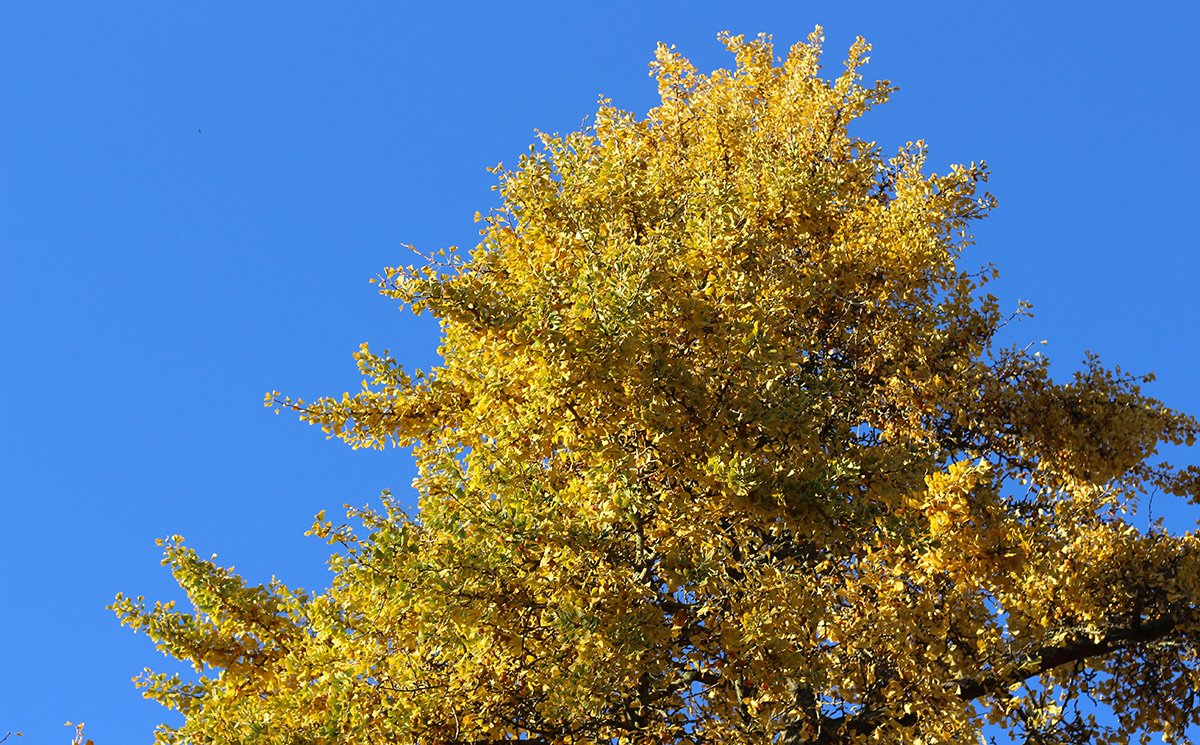
Ginkgo offers fascination all year round, but autumn is particularly beautiful when its fan-shaped leaves turn yellow. Witness a radiant light show through the leaves as they glow brightly like a torch. If you have a small garden, look out for fun-named varieties like ‘Mariken’, ‘Troll’, or ‘Munchkin ’, but when space is no barrier, make a statement with ‘Autumn Gold’.
If size matters, visit Bristol Botanic Garden, where they boast an exceptionally mammoth female ginkgo. Female ginkgos are relatively rare and sport plum-like yellow ripe fruits which surprisingly give off an unpleasant strong odour. Worth a look!
Ginkgos are considered living fossils, outliving the dinosaurs and remaining virtually unchanged for over 200 million years. Now that really is something to ponder. It is hard to believe the environment my ginkgo’s ancestors would have grown in, but in my modest urban garden it stands as a testament to time weathering modern-day elements.
Sweetgum, Liquidambar styraciflua
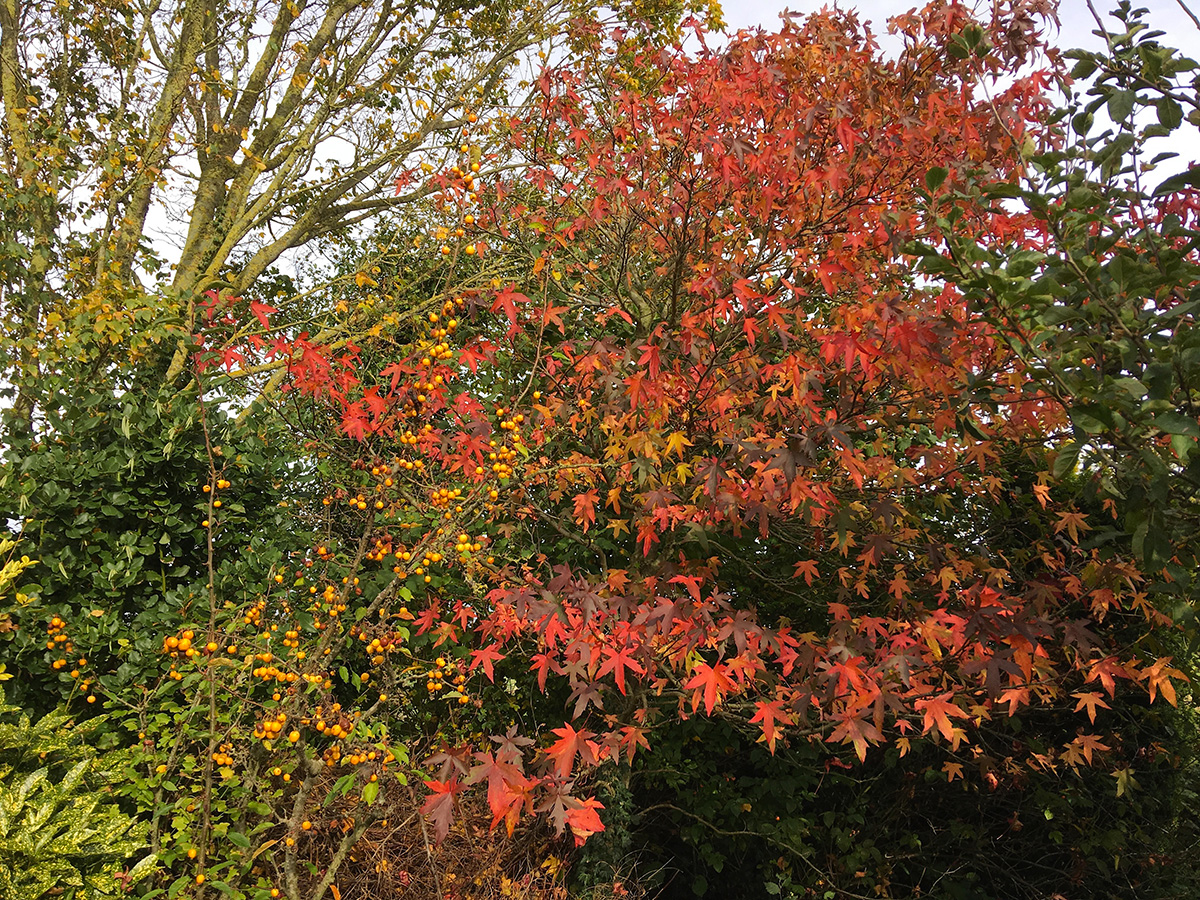
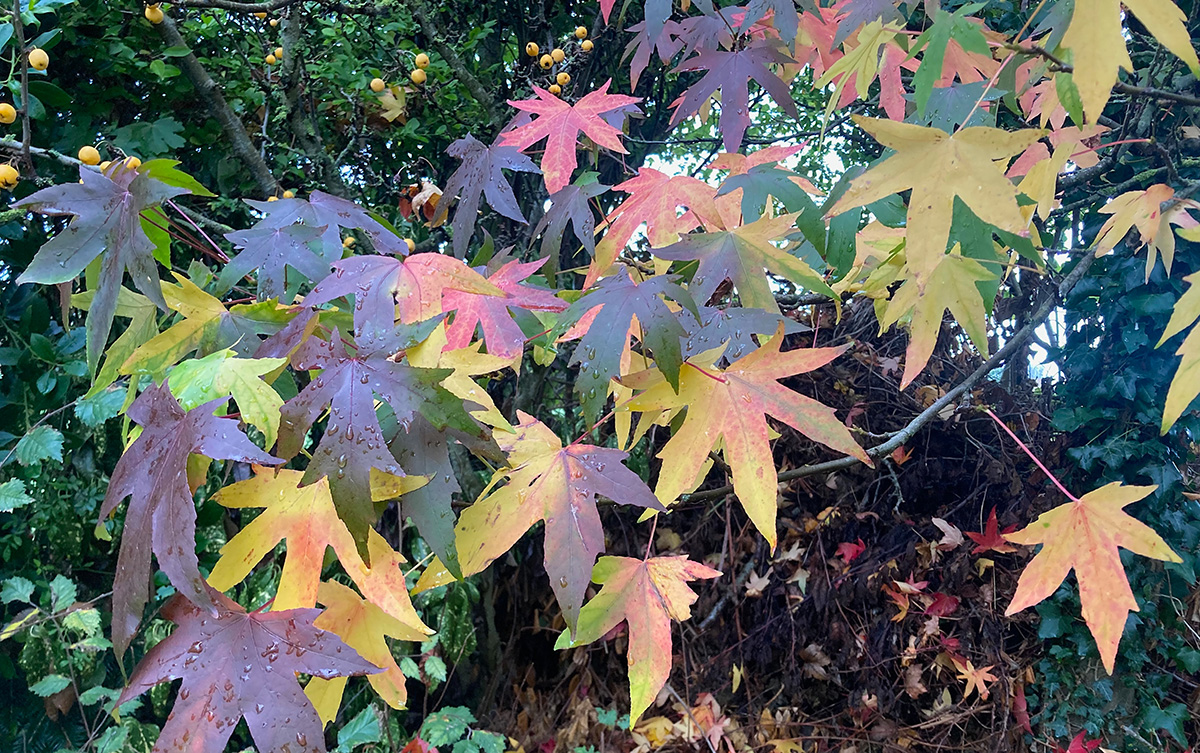
And finally, sweetgum is not only a spectacular tree for large gardens, but by choosing a dwarf cultivar like ‘Gum Ball ’, you can even grow sweetgum in a container! Metamorphosing from green to deep purple, red, orange and yellow, sweet gum is a striking deciduous tree famed for its star-shaped, maple-like, colour-changing leaves.
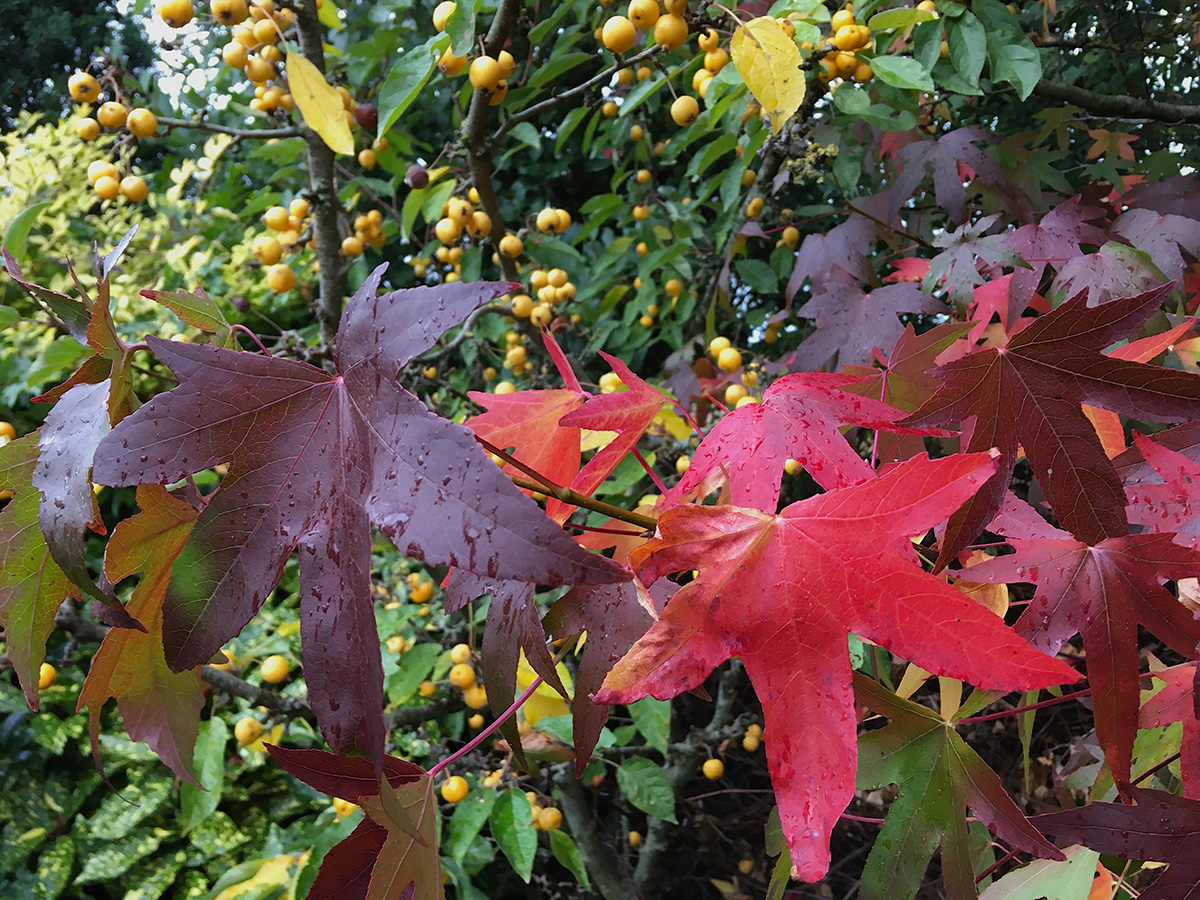
In the forests of southeastern United States, sweet gum is a beast; mature trees can grow up to a heady 45 metres, but don’t panic: UK conditions and slow growth limit sweetgum to around 12-25 metres over decades, making it a worthy architectural asset for gardens.
Appreciating full sun, they can cope with a little shade; but just make sure their roots are not waterlogged, and the soil pH is ideally slightly acidic to optimise your liquidambar display. If you plant a sweetgum in a pot, protect its rootball over winter with hessian or bubble wrap to keep frost out.
I’ve been watching the progress of a couple of sweetgums for over the last 10 years. Planted by true plantsmen who are sadly no longer with us, but their trees live on, bringing joy to everyone who sees them, and whenever I ponder the changing colours and leaf shapes, it gives me time to spare a sweet thought for my absent friends.