If you’re struggling to find a summer-flowering plant for a shady corner, then don’t forget beautiful fuchsias! They are usually just pink and bushy but there are many more to choose from! Read on.
Over the years I have accumulated quite a few fuchsias in my garden. Bearing in mind I never really got into gardening until I was lucky enough to retire early at 51, back in 2004, I was probably influenced a little by my father who loved them and became a keen but simple gardener, after he retired from running a pub in the Cotswolds, with my mum, back in 1987.
First fuchsia
One of the first plants I owned was a gift my Dad had bought my Mum for their ruby wedding anniversary, back in 1990, it was a fuchsia.

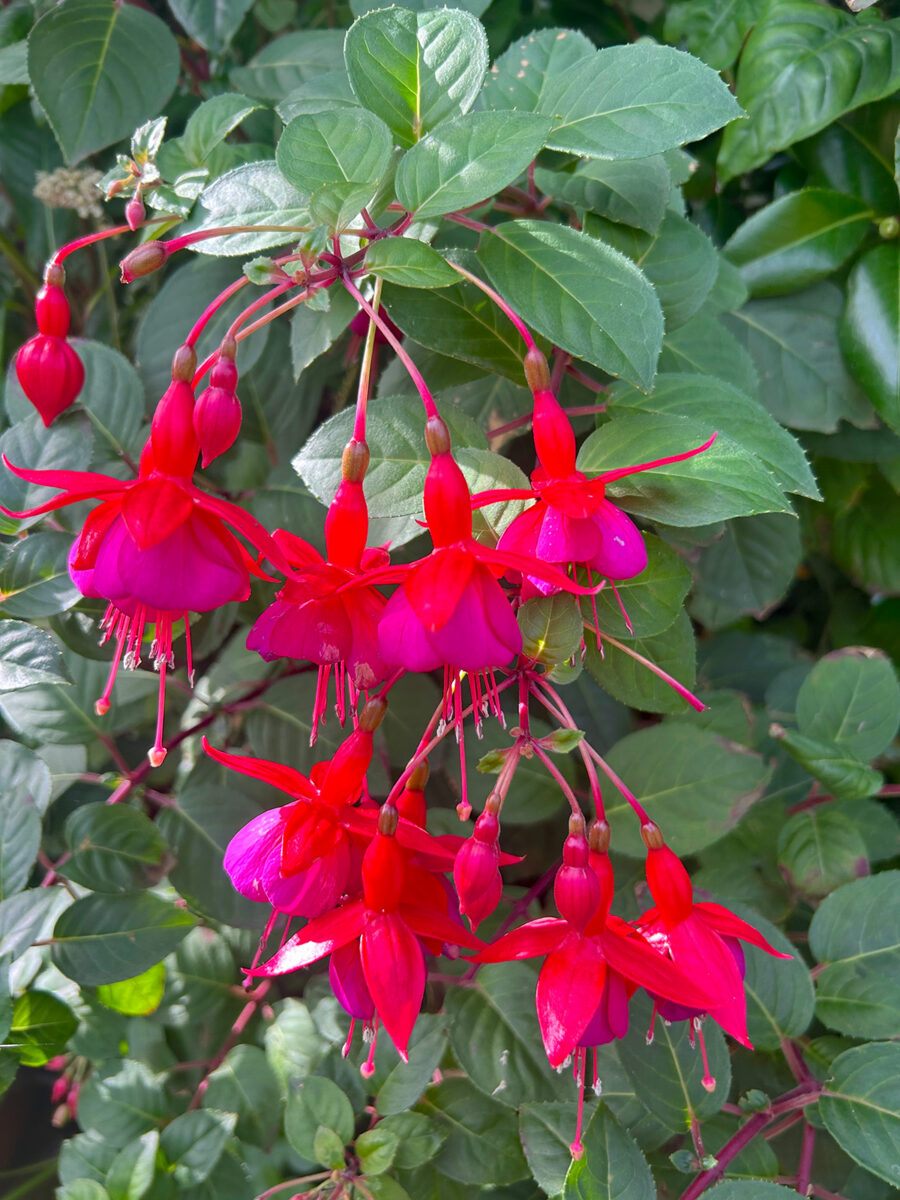
The fuchsia in question was one called Empress of Prussia. When my Dad passed away, with my Mum’s agreement, I took the container in which it had been planted and transferred it to my garden on the south coast, from where it has been propagated to death. It’s now 36 years old and still flowering well. When I first opened my garden, back in 2009, I took lots of cuttings and resold them on so it is well-established all over Sussex now thanks to the plant sales I had then. It is a popular, hardy, upright fuchsia cultivar known for its large, single, regal flowers with bright scarlet sepals/tube and reddish-magenta petals. It grows into a bushy shrub about three feet tall, it’s ideal for pots or borders, providing summer-to-autumn blooms and it attracts pollinators. It has a vigorous self-branching habit and needs protection from hard frost when young. It will thrive well in well-drained soil with morning sun. I’ve got ten or more of these fuchsia plants growing around my garden now, all of which have become hardy over time.
Less hardy
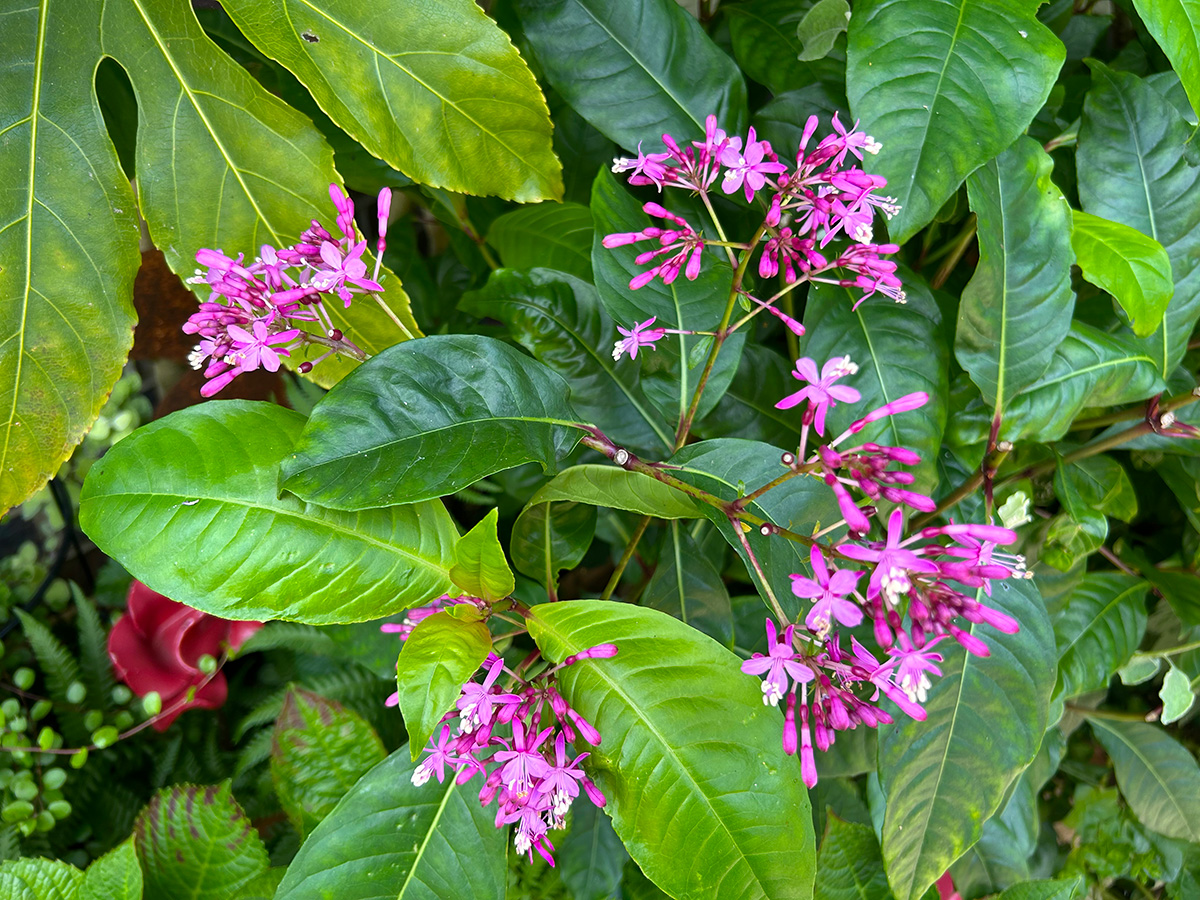
One that’s not so hardy and is fleeced and protected undercover every winter is Fuchsia arborescens, commonly known as the tree fuchsia. It is a tender, evergreen shrub with many growing to the size of a small tree, if kept in a frost-free location. It features glossy, dark green leaves and produces abundant clusters of pendulous, tubular flowers in white or pale pink and is attractive to pollinators too. This fuchsia thrives in full sun, but will also grow in partial-shade. It prefers a well-drained soil, but also needs constant moisture at the roots. Although the foliage can survive brief dips just below freezing, the plant will die back after a long frost. However, the plant can survive in the mildest parts of the UK, behaving as a herbaceous perennial. Alternatively, it is quite happy living in a large pot which can be brought undercover for winter, as mine are.
Basket beauty
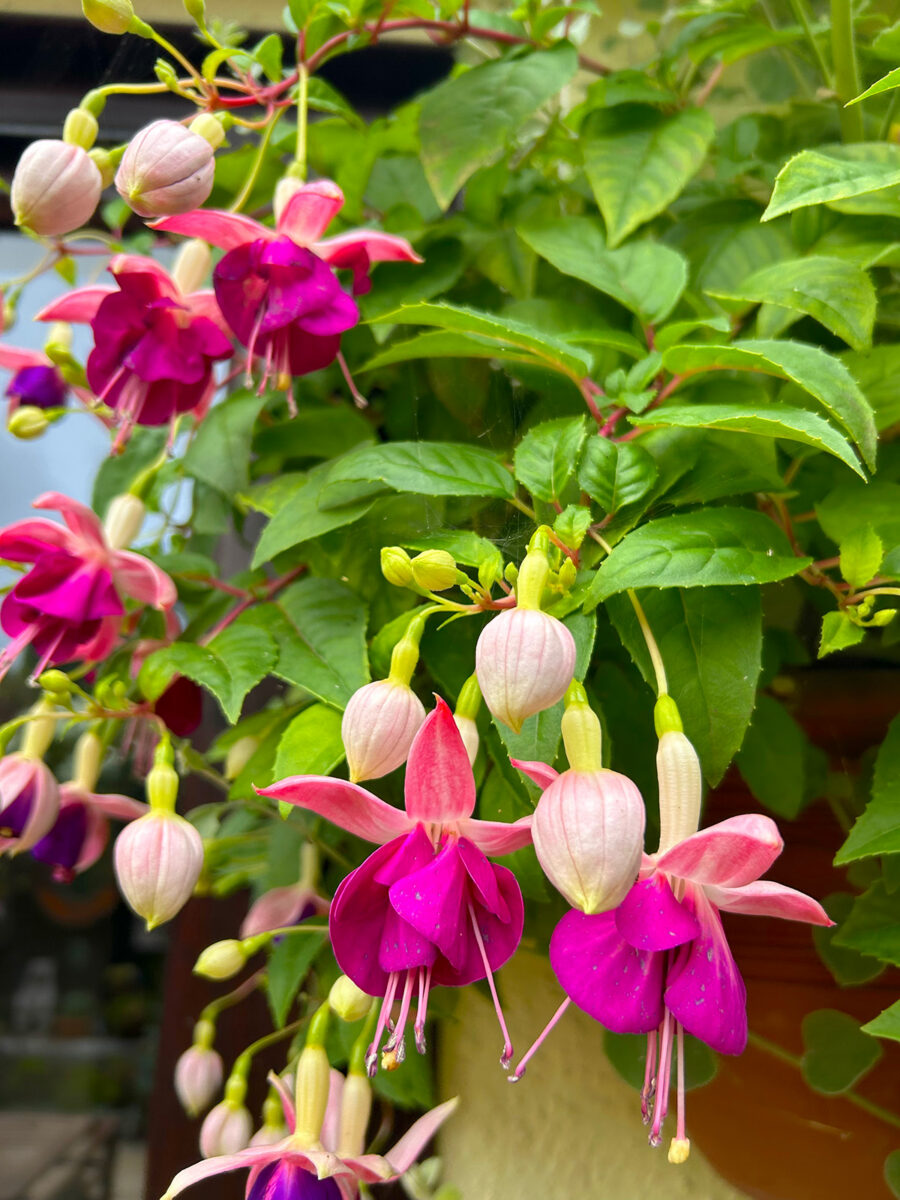
One of my favorites, which I’ve had for several years now, is a pretty one called Fuchsia ‘Pink Temptation’. It is a specific, popular variety of fuchsia plant known for its vibrant, bushy, trailing growth with unique single flowers featuring creamy white sepals, pink flush, and reddish-orange blossoms, making it perfect for baskets and containers. It’s a half-hardy, floriferous trailer that provides long-lasting summer colour, often used in hanging displays, as shown. Mine are all growing in large wall pots on a north facing wall that I take down and protect undercover for the winter months.
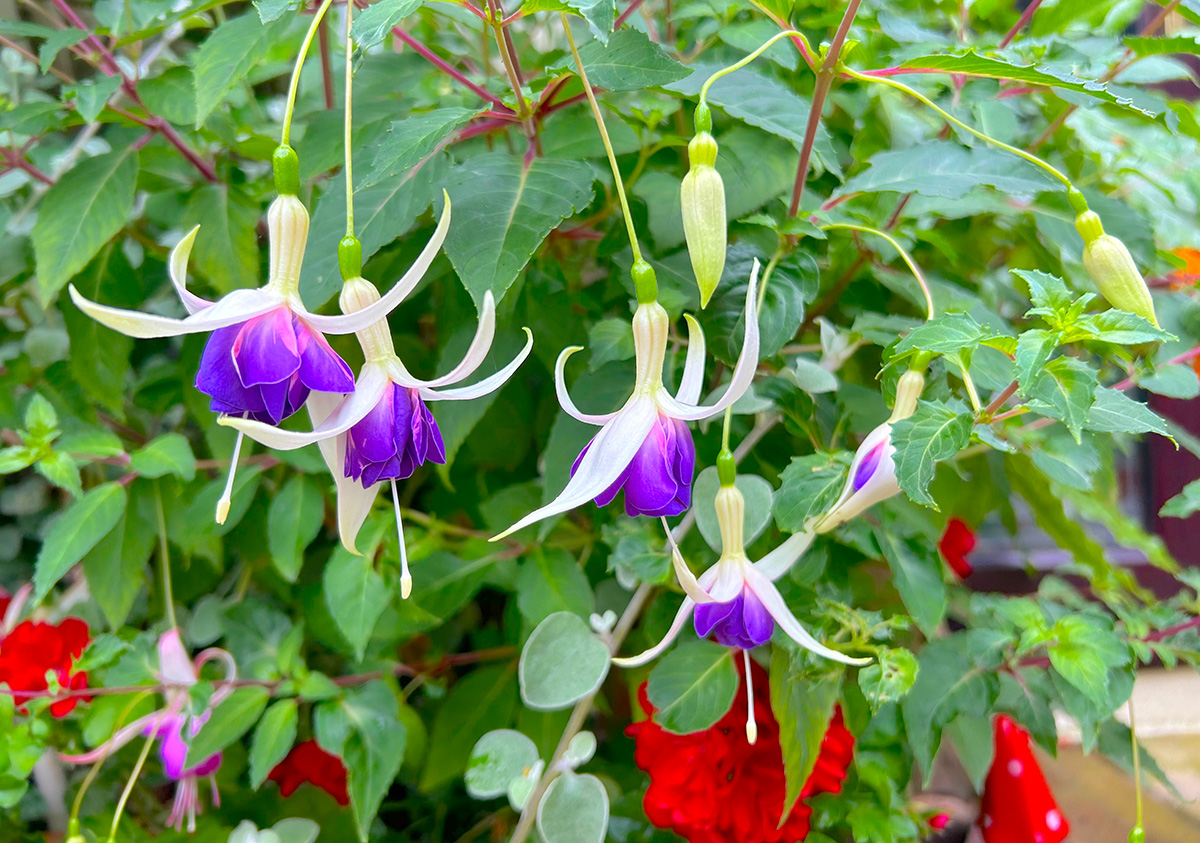
Another one that looks equally pretty tumbling out of wall pots each summer are the pretty flowers on Fuchsia ‘Lena’. They are a lovely contrast for Fuchsia ‘Pink Temptation’ too.
Hardy fuchsias
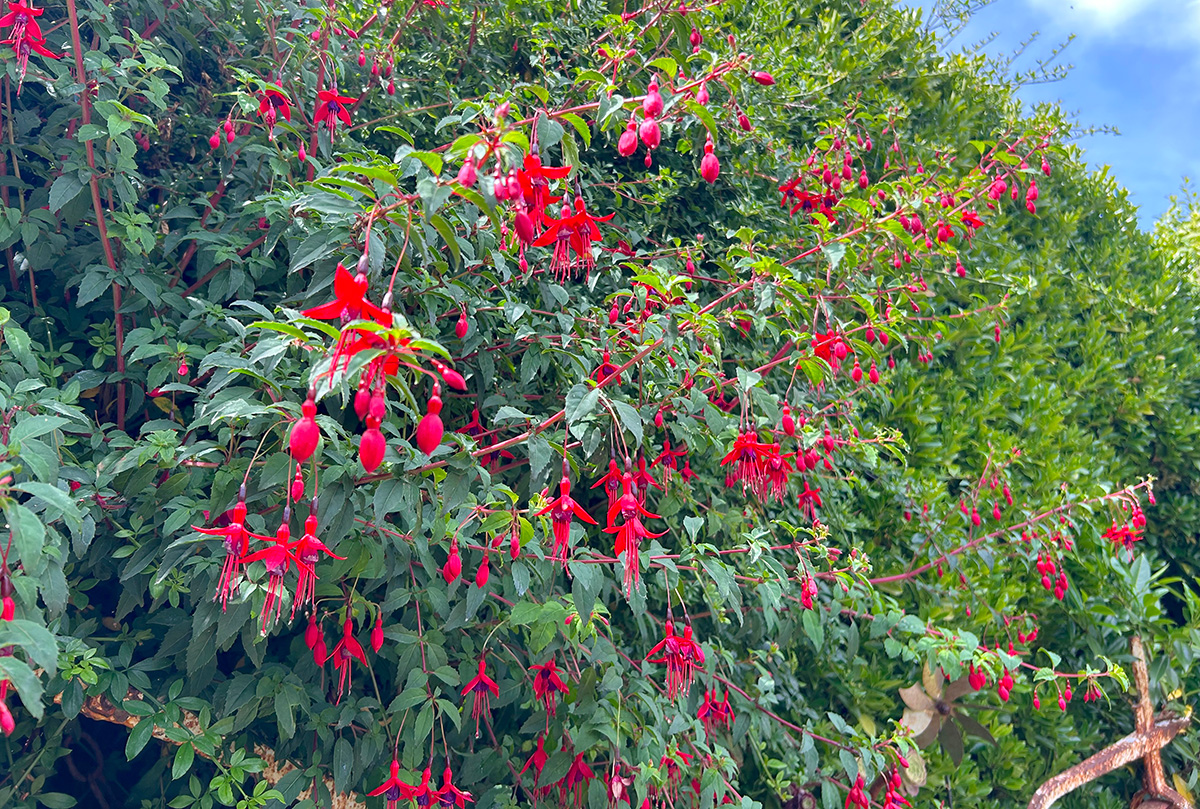
Some fuchsias are hardy enough to be used in perennial planting schemes, and may even be clipped into a low-growing hedge. One such plant is Fuchsia magellinica, a hardy fuchsia with pretty, red flowers with long, tapered sepals. When other fuchsias fail to survive winter, this robust South American species can be relied on to retain a framework of branches. The purple and red flowers are small but borne profusely throughout the summer, as you can see on my hedge like plant growing in the back garden at Driftwood. Like all fuchsias, it thrives in fertile, moist but well-drained soil, in a sheltered spot in partial shade. That said, mine are growing in very sunny spots in the garden and seem to do very well. Now the experts say, grow in a sheltered spot away from cold winter winds, and mulch the roots with a thick dressing of well-rotted manure or compost in autumn. I don’t do either and my three plants have done extremely well looking amazing over many successive summers.
With their profusion of dainty two-tone pendent flowers, that last well into autumn, hardy fuchsias bring a tropical touch to borders and containers in warm sheltered spots, in sun or partial shade. They are compact and bushy and can even be grown as informal hedges.
Fuchsia know-how
Fuchsias are much-loved for their hanging, bell-shaped, bi-coloured flowers that look like colourful ballerinas. Their flowers last all summer long and there are many different ones available, in shades of white, magenta, purple and red. Some varieties have golden or variegated foliage, or purple or red-tinged leaves, too.
They mostly hail from Central and South America, where they’re pollinated by hummingbirds. They were first discovered growing in the Caribbean in the 1700’s and were named after a German named Leonard Fuchs.
The outer set of petals are actually sepals, which protect the flower petals beneath. Both the flowers and the small purple berries that follow them are edible. The flowers can be crystallized and used to decorate cakes and desserts, while the fruits of some varieties have a citrus, peppery taste and can be used to make jam.
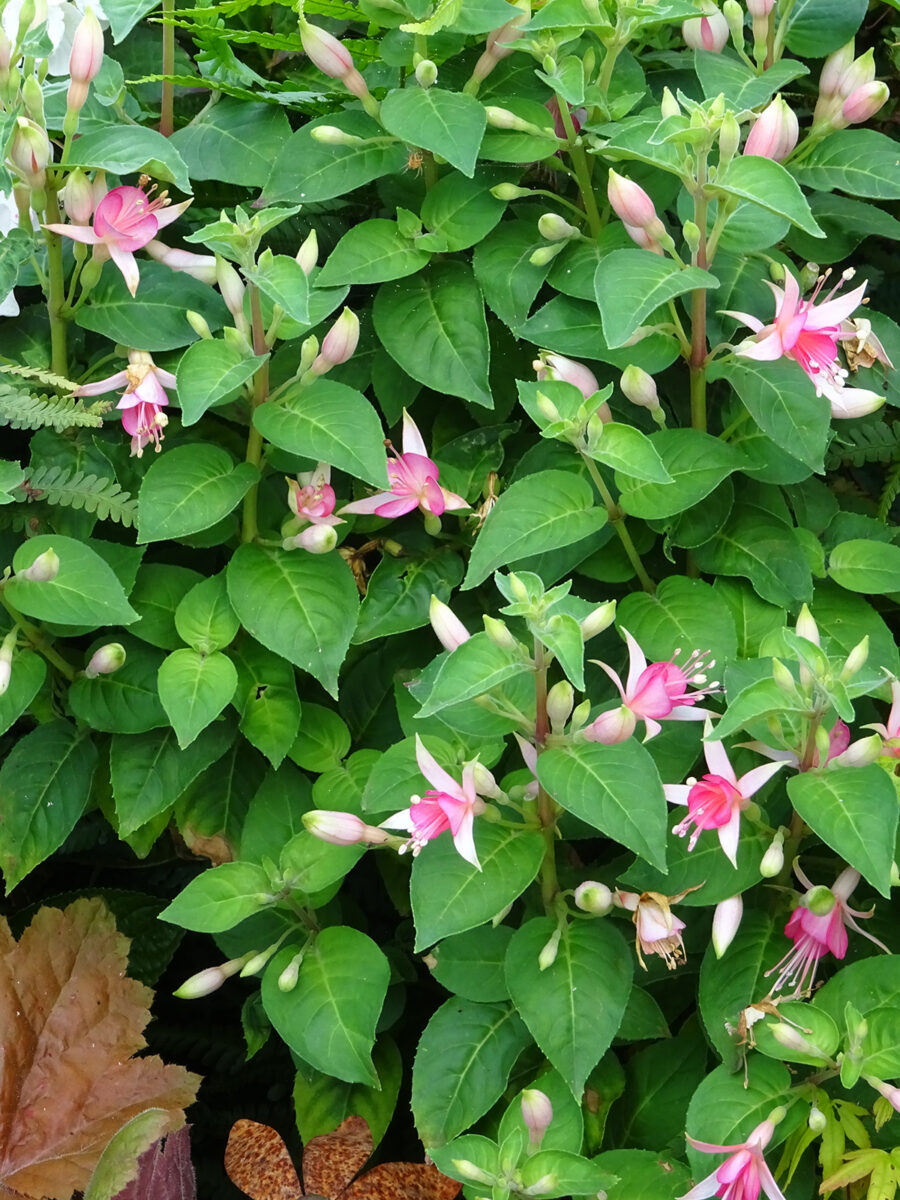
A rather delicate one in my garden is Fuchsia ‘Princess Charlotte’ which is known for its lovely, upward-facing, frosted pink flowers, offering a unique look with blooms that aren’t hidden, and making it a popular choice for baskets and borders, valued for its hardiness and continuous summer display. I’ve had mine in the garden now for several years. Lovely, frosted pink flowers clothe the rounded, basketball-shaped plants throughout the summer, and the plants are hardy too!
Fuchsia Favourite
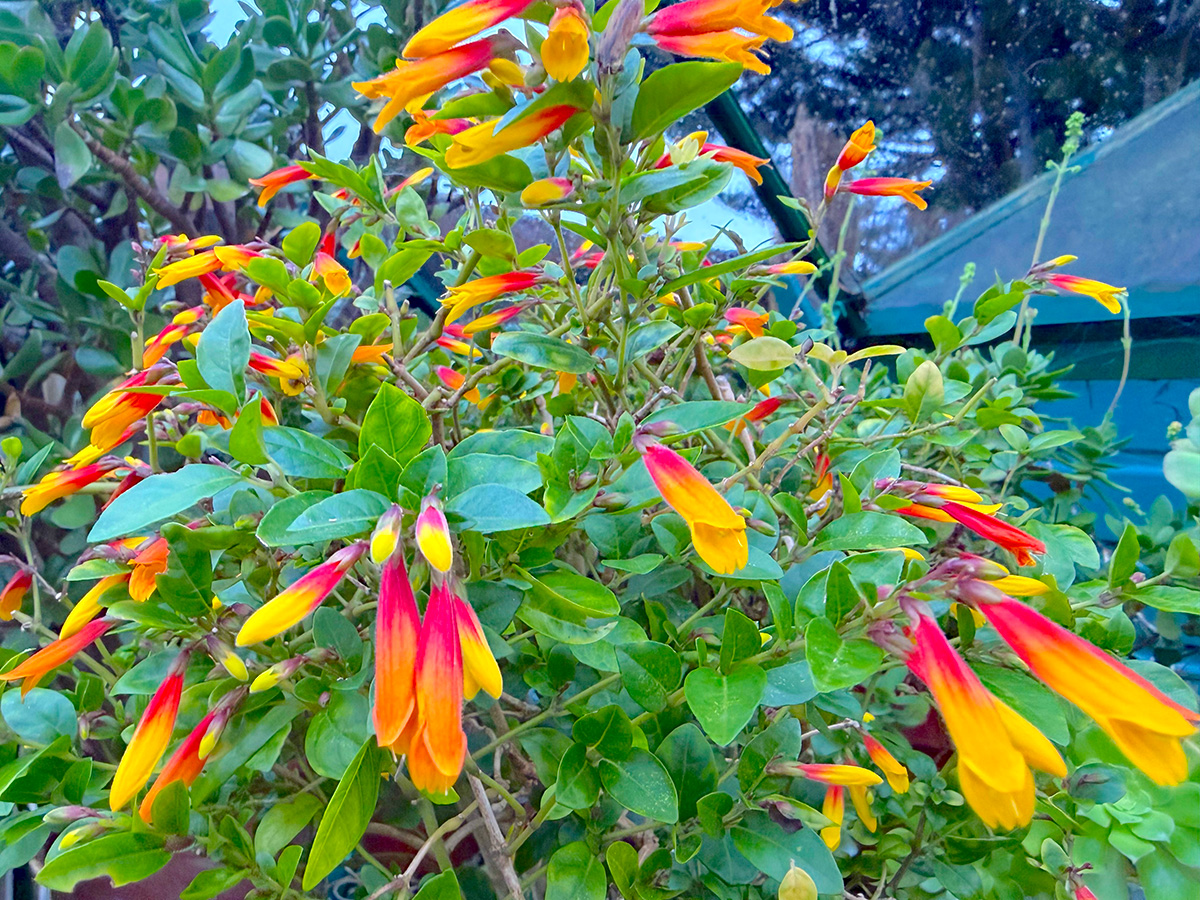
A real favorite of mine, which guarantees a gorgeous splash of colour through the winter months is the gorgeous Brazilian fuchsia. Add a touch of Brazilian sunshine to your indoor and outdoor spaces with this tropical yellow and red fuchsia. Also called Jacobinia pauciflora, it bears long, tubular, brightly coloured blooms from October through to March each year. Its flowers have a wonderfully sunny appeal and will bring the sunshine indoors over late autumn, winter and early spring. Perfect for planting in a container to liven up a conservatory all year-round or locating in a prime spot on a light, bright, windowsill. Furthermore, as a tender shrub which likes a climate above 10°C, it can even enjoy a spell outdoors during the summer months to soak up some warmer temperatures and help build its resilience. They prefer well-drained soil and are best planted in partial shade with a south or east facing aspect.
Last autumn, I realised I was going to need a few extra trailing plants for the wall pots this summer so I did take cuttings from existing plants to ensure I had enough. I opted to keep them in the back porch in order to be able to keep an eye on them.
Troubleshooting
The only real problem I experience with disease on fuchsias is brown rust. The first signs are yellow spots on the top surface of leaves and if you look at the lower surface you will see a fine, dusty, orange coloured area. The orange dust becomes more raised as the disease progresses and may well appear on the top surface as well. The plants begin to look generally unwell and the leaves begin to fall off. This is most definitely Fuchsia Rust and it is caused by a fungus called Pucciniastrum epilobii. Where the plants are grown in the open it will normally appear from July to September but greenhouse fuchsias can be affected at any time of the year. The disease is spread when the fungal spots mature and give off spores which spread to other leaves and plants by wind.
To treat fuchsia rust, pick off any affected leaves on the plant and all leaves which have fallen off naturally, destroy by burning. Rust is often a sign that the plants are not in good condition so ensure they have the correct amount of water.