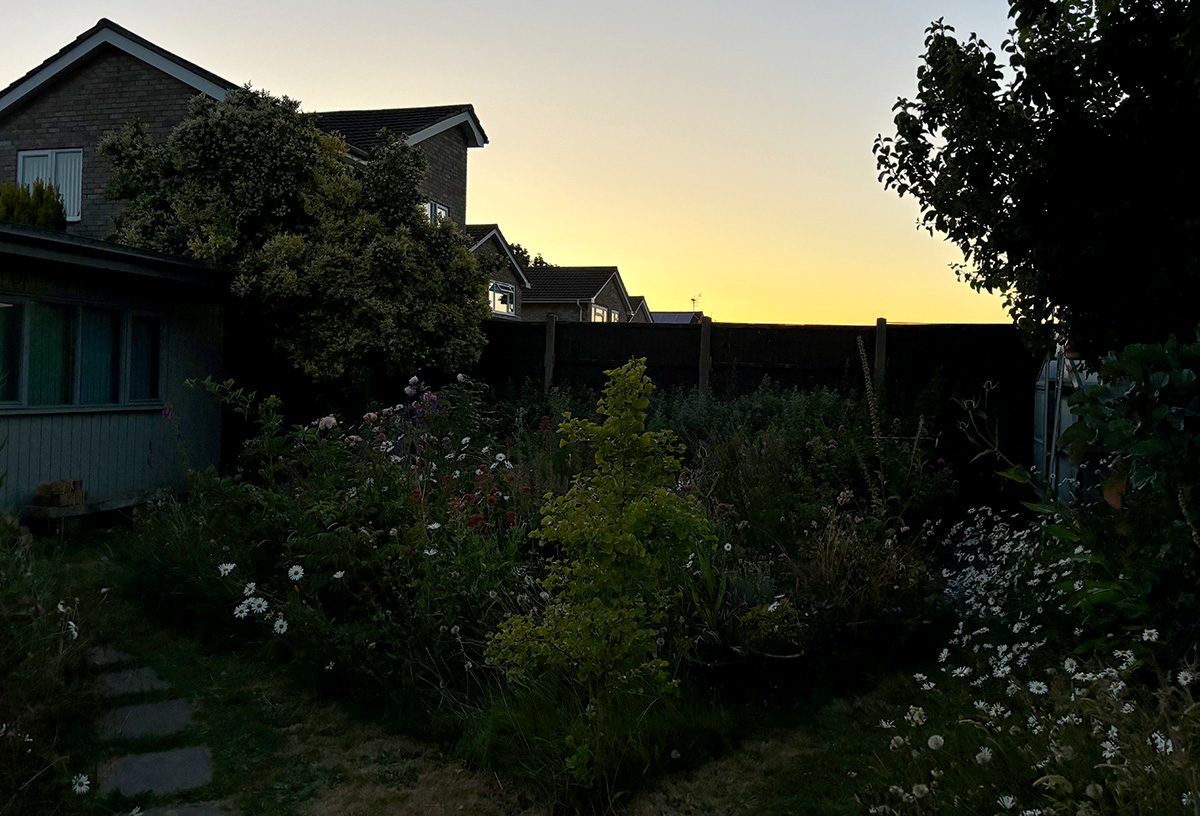
Summer signals garden socials, watering (lots of it!), sitting still and listening to nature, but as night draws in, our gardens enter a new phase; they take on the role of a moon garden. A calm descends at dusk, night pollinators appear, and if you are lucky, even bats will swoop around catching bugs.
Evenings in the garden are a great opportunity for reflection. I find it the perfect time to ponder the day and make plans; temperatures cool to a comfortable bliss and our plants take on a different dimension. Although many plants dazzle in the day, by night it is the silver and white foliage and flowers that really shine.
If you have visited Sissinghurst Castle Garden in Kent, you will probably have marvelled at Vita Sackville-West’s white garden celebrating the simple palette of white, grey, silver and green; this magnificent masterpiece is far from monotone, providing copious inspiration, and at night, this muted palette holds enchanted, magical properties.
Like many of us, I spend my days rushing around trying to be as productive as possible and come the evening, I finally get the chance to slow down and take stock, but rather than things drawing to a close, for me, sitting down in the garden as the sun sets can be just the beginning.
With a few tweaks, any garden can be transformed into a moon garden, and here’s how to create your very own moon garden.
A place to sit
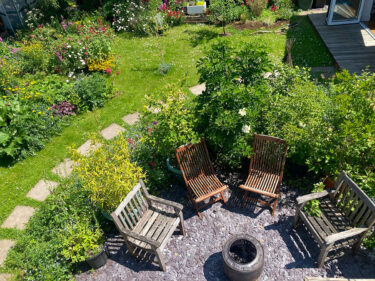
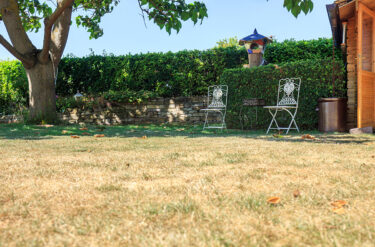
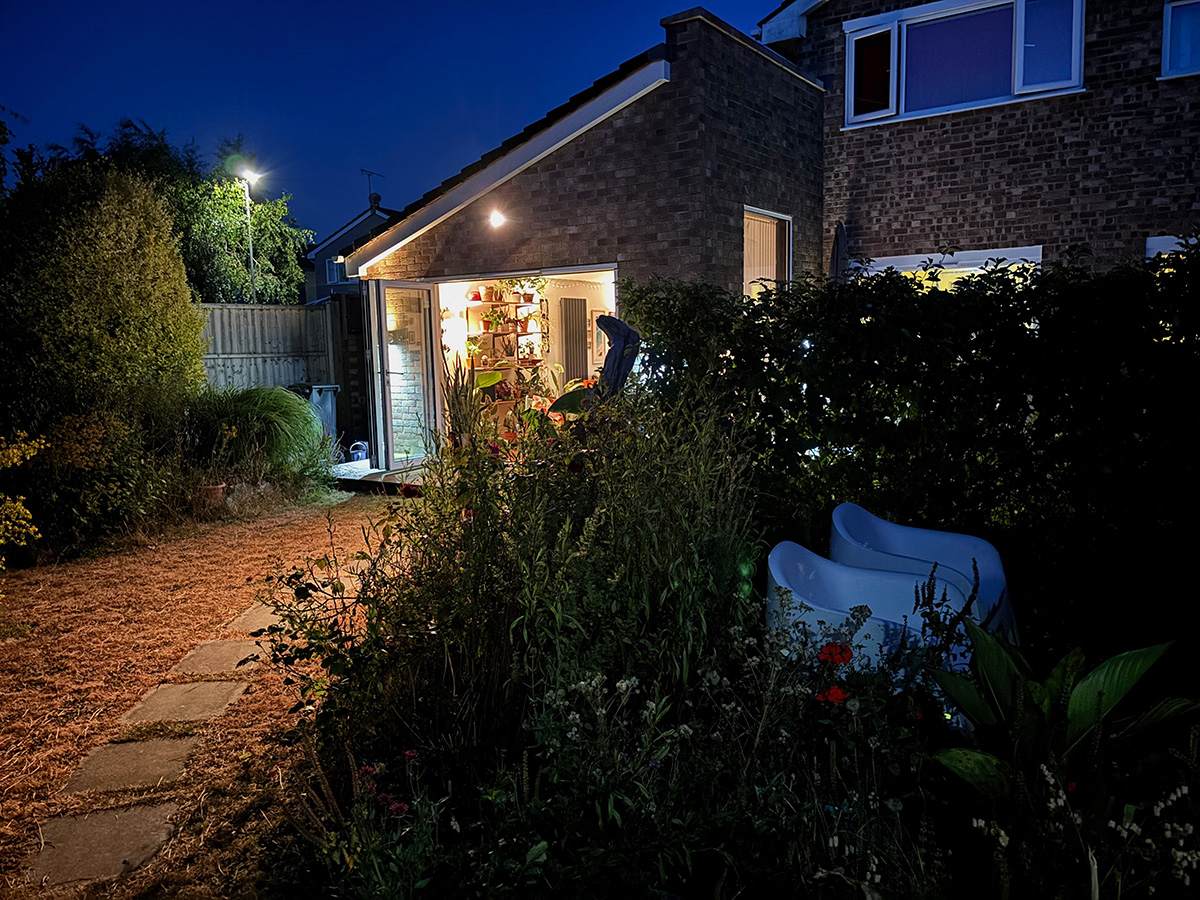
First things first, make your outdoor space as inviting as possible. If you want to spend more time in your garden in the evening, then create an area that draws you outside. A cosy snug surrounded by plants will feel like a nocturnal oasis. Try and position your seating area with a view of the night sky, then sit back and stargaze. Embrace this immersive sensory experience; get comfortable and relax.
Night-scented plants
An important element of any moon garden is scent. This isn’t only to create an appealing garden for you, but it provides a lure for night pollinators that put in an appearance from dusk. Moths are attracted to heavily scented plants; they cannot resist the heady scent of honeysuckle, jasmine, night-scented stocks and phlox, as well as, sweet rocket (Hesperis matronalis) and the flowering tobacco plant (Nicotiana alata). If you sit quietly near these plants at night, you should be treated to a flutter of entertainment.
Illuminating plants
There is an incredible list of plants suitable for a moon garden, from blowsy gap-filling annuals like cosmos to structural shrubs. Here are five plants I find have particularly glowing qualities as well as interesting structure, texture and form.
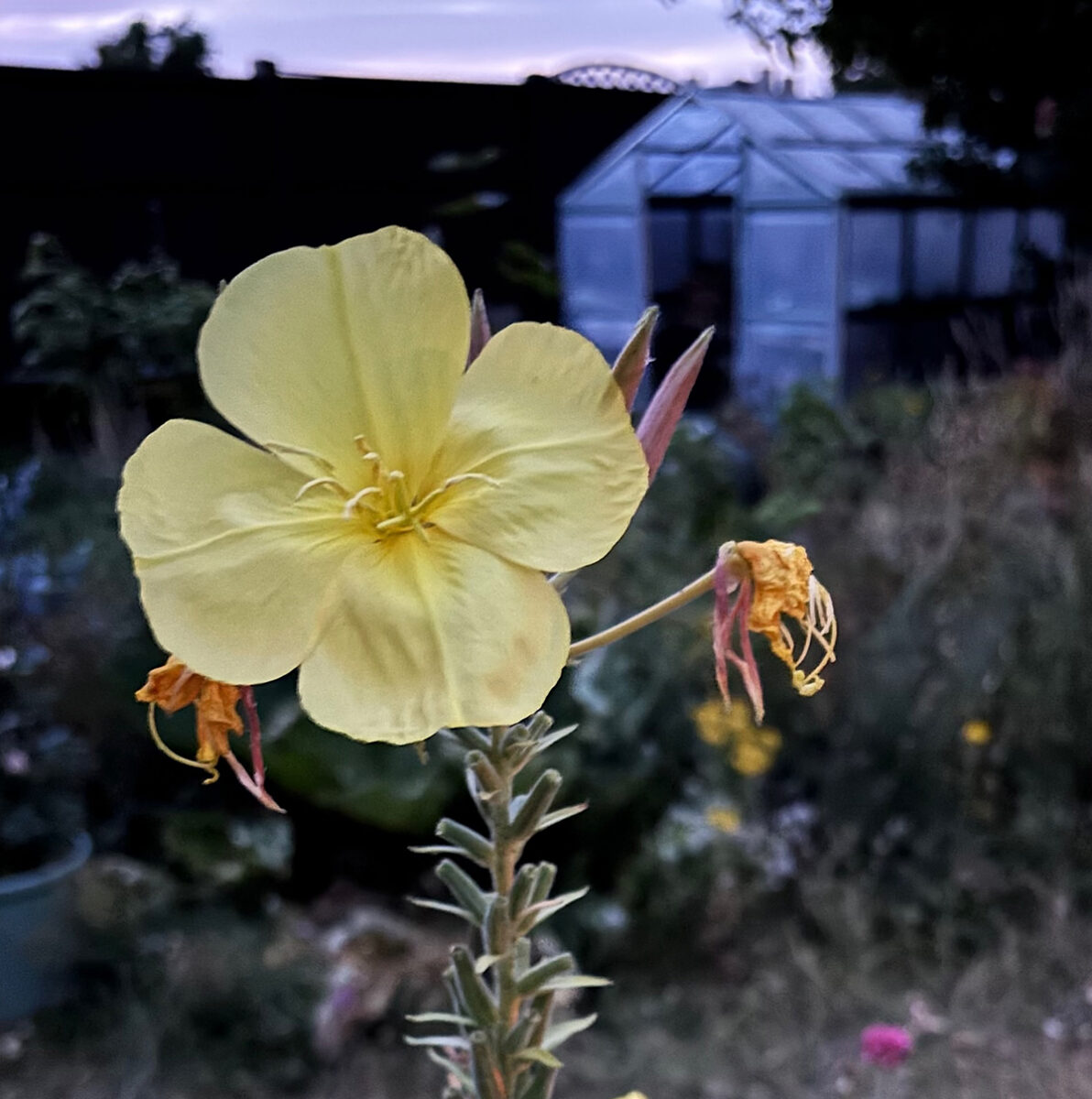
Evening Primrose (Oenothera biennis) is a beautiful biennial with luminous yellow petals whose buds are closed most of the day, then pop open rapidly at dusk, a process known as nyctinasty. These flowers then wilt by mid-morning once daylight has increased. This is a plant in tune with its circadian rhythm. As well as displaying a ghostly glow, it emits a strong fragrance at night to attract pollinators like moths, although flowers are also a big hit with bees.
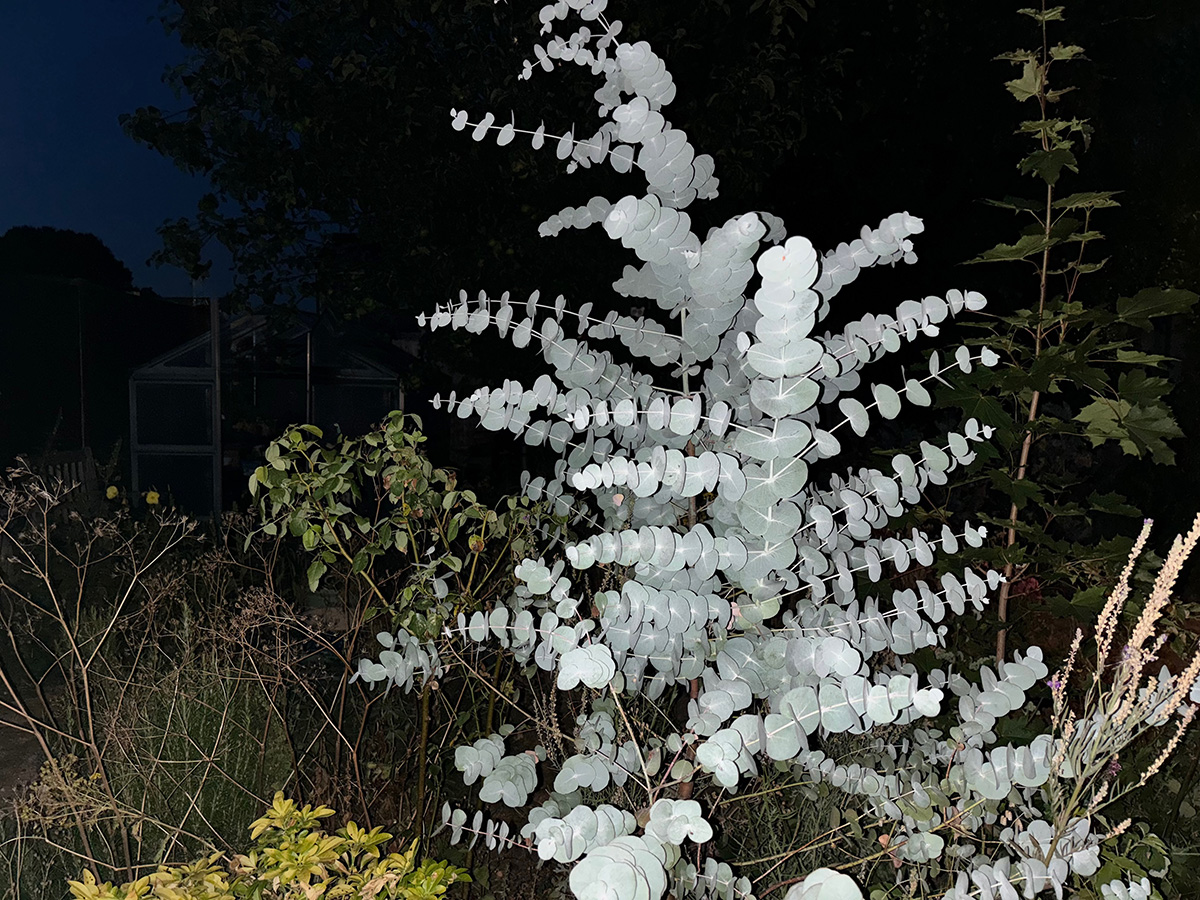
Silver foliage acts as a natural reflector at night, and Eucalyptus gunnii will not only shine in the evening (see main image) but also give off a refreshing scent. Young silvery-blue foliage is round and vividly bright, whereas leaves darken and become elongated as they mature, so keep chopping stems back to keep your eucalyptus leaves fresh. This will help retain your tree’s size and also provide you with some gorgeous scented foliage that you can use for a floral display or to make a door wreath.

Ox-eye daisy (Leucanthemum vulgare), sparkles at night with star-like constellations of blooms through borders. Their brilliant white petals appear to glow at dusk as they reflect the evening light. It is no wonder this native British wildflower is often called the moon flower. These easy-to-grow, drought-tolerant, low-maintenance perennials are a magnet for daytime and also nighttime pollinators as blooms remain open all night.
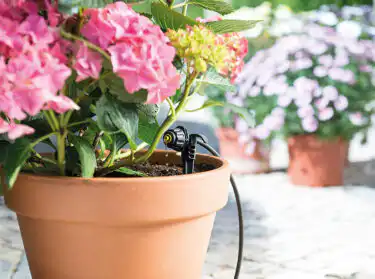
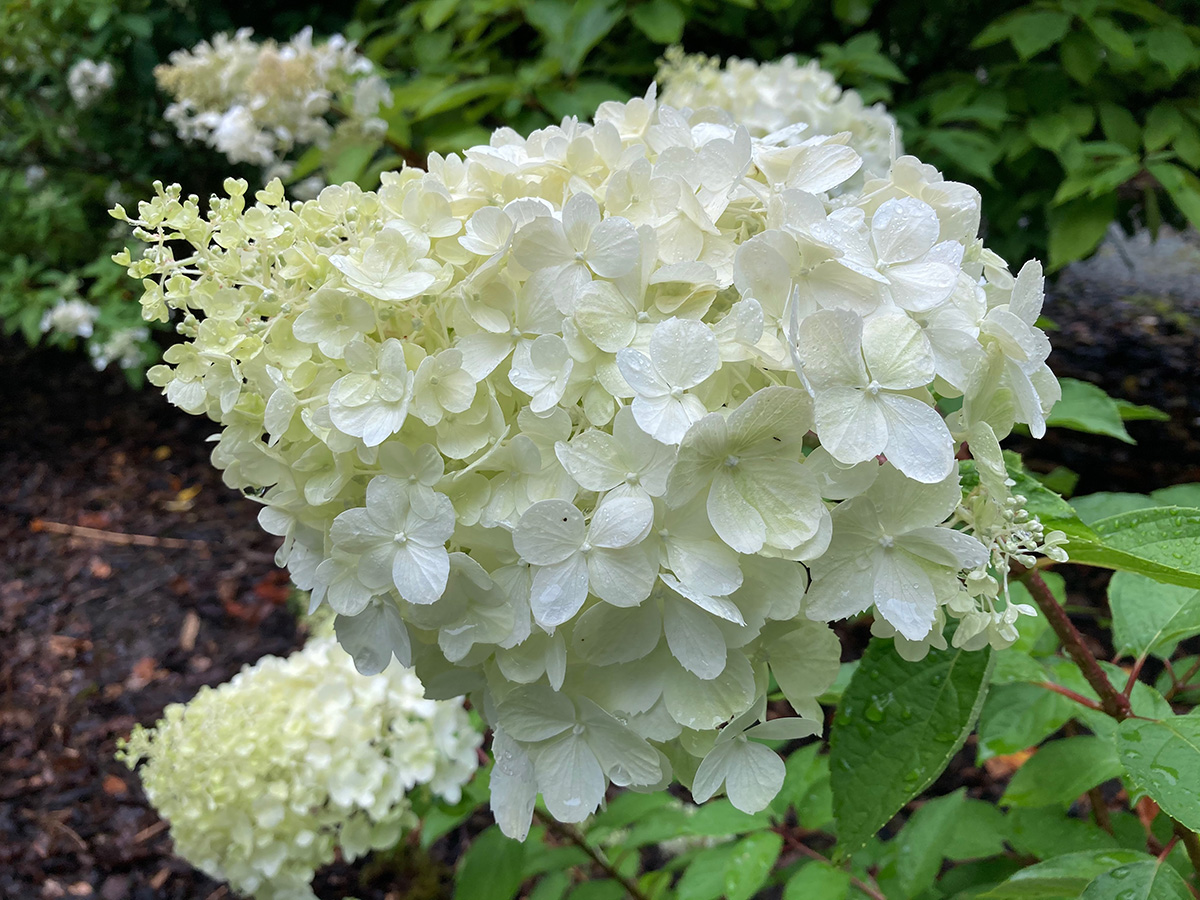
White hydrangeas will illuminate shrubby borders. Hydrangea arborescens ‘Annabelle’ and ‘Beauty Bell’ produce huge white balls of blooms, whereas Hydrangea paniculata ‘Skyfall’ and ‘Candlelight’ become covered in cone-like flowers. Your shrubs will be bathed in white petals that reflect moonlight and contrast against dark foliage.
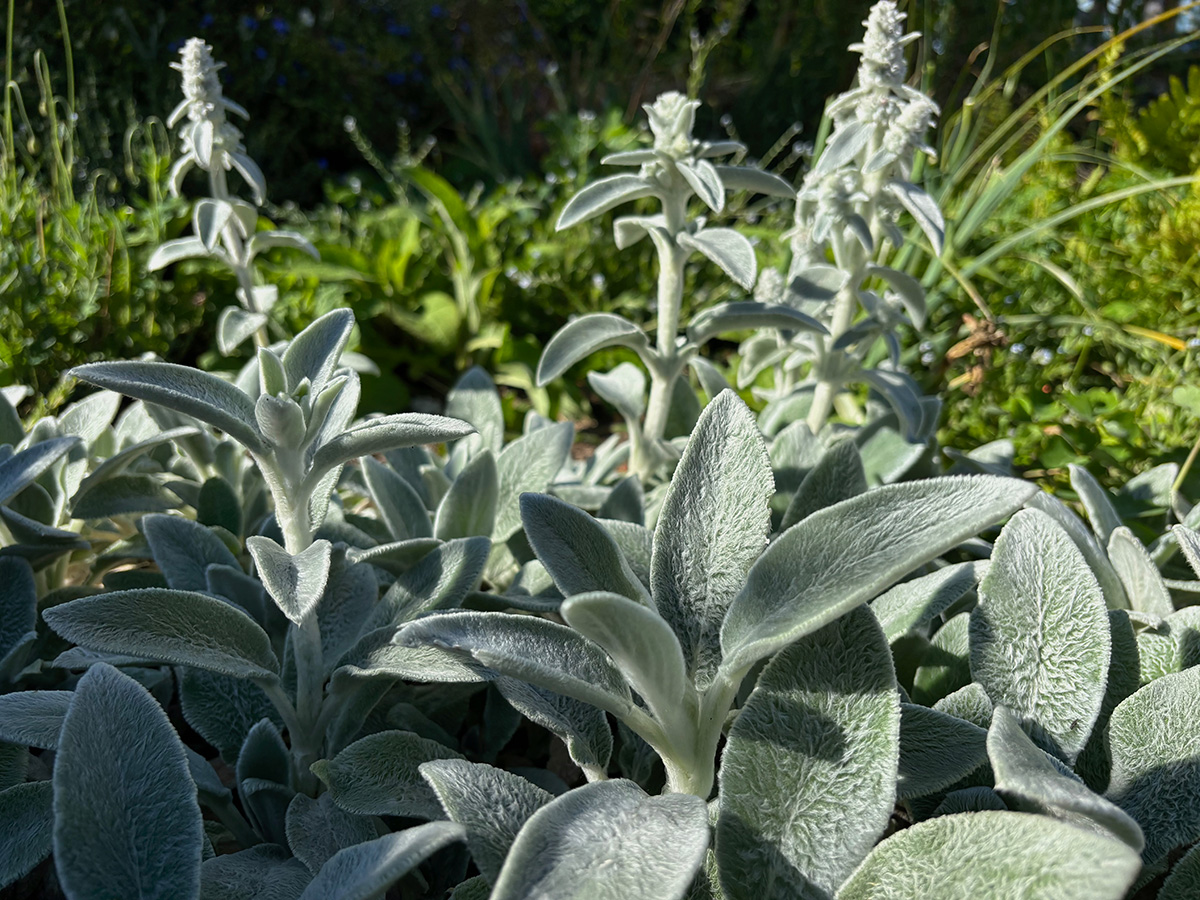
For carpets of silver-white foliage, choose Lamb’s Ear (Stachys byzantina). In the day, the fluffy flower spikes are a nectar-rich magnet for bees and butterflies, but at night this dense luminescent foliage lights up borders. Stachys is a valuable addition to your moon garden to catch the evening light. The traditional evergreen perennial lamb’s ear is a large, fairly tall, ornamental plant, but if you are looking for low-growing groundcover, try ‘Silver Carpet’.
I can’t resist touching the woolly, velvety leaves; they are so soft! The wool carder bee is also a fan of these downy leaves and the female bees scrape off the fuzzy fibres to line their nests.
Container Garden
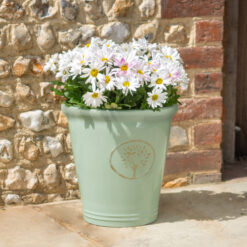
It doesn’t matter how small or large your garden is; even if you have a balcony, you can plant a collection of moon garden flowers in containers, from flamboyant white roses to low-growing sweet alyssum and white petunia to cascading Dichondra ‘Silver Falls’. Just make sure your plants have access to the sky, and they will reflect the ambient night light.
Reflection
Add some reflective surfaces into your garden; this can be a water feature to reflect moonlight or an outdoor mirror. Let the night light bounce around your garden. Use pale hard landscaping materials, whether white gravel, paving stones or rendered raised beds, to reflect ambient light. This can double as a useful safety feature for paths, as it will also help you to see where you are going in the absence of outdoor lighting.
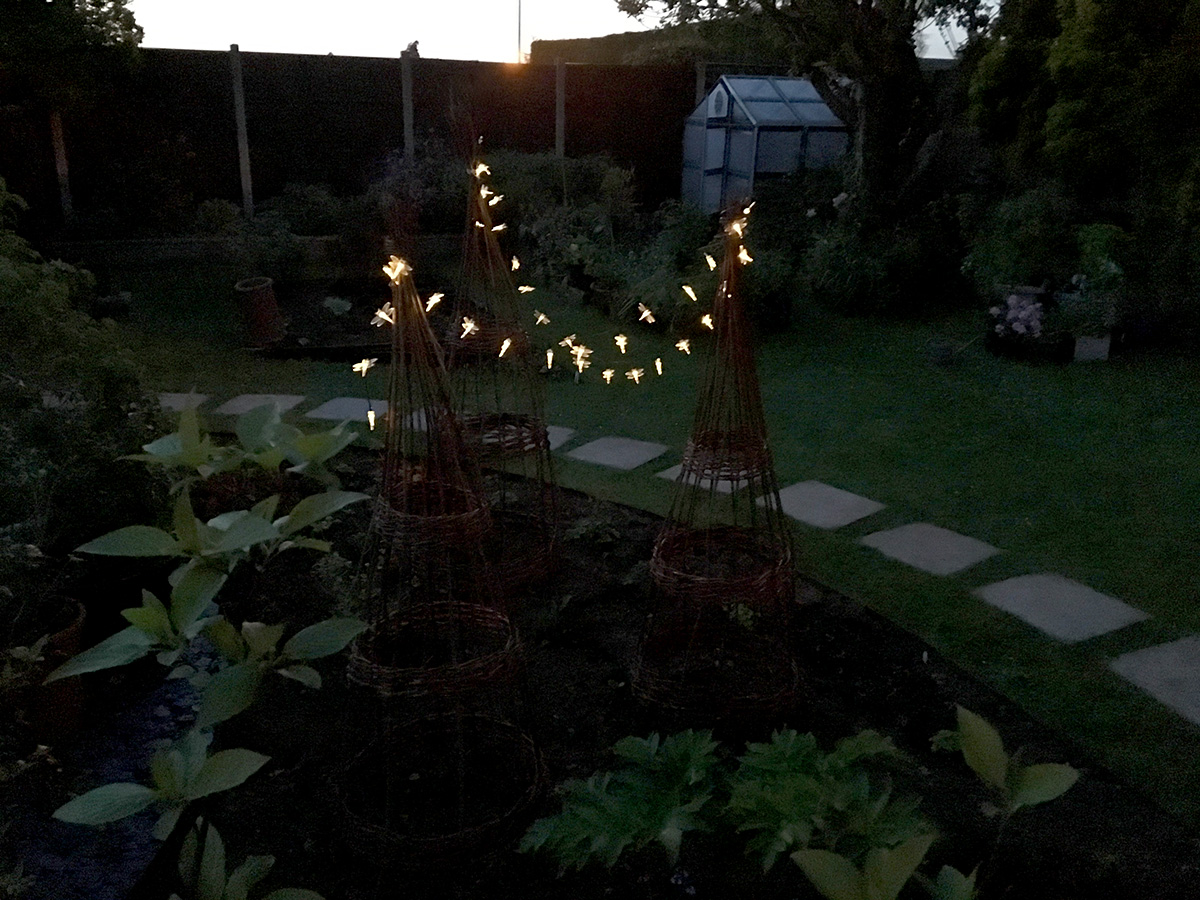
Utilise moon and night light, but when these are not available, some sympathetic artificial lighting will help create a welcoming atmosphere. Embrace the sun’s energy throughout the day to power up solar panels, and at night enjoy the warm hues of ground-level orbs or strings of fairy lights, lanterns, or festoon bulbs.
Get planting and enjoy watching, listening and inhaling in your garden as the sun goes down and the night pollinators come out to play. That’s when the real magic begins.