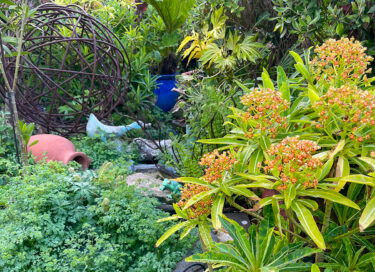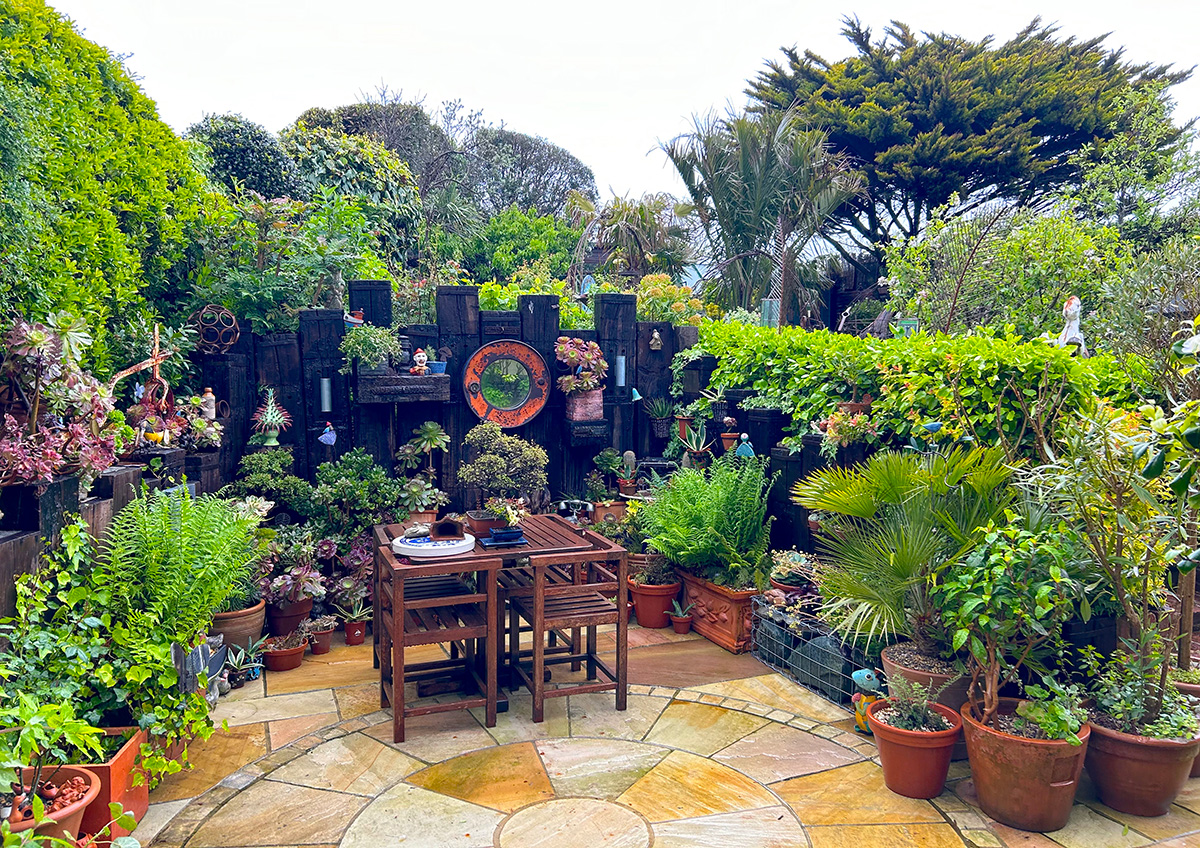
In a garden with many containers, you have to keep your eye on the ball to ensure they continually look their very best! I suppose it’s inevitable that mistakes are made along the way, many of my visitors say they tend to kill more container plants than they care to admit. Every year, they would start with big dreams in these little pots, only to end up with shrivelled leaves, dry soil, or plants that just never grew.
I usually say, maybe it’s the way in which they were going about container gardening. Over the years I’ve made mistakes and in some ways it’s best to learn from your own mistakes and the lessons are well learnt, especially if an expensive plant is involved.
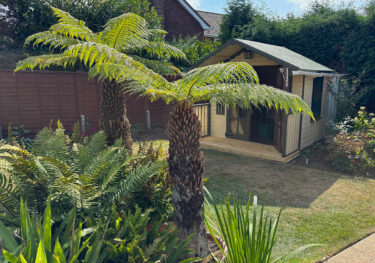
On moving to the coast, back in 2004, from a North London garden, I opted to transfer many of my plants, from both ground and containers to my new garden, not realising that many of them would not survive their first and only winter by the coast. The salt laden winds finished them off. That was certainly a hard-learnt lesson.
Life and colour
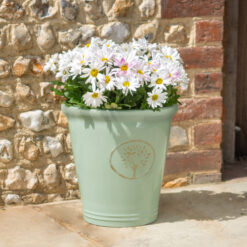
Growing plants in containers is a great way to bring life and colour into otherwise dull spots in your garden. Patios, balconies and window boxes are all places where plants can be easily introduced in containers.
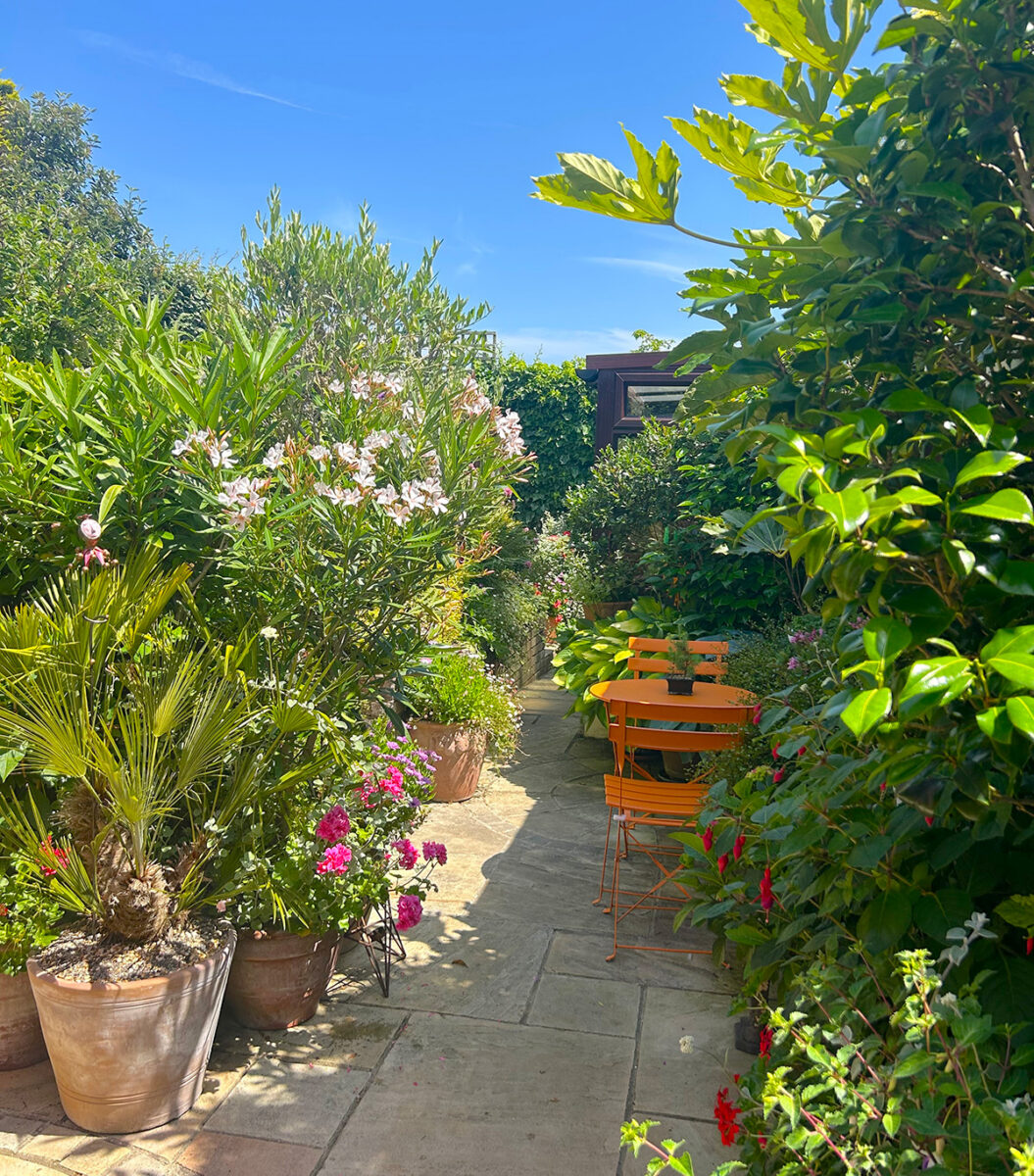
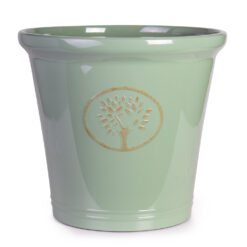
I believe a common mistake, made by many of us, is to utilise containers that are too small for the plant in question. How often have we visited a garden centre and viewed a plant in an interesting container and maybe made the purchase, persuaded more by the container than the plant? I know I have in the past. I quickly learned that even if a container is cute and decorative, it may not be the best choice for the survival of my plants.
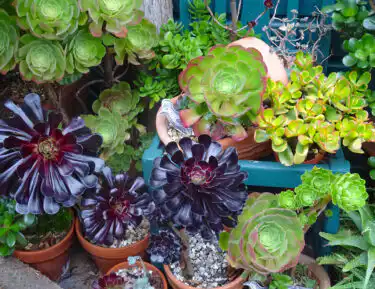
Over the years I’ve learnt that its probably best to start with containers at least 12 inches (30cm) wide and 12 inches (30cm) deep, unless you are using drought tolerant succulents which cope much better in smaller pots. Anything smaller is likely going to leave your plant thirsty, root bound, and little bit stressed out. A larger pot gives plants room to grow and gives you a little more spare capacity if you forget a watering or two. Before planting, it’s a good idea to check the mature size of your plant and then acquire a container big enough to carry it all the way through.
Big pots for big plants
In my world, almost any type of plant can be grown in a container. Over 10 years ago I was admiring a gunnera at Hampton Court Flower Show and was bemoaning the fact I only have a small garden and could not accommodate one! Imagine my surprise to be told I could grow them in a large container and they would cope well. So, I bought two! One is now growing above the ground and one in a pot buried in the ground.
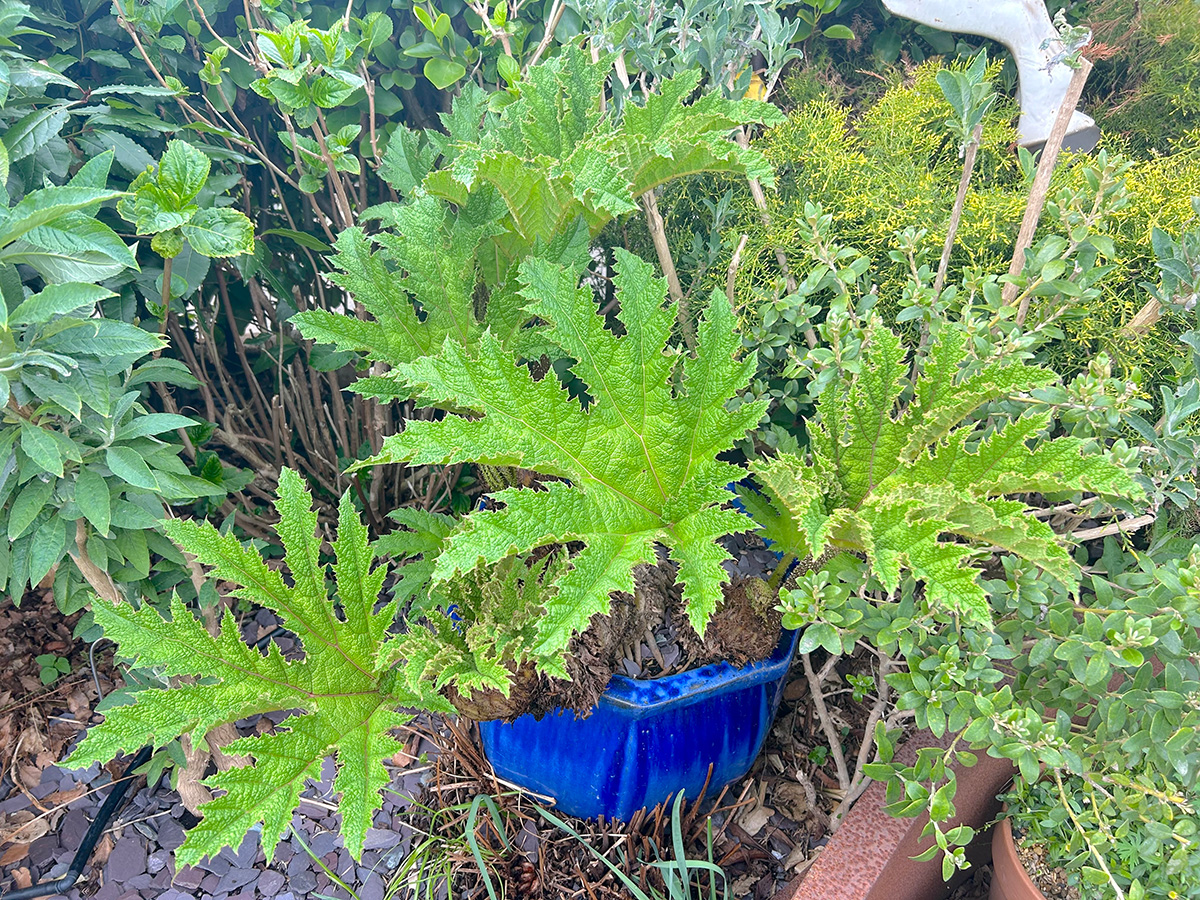
Generally, the bigger the pot and the plant, the easier it is to care for. Soft, fleshy, leafy plants such as tomatoes and fuchsias are more demanding than ‘leathery’ plants such as pelargoniums (tender geraniums) or lavender.
Most gardeners know that plants need sunlight to survive, but container plants generally can’t handle as much sun as those planted in the ground, because their soil supply is limited and they dry out faster and overheat more easily.
It can be a case of trial and error moving pots around to get the right balance of sun and shade. It’s also key to remember that plants that generally require a lot of feeding will grow better in a larger container.
Watering know-how
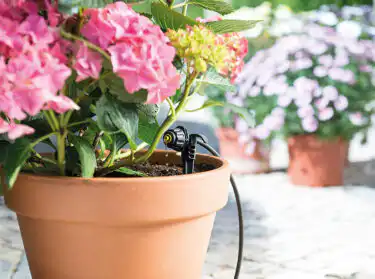
If you have a large number of pots in your garden then it is probably a good idea to create your own watering plan, be that laid down for you and others to follow, or just a plan in the back of your mind. In the heat of the summer, container plants will likely need daily watering. If you’re not consistent, there is a good chance they will wilt, or die.
Remember to check that the pot has good drainage too! Without this the pot will become a death trap with roots sitting in soggy soil which will rot fast. For some containers, you might be able to drill your own holes in the bottom. It depends on the type of material the container is made of and which tools you have. Plastic, wood, and metal containers can be drilled pretty easily.
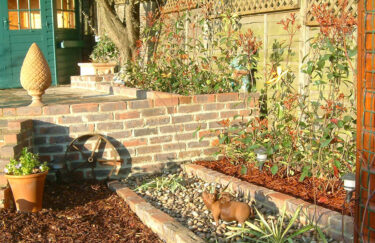
A trick I learnt very quickly is that bare, exposed soil dries out quickly and leaches nutrients. My solution has always been to put a layer of gravel across the top of the compost which has a double whammy as it discourages snails too, especially with hostas.
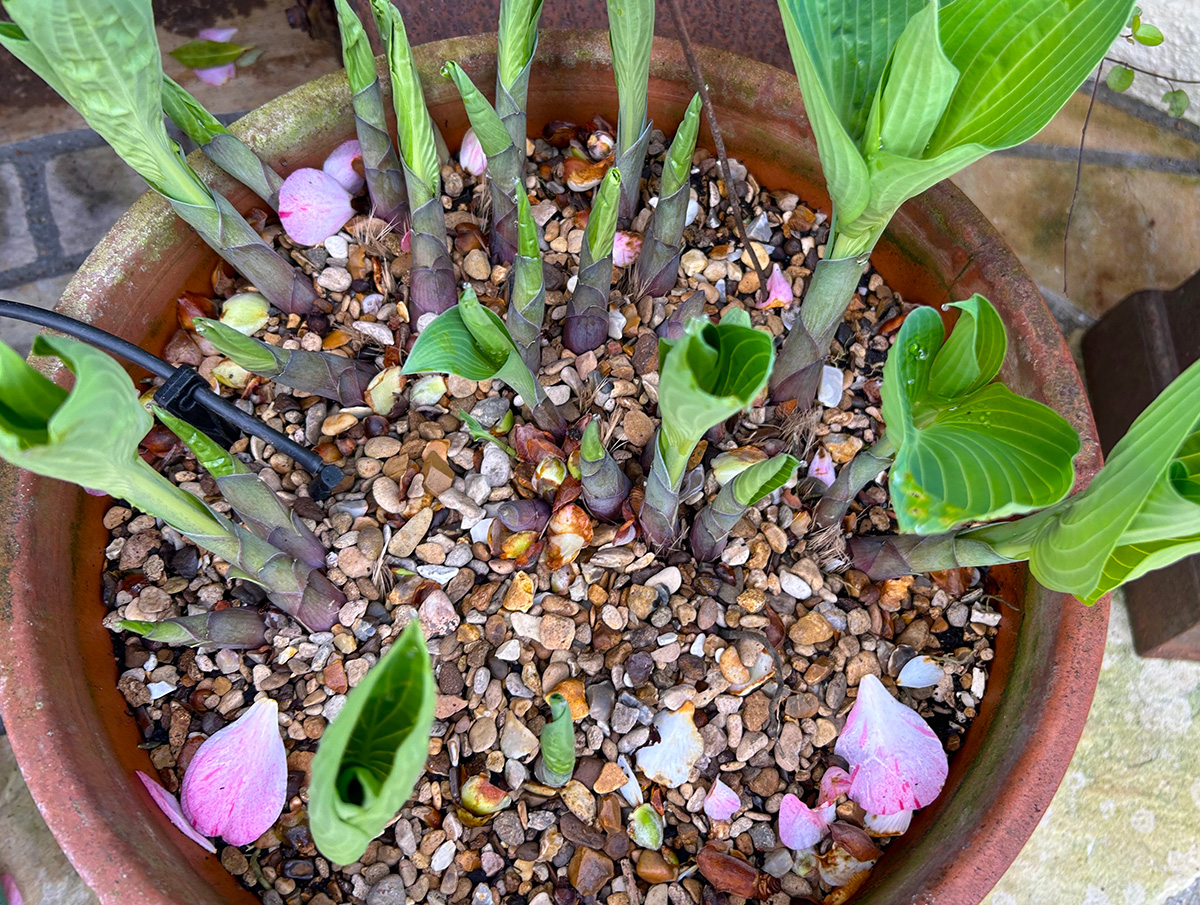
Big pots are heavy once you’ve added compost and water, buy you can place them on rolling stands or add wheels. This way, you can shift them with the seasons or move them out of the wind when storms come. I tend to use a large sack barrow to do this.
Container Care
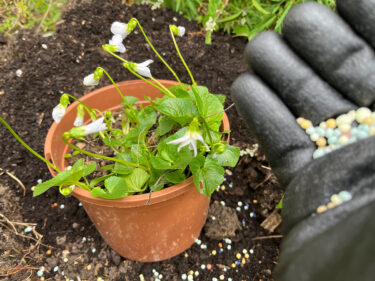
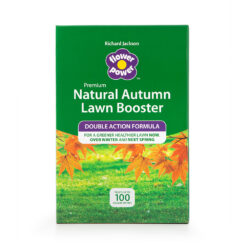
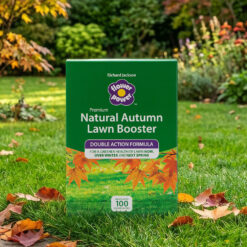
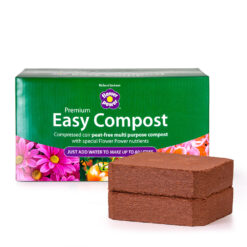
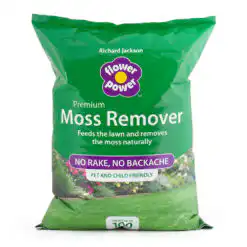
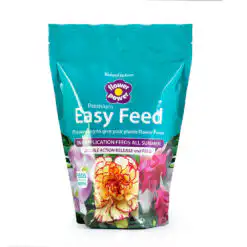
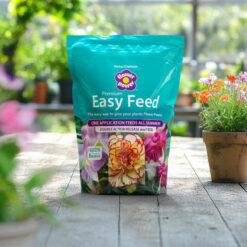
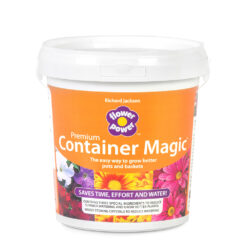
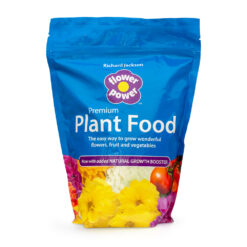
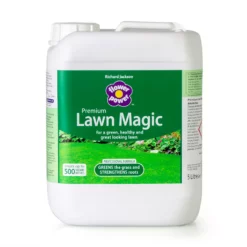
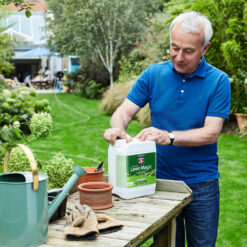
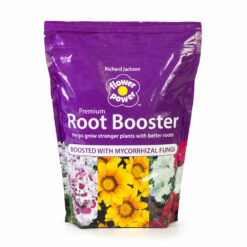
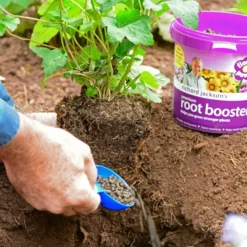
- We have to remember that the compost in the container is the plant’s whole world and as such it needs to provide everything the plant needs. Regular feeding has certainly helped me with my vibrant displays and my wholehearted recommendation would be Richard Jackson’s Flower Power.
- If you cluster pots together into groups it certainly makes watering easier, and the plants actually benefit as well. Grouped plants help each other by conserving moisture and creating a little microclimate. They help protect each other from pests and maintain their own little mini ecosystem.
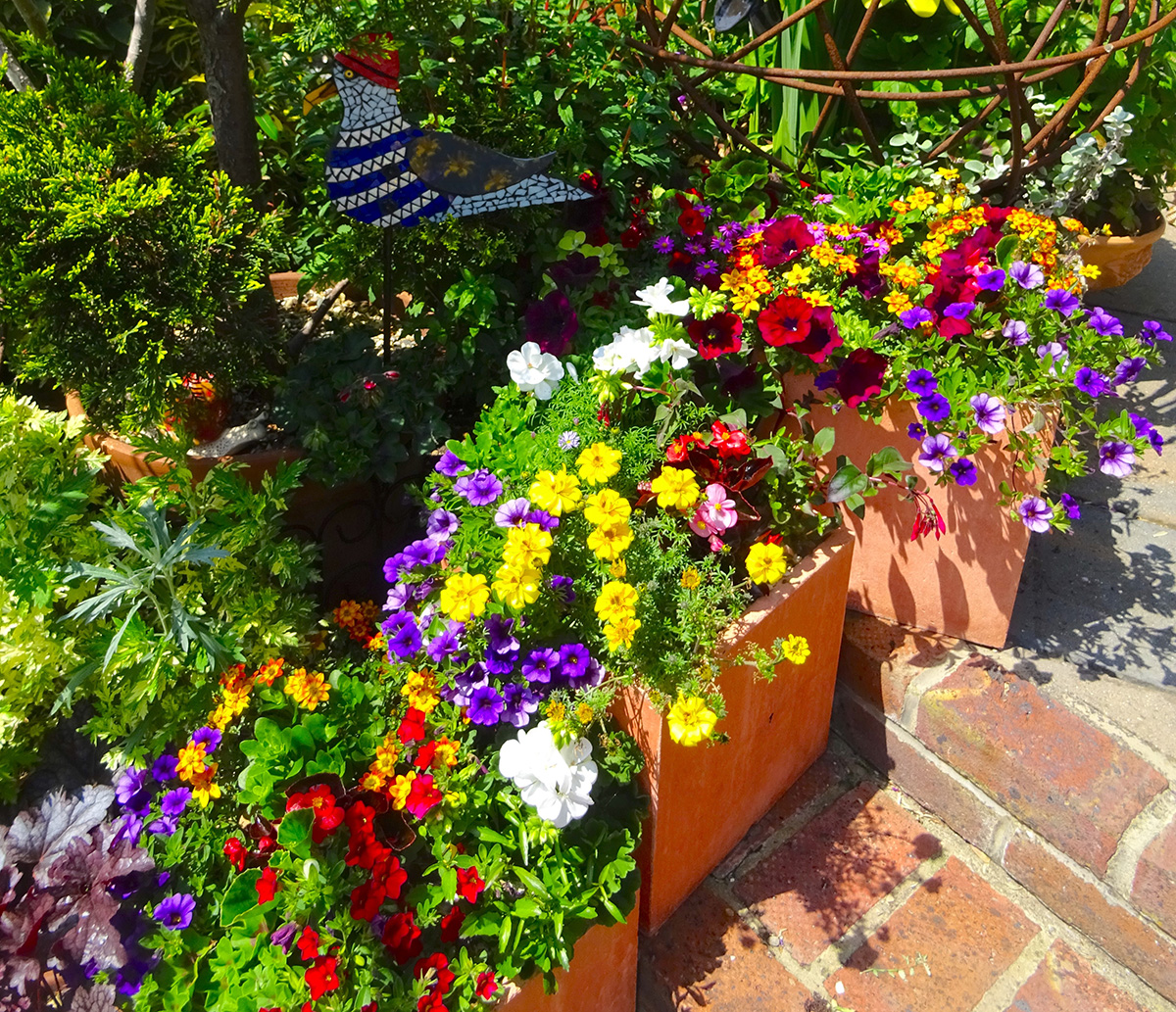
- Most plants will be fine if they are allowed to dry out a little between waterings and they will adapt to using less water if less is available to them. Try to avoid letting plants reach the wilting stage; although they are likely to recover, their growth may be affected
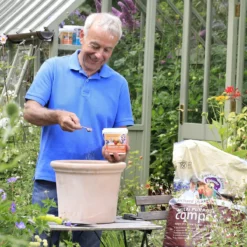
- Many of my visitors are amazed when I tell them I rarely change the compost in my pots! I tend to pull out spent roots, and just add a 2-3 inch layer of compost on top each season. The nutrients trickle down, and the soil life keeps getting better. It’s less work, less expensive, and it mirrors how things work in nature. In the wilderness, things decompose on top of the soil and make their way into the ground as nutrients over time.
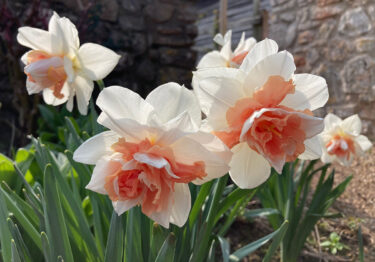
- A perfect example of this is the stunning, peach coloured lilies that were planted by my Auntie Margaret some time before her passing in 2004. They are still in the same pot and compost 22 years later and thrive each year, alongside some new additions, all in some well concealed containers! I just make sure I feed them well every season.
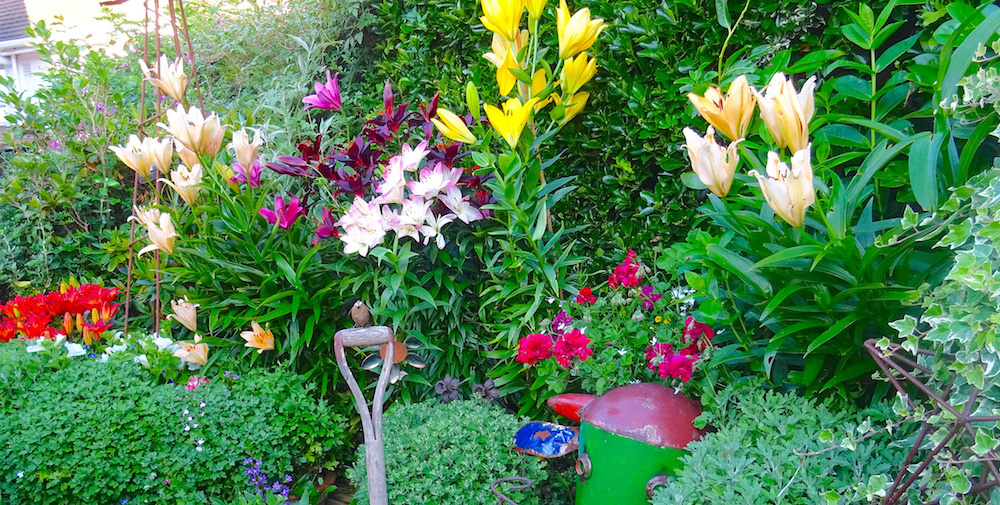
- In my coastal garden it is impossible not to ignore the wind. Balconies, rooftops, and patios can be wind tunnels and lightweight or tall pots can be blown right over and damage both plants and the container.
- It’s key also to remember that pests can take over a container plant almost overnight, so it is always a good idea to check under the leaves every time you water.
- Plant roots will eventually fill containers and this often reduces their growth. Eventually, container plants will need to be moved to a bigger pot or the compost refreshed in the same pot, as composts lose their structure over time. Shrubs and trees that stay in a pot for years are especially vulnerable, unless repotted.
- In my opinion, container gardening is one of the easiest and fastest ways to create your own oasis, especially if you don’t have a lot of space. It can also bring plant life even closer to your home by allowing you to grow on patios and decked areas. I suppose their one weakness is the need to be wary of hard frost being able to penetrate the root easier in a container as opposed to in the ground so just be mindful and provide protection where needed.
Happy container gardening.