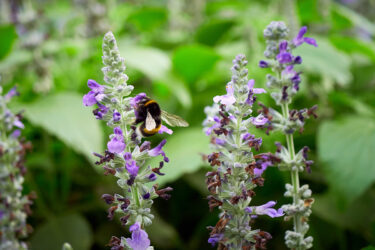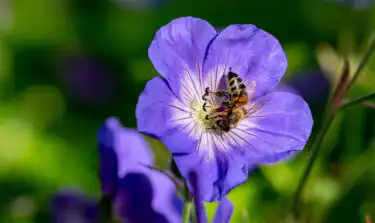
Have you noticed any unusual insect visitors in your garden? There are lots of species that cross the seas and arrive in our summer gardens, to feed on the nectar in our garden flowers.
If you think about what we grow in our gardens, many or even most of our garden plants hail from far distant shores. Some of our native wildlife really do need native plants to complete their lifecycle, but many pollinators just need a source of nectar to sustain their activity, while bees need pollen to feed to their babies. So plants that produce copious nectar and pollen are a magnet for many different foraging insects, even though these plants may not be native.
We know that many birds migrate the cooler climes of the UK for summer, while others gather here for the winter before returning to their summer homes, so, it shouldn’t be a surprise that some insects do that too. This summer we’ve had an influx of summer migrants in and around our gardens. These beautiful creatures have lifted our spirits and stirred new interest and wonder of the natural world.
Here are five spectacular, exotic garden visitors you may have seen this summer.
Violet Carpenter Bee (Xylocopa violacea)
The violet carpenter bee is a solitary bee, this means that it doesn’t live in a colony. Instead it is the mother bee that does all of the work making and provisioning a nest.
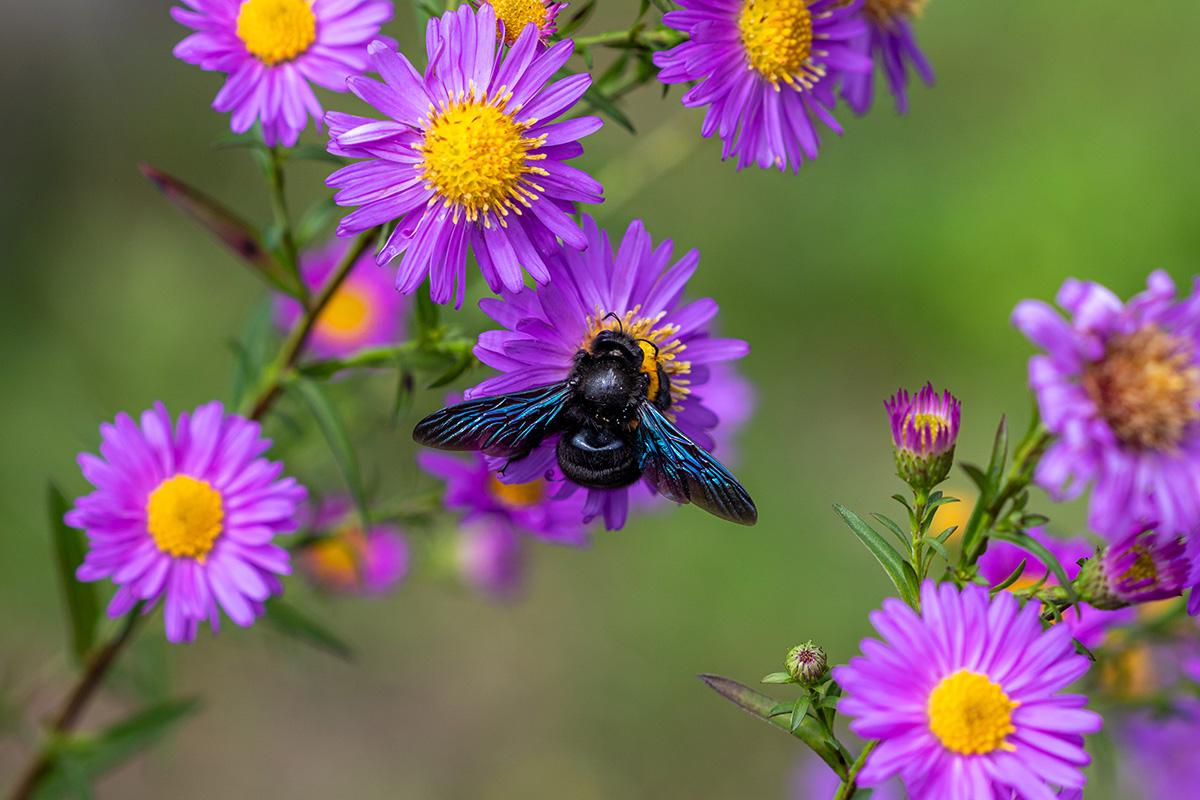
It’s been occasionally spotted in UK gardens for the last twenty years and has been pretty active in UK gardens this summer too. Carpenter bees are generally bees that make nests in wood, tunnelling into stems or using old beetle holes. The Violet Carpenter bee is one of Europe’s largest solitary bees. Climate change has enabled this European migrant to not only feed and breed here, but to overwinter too. It might be large and to some people a little scary, but like most solitary bees it won’t sting you. With it’s blue violet wings and the fact that it nests in old timber and especially old and dead wood trees, it lives up to its name in every way. We can expect to see more of this beautiful, large black bee in our summer gardens.
Humming-bird Hawk-moth (Macroglossum stellatarum)
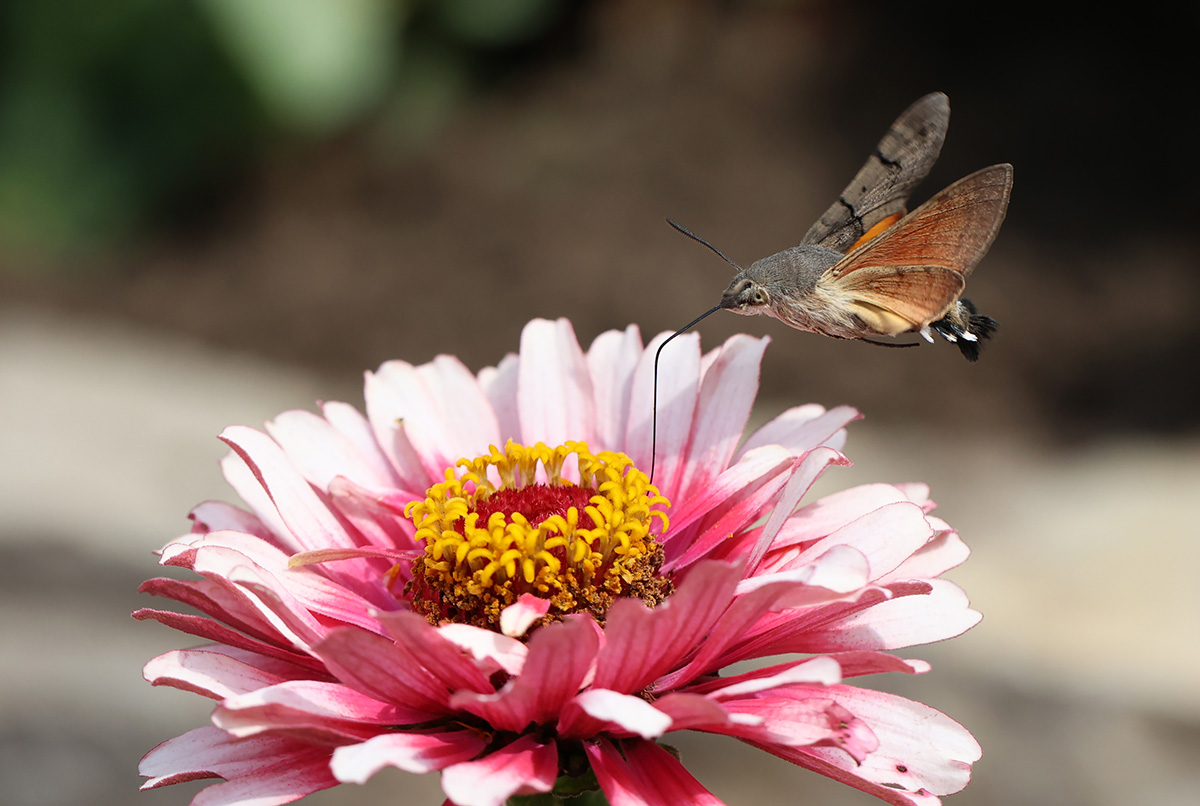
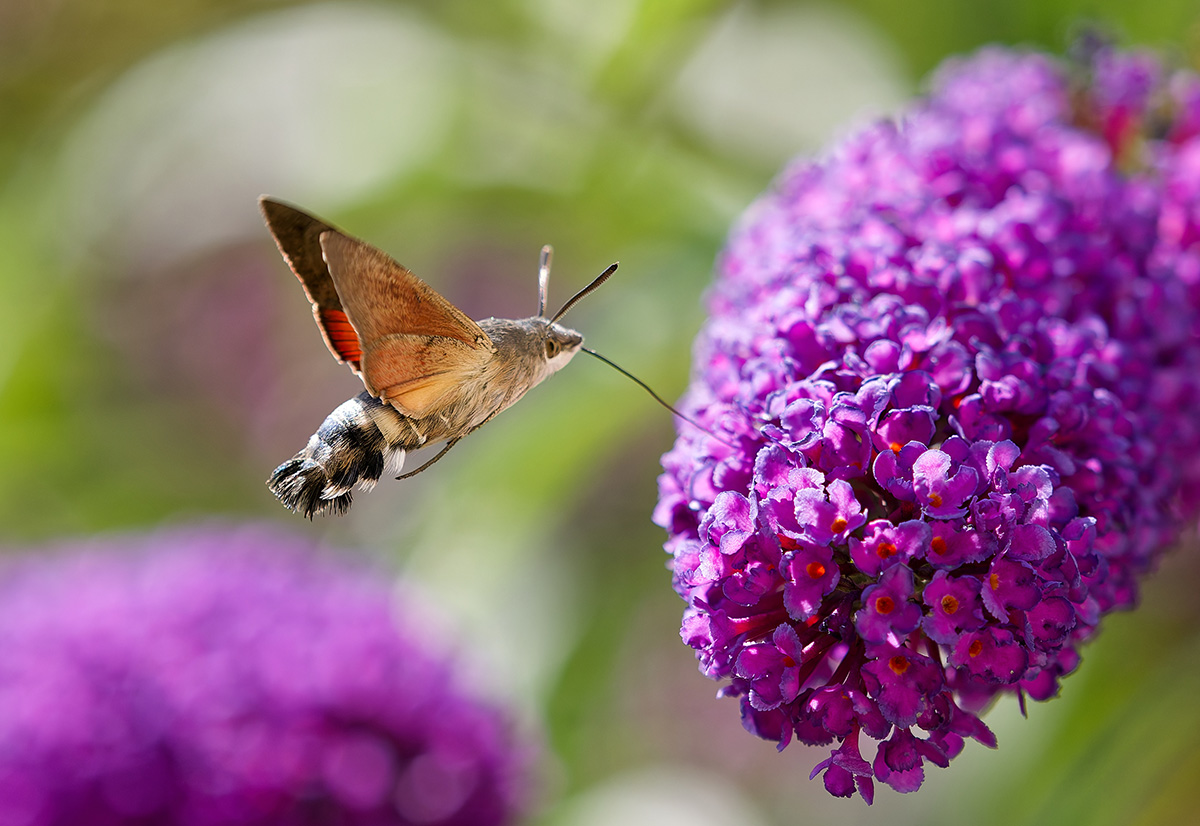
If you’ve ever spotted the Humming-bird Hawk-moth in your garden the chances are that at first sight you really did think it was a humming bird. The Humming-bird Hawk-moth is small, flies very fast and hovers at a slight distance from your garden flowers, supping nectar from their nectaries. It’s a very beautiful creature and flits from flower to flower in the summer garden feeding on verbena, lavender, buddleia and other nectar-rich flowers. Nectar plants are abundant in our gardens to feed this moth, but it’s the larval food plants that are less likely to be present. If your garden borders meadows and countryside then the caterpillar plants may be growing nearby. That helps the Humming-bird Hawk Moth because most of its favourite larval food plants are not really garden plants. It needs bedstraws, but unless you can grow bedstraws (Galium spp) in a meadow area, or maybe in a pot or a rockery, it doesn’t really grow well in most gardens. Another plant that the adults might lay their eggs on is red valerian (Centranthus ruber) and the adults might also get nectar from its flowers. Enjoy this summer visitor right into autumn as it visits the last of the summer flowers for the abundant nectar.
Clouded Yellow Butterfly
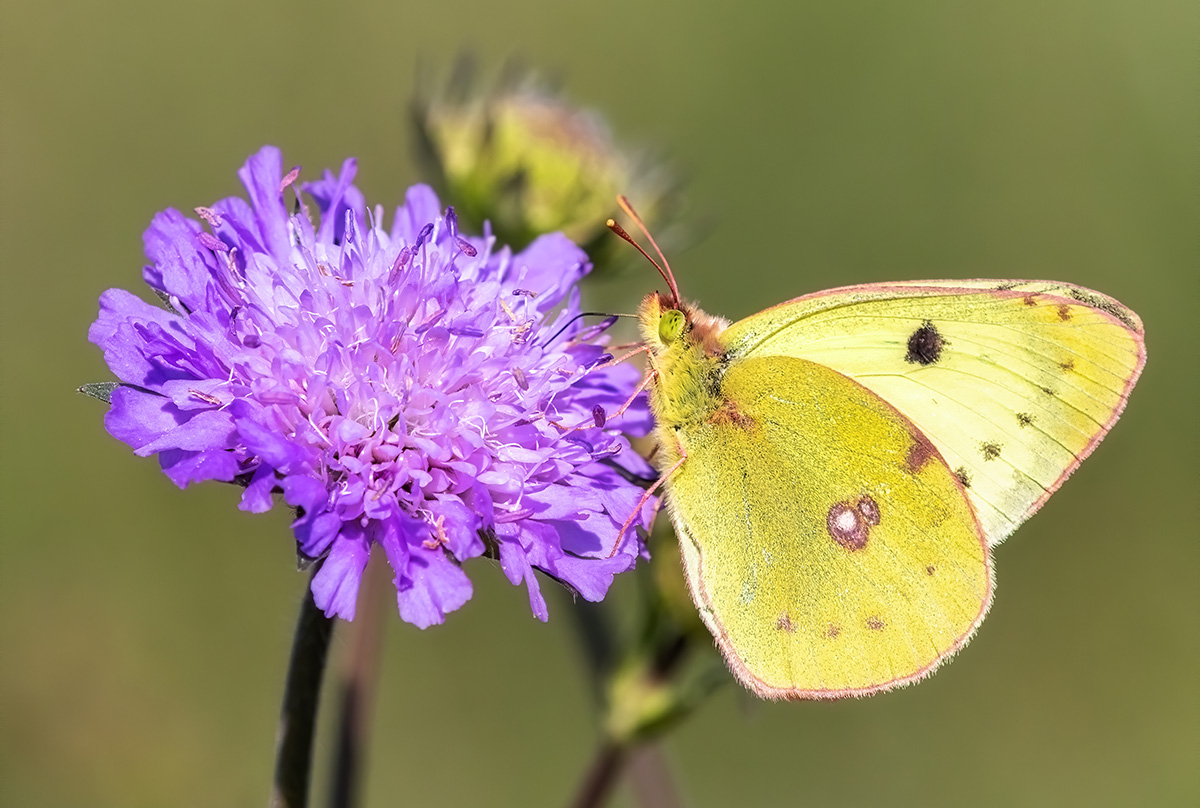
This summer I’ve seen several rich, gingery yellow butterflies in different gardens and grassland environments. It’s the very first time I have ever encountered the Clouded Yellow Butterfly (Colias croceus), and wow what a treat it has been. It’s a fast flier, rarely settling for capturing images, and when it does stop you are treated to a view of it’s rich yellow underwing, with chestnut brown spots. But if you get a glimpse of the upper wing, you get to see the gorgeous, dark chocolate bordered wings. It’s such a beauty. It’s probably fair to say that the summer of 2026 has been a clouded yellow year. This species has a more southerly distribution and may be found in abundance where its larvae food plants grow. It has a preference for legumes and lays its eggs on clovers and sometimes on wild bird’s foot trefoil plants.
Painted Lady Butterfly
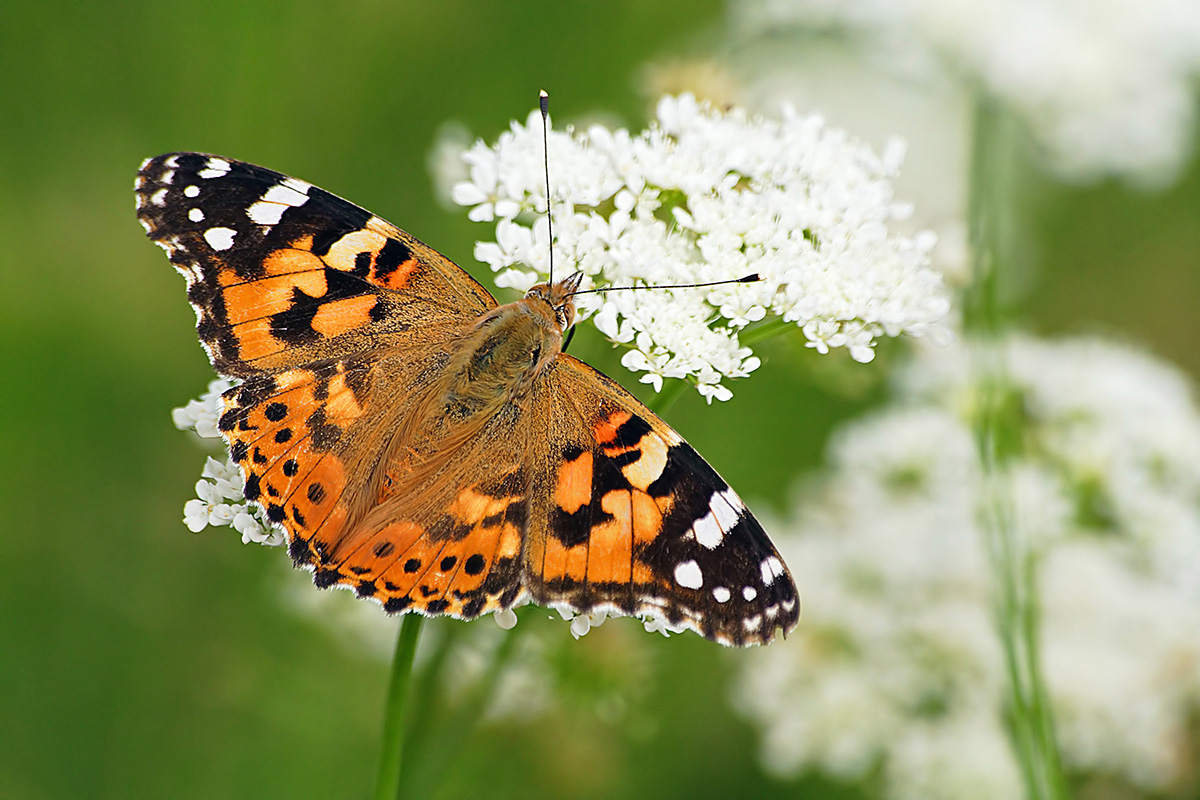
This is a creature that deserves our complete admiration; in fact the story of its remarkable life is the stuff of science fiction and fairytale. The Painted Lady (Vanessa cardui) is not a resident UK species but a migrant, often arriving to UK shores in large numbers each summer. And this summer we’ve seen a huge spike in their numbers. Like many creatures it arrives in Britain to feed. Scientists believe that it sets off from its native lands in north Africa when the density of the population there threatens the availability of food plants.
Special entomological radars were used to track these butterflies flying in later summer at a height of 500 metres where the prevailing wind enabled them to fly south at 30mph. Scientists discovered that the Painted Lady is controlled by day length. Caterpillars developing while the days are getting longer become adults that fly northwards. As the days shorten the emerging butterflies are aware of the need to travel south.
So one individual butterfly doesn’t fly the full 5000 miles to the UK, instead the journey is completed over several generations as a progressional journey. The painted lady butterfly is a large orange butterfly with black tips to its forewings and white and black spots. You can find it between April and October, though it is more common in mid to late summer. Grow plenty of nectar rich summer flowers to provide a nectar bar for garden butterflies. Painted Lady caterpillars feed on thistles, nettles, mallows and viper’s bugloss.
Death’s-head Hawk-moth
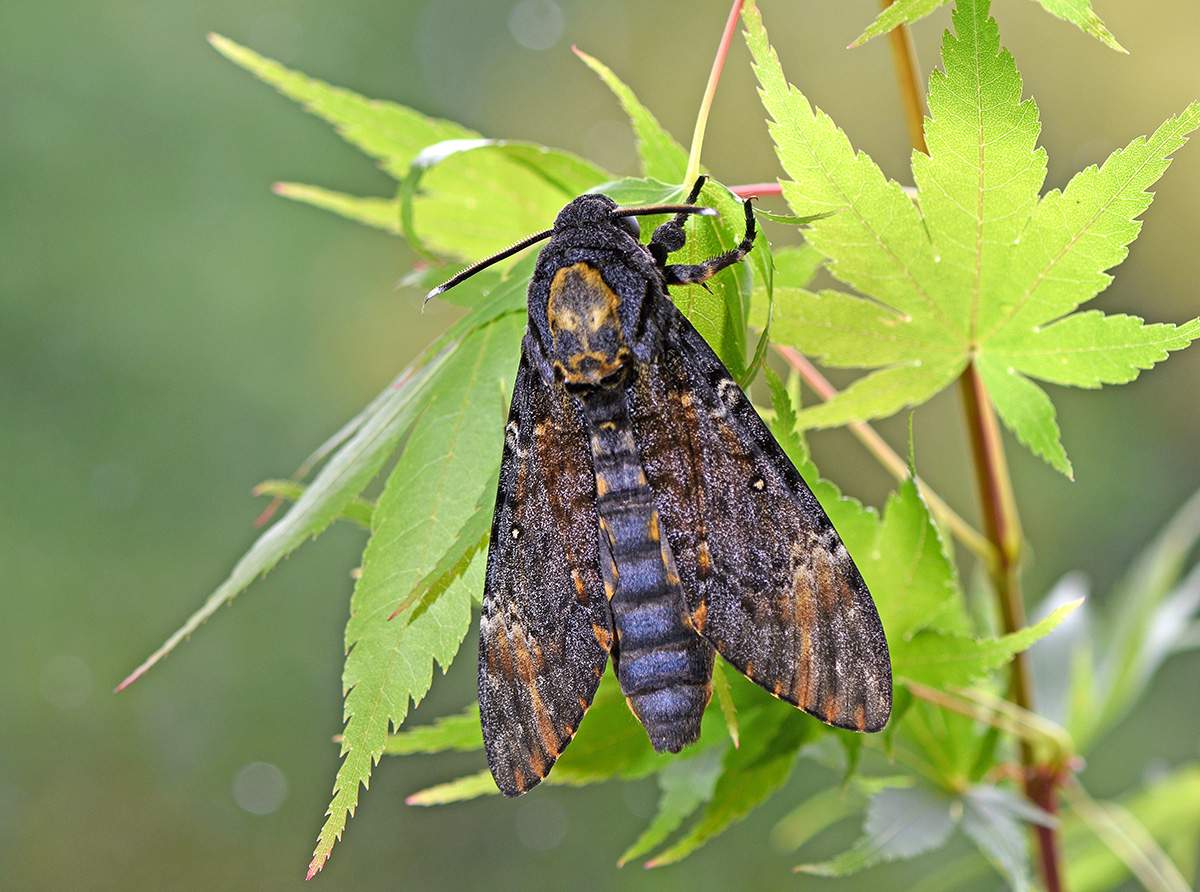
This creature is totally fantastical. But it is also very real, though rarely found in the UK. Its luminous yellow and lime green, and very large caterpillars feed on potato foliage and other members of the solanum family, plus privet and lilac. The adult Death’s-head Hawk-moth (Acherontia atroposis) is huge and is renowned for squeaking when threatened and also for the iconic skull pattern on its thorax. It will enter bee hives to feast on the honey inside the nest. It sneaks in by imitating the smell of the hive so that the guard bees recognise the moth as friend and not foe, and once inside the hive it feasts on the honey stores.
This summer, caterpillars of this extraordinary moth have been found in potato fields and some gardens. They will pupate in the soil but rarely survive a British winter. The Death’s-head Hawk-moth was seen as a dark omen and the moth was also associated with hell. These were the moths that featured in the film Silence of the Lambs. And yet there is beauty in these dark and dramatic insects, look out for them this season and let us know if you find one.