Most adult pollinators need nectar as an energy source and a few eat pollen for a source of protein. So, plants that flower into the autumn and even the winter are a vital source of pollen and nectar for any still active pollinators.
Most bumblebee nests have completed their cycle and died out, but there can still be a few active nests, particularly of the carder bumblebees that have a later lifecycle than many other bumblebees. You might also see a few male bumblebees and new Queen bumblebees on the wing. And in more southerly counties you may have a winter active nest of buff-tailed bumblebees (Bombus terrestris). Though most newly mated Bumblebee Queens from this year’s nests usually overwinter in a hidey hole for several months before emerging in spring, scientists have noticed that sometimes the new queens start nest building in autumn creating a nest that will be complete by spring. While unusual this is happening more frequently. So, if you see bumblebees active in the late autumn or winter months, you may have a winter active bumblebee nest nearby. And that means you may need to work a bit harder to ensure your bees and other pollinators have plenty to feed on. So read on for some great late season plants that will help to feed nectaring insects on sunny days.
Top of the pops
One of the most important plants in our gardens is our native wild ivy. It’s often regarded as a problem when in fact it is a vital food plant for many of our autumn active pollinators. When in flower, ivy provides up to 90% of nectar and pollen needed for all insects. It’s ideal for short tongued pollinators like solitary bees, hoverflies, wasps, hornets and other flies. The caterpillars of the holly blue butterfly eat ivy plants. Even the berries are eaten by blackbirds and thrushes and other wild birds.
Nectar buffet
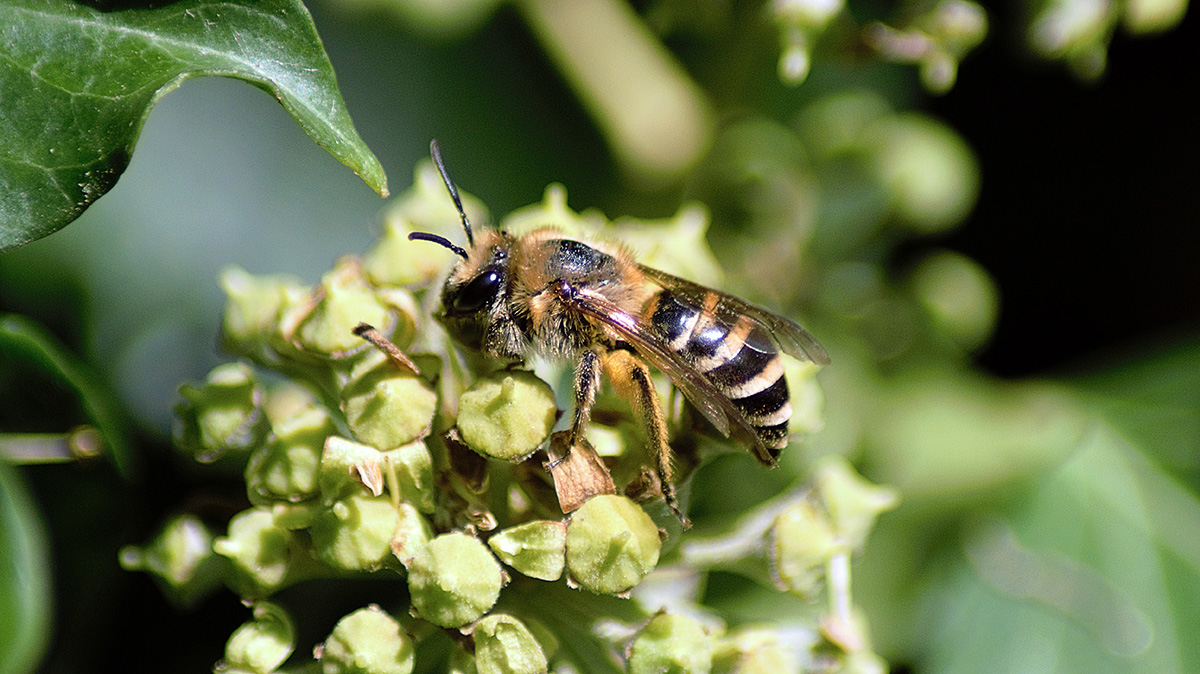
Look closely at your patch of ivy flowers and you will see a huge variety of pollinators feeding on the nectar and pollen of the flowers.
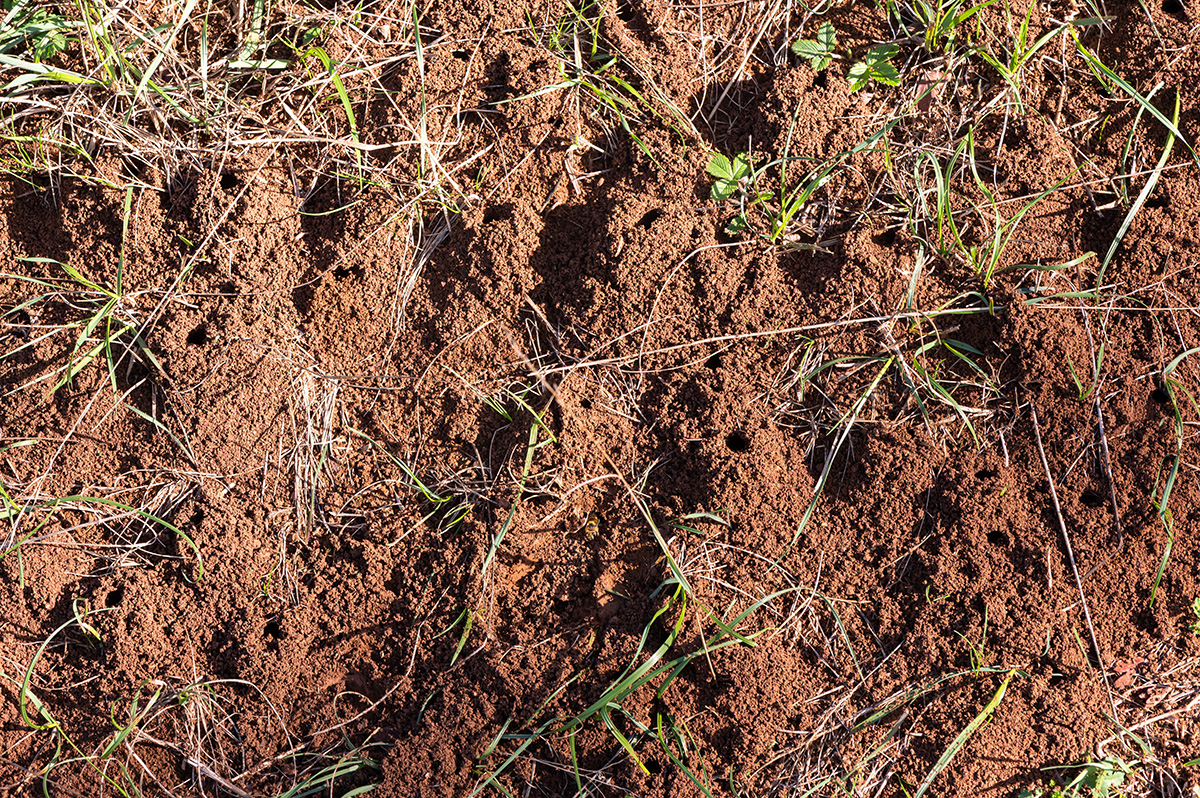
One of them is the ivy bee (Colletes hederae). It’s a small very stripey solitary bee. The ivy bee is the UK’s only autumn emerging solitary bee. The ivy bee nests in well-drained soil and tightly mown lawns. The female bee secretes a type of cellophane and lines her nest with that to waterproof it. The Ivy bee often nests in aggregation – lots of nests in one place.
Bees feed their babies pollen and the ivy bee only feeds its larvae the pollen from wild ivy. It needs wild ivy to complete its lifecycle. It doesn’t use any other pollen.
Other autumnal power plants for pollinators
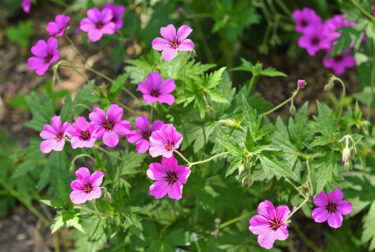
Many of our late summer flowering plants continue flowering into the winter. These are the plants that will provide important food for autumn and winter active pollinators. Great plants to choose include:
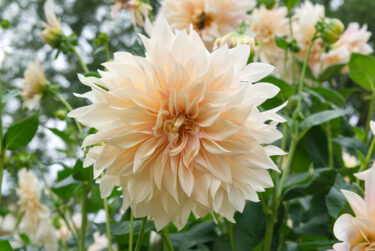
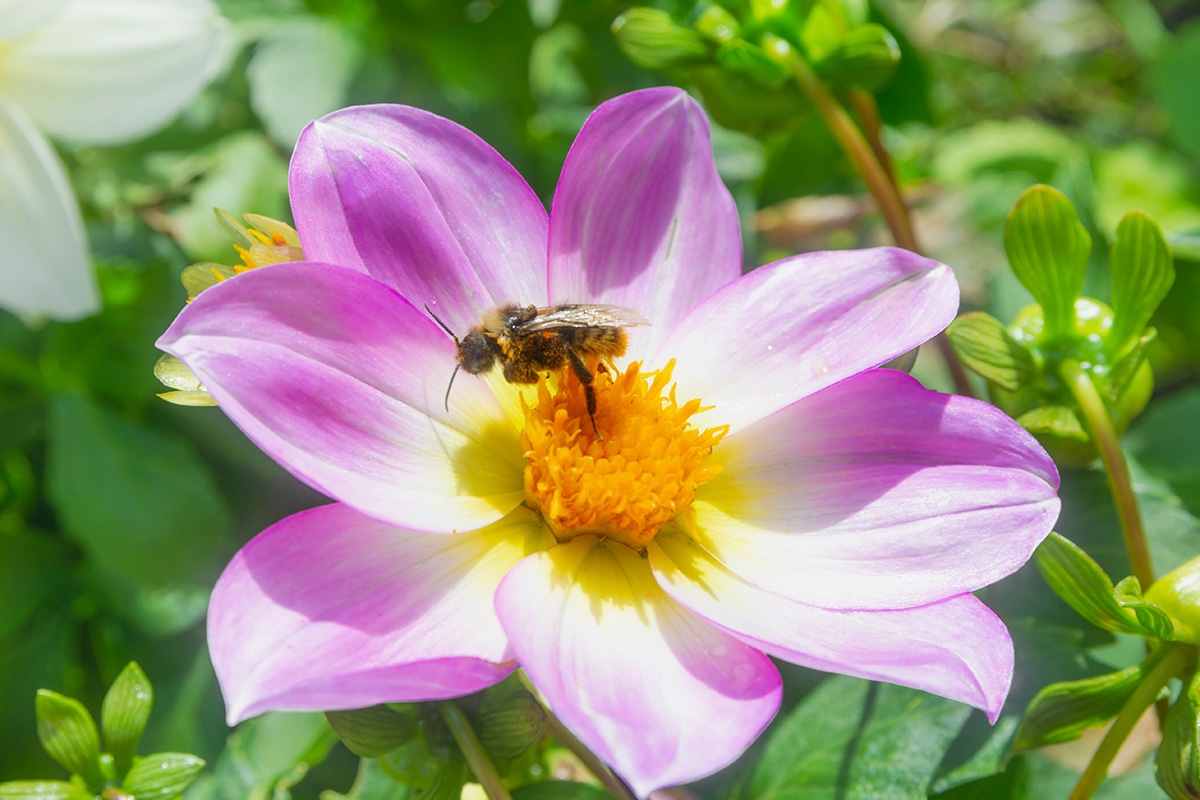
- Dahlias – but choose the single open flowered varieties for easier access.
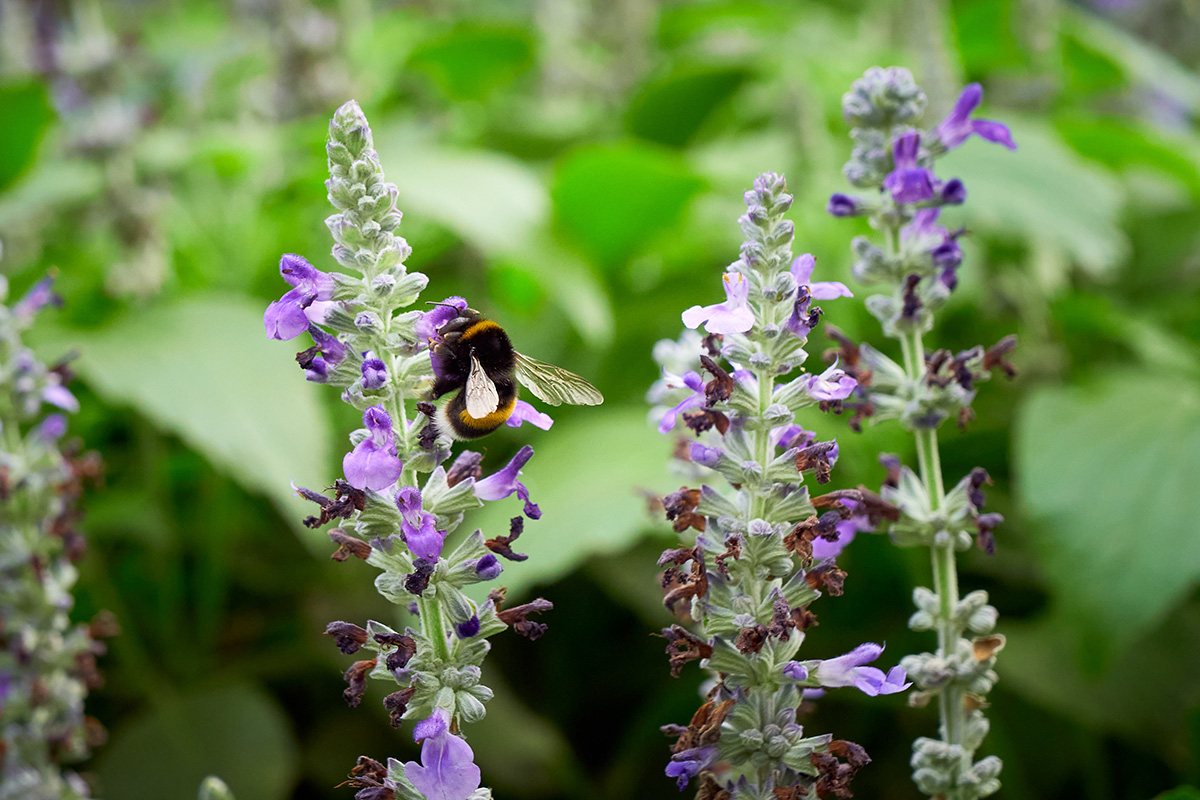
- Salvias – the ornamental sages are fantastic late summer forage for insects.
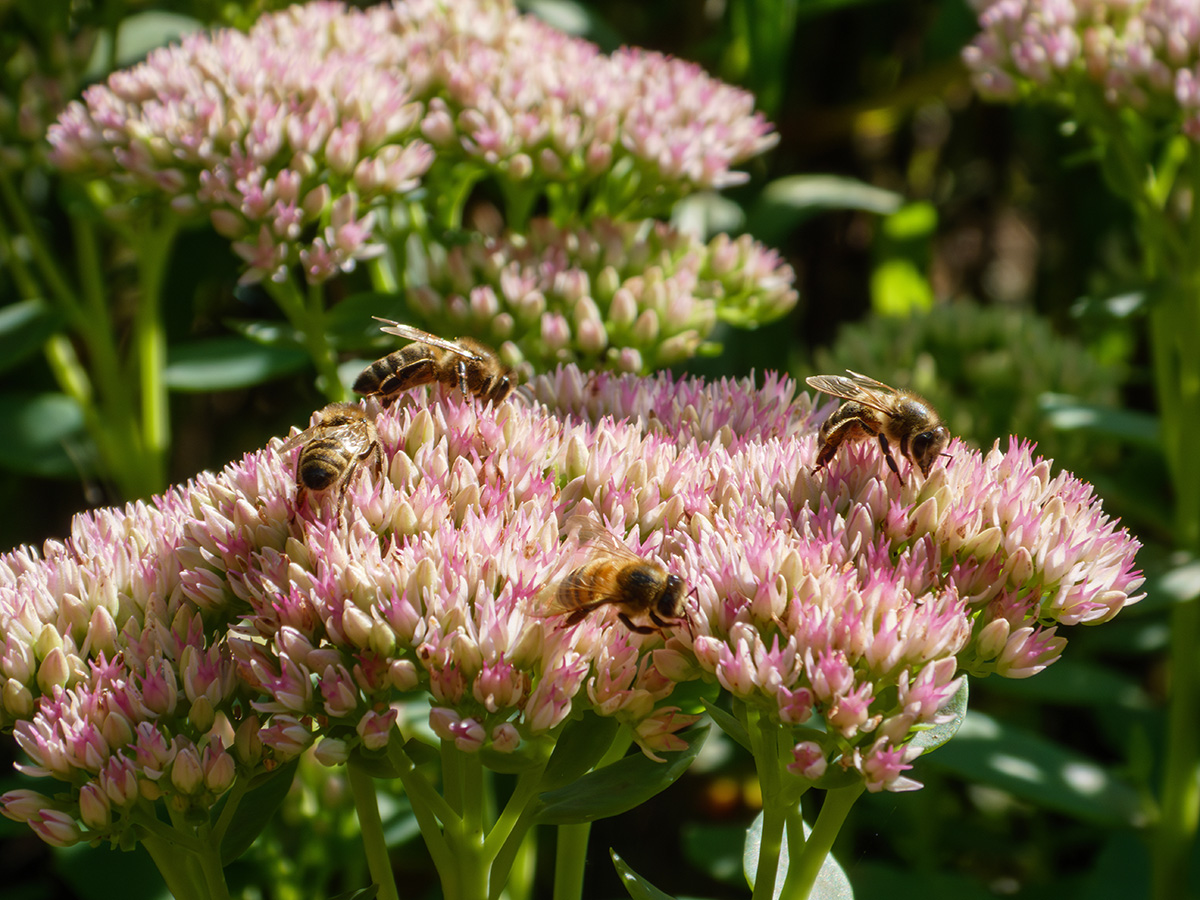
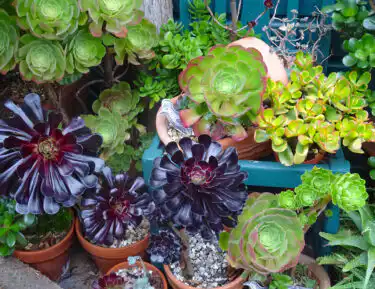
- Sedums – now called Hylotelephium are a reliable buffet for bumblebees and autumn active invertebrates. The big landing pads are full of nectar-rich flowers.
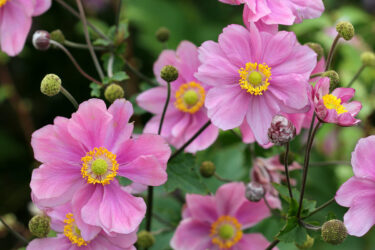
- Asters – the daisy family are great plants for pollinators, flowering into the autumn with pollen and nectar rich flowers.
- Sunflowers – the huge flower heads of sunflowers are very rich in pollen and nectar and a magnet for late active pollinators. The seeds are also vital food for wild birds.
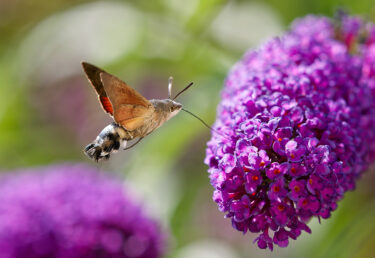
- Honeysuckle – late flowers of honeysuckle offer vital food for the longer tongues moths that are active at dusk and into the night. The long tubular flowers need a long-tongued insect to reach inside for the nectar.
- Echinacea and rudbeckia
- Fuchsias – the flowers are very rich in nectar and ideal for longer tongued pollinators though short tongued bumblebees will nectar rob the flowers by chewing a hole above the nectary and poking their tongues through the hole to soak up the sugar rich nectar.
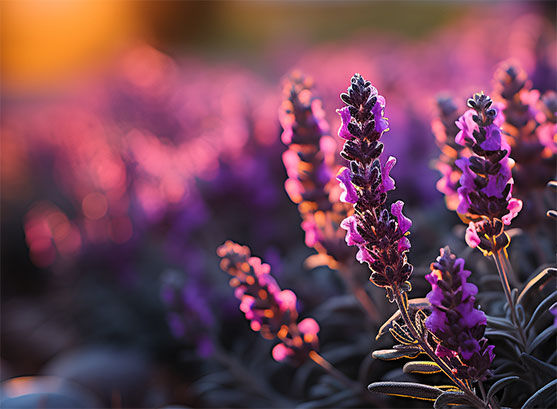
- Caucasian germander (Teucrium hircanicum) flowers into the autumn providing purple spikes of nectar rich flowers to feed pollinators still active at this time of year. It’s a great self-seeder too and a tough and hardy plant to fill gaps in the garden and borders.
- Late forage is essential to ensure that our precious pollinators can complete their lifecycle. But don’t forget that we need to leave the ‘weeds’ too – these are the plants that our native pollinators evolved with. They need each other to survive.