Some plants have more presence and panache than others. Often, it’s down to their growth habit and how they intermingle with your border plants. Think about flower shape when you plant your garden. Plants with tall spires of flowers add the spikey effect in the border, creating height and drama over and above mound forming cushions and clouds of colour.
These border beauties are the space rockets in the garden and produce spike after spike of pure colour and wonder to season your garden with long-term interest year after year.
Investing in some new border plants this season will lift the vibrancy, appearance and blooming power of your garden into new levels.
Here are five of our specially selected new plants for your garden.
Lupinus ‘Rachel de Thame’
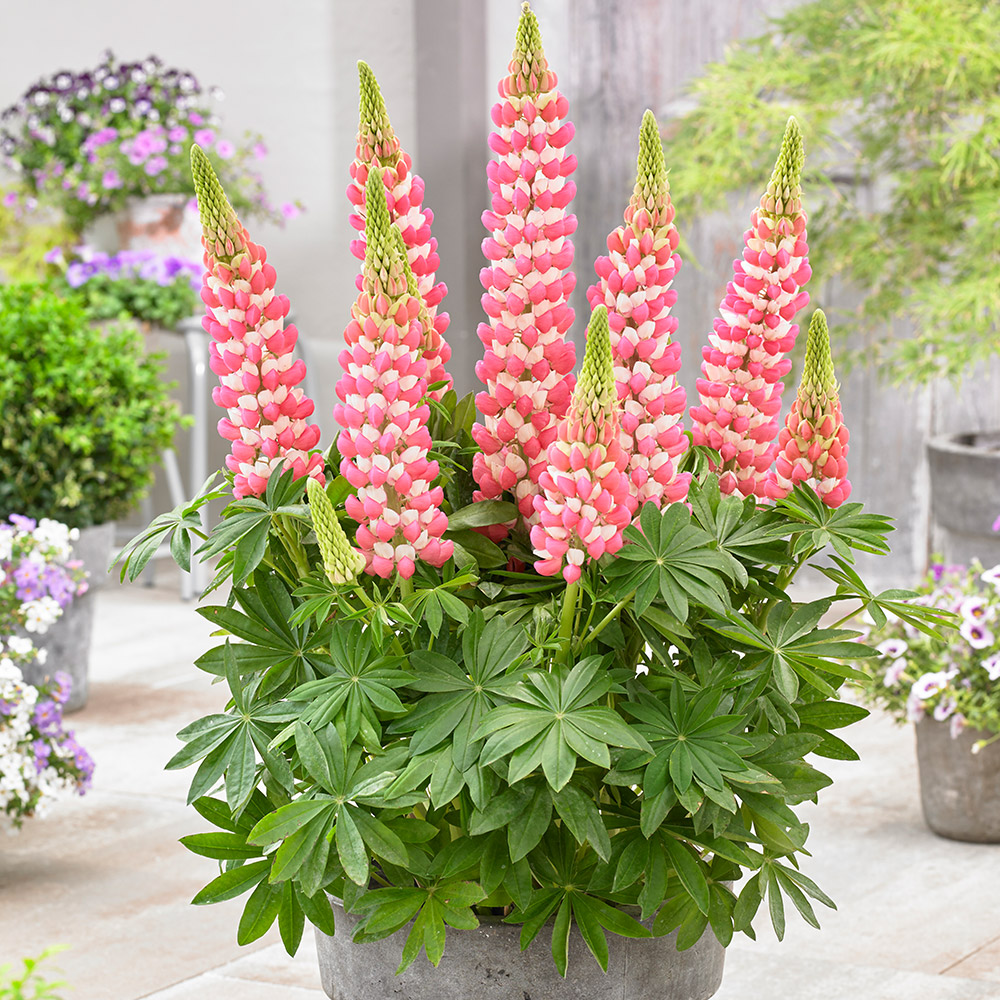
If there’s one plant that can light up a border, it’s a lupin. These reliable plants grow spectacular spires of hundreds of flowers, like fireworks in the border. Lupinus ‘Rachel de Thame’ is a refined and graceful lupin that adds height, drama and traditional charm to early summer borders. Its tall, unusual, cerise pink and pale pink spires are densely packed with beautifully formed flowers, rising above fresh green, attractive foliage to create a striking flower bed of rockets. It’s a beautiful form, named after the Gardener’s World presenter, Rachel de Thame.
Perfect for a cottagey corner, or herbaceous border, it’s a pollinator magnet too, as its flowers are rich in nectar. Cut off the dead flower heads and this one will repeat flower later in the season. It’s a reliable, beautiful variety that will fill your garden with border beauty year after year.
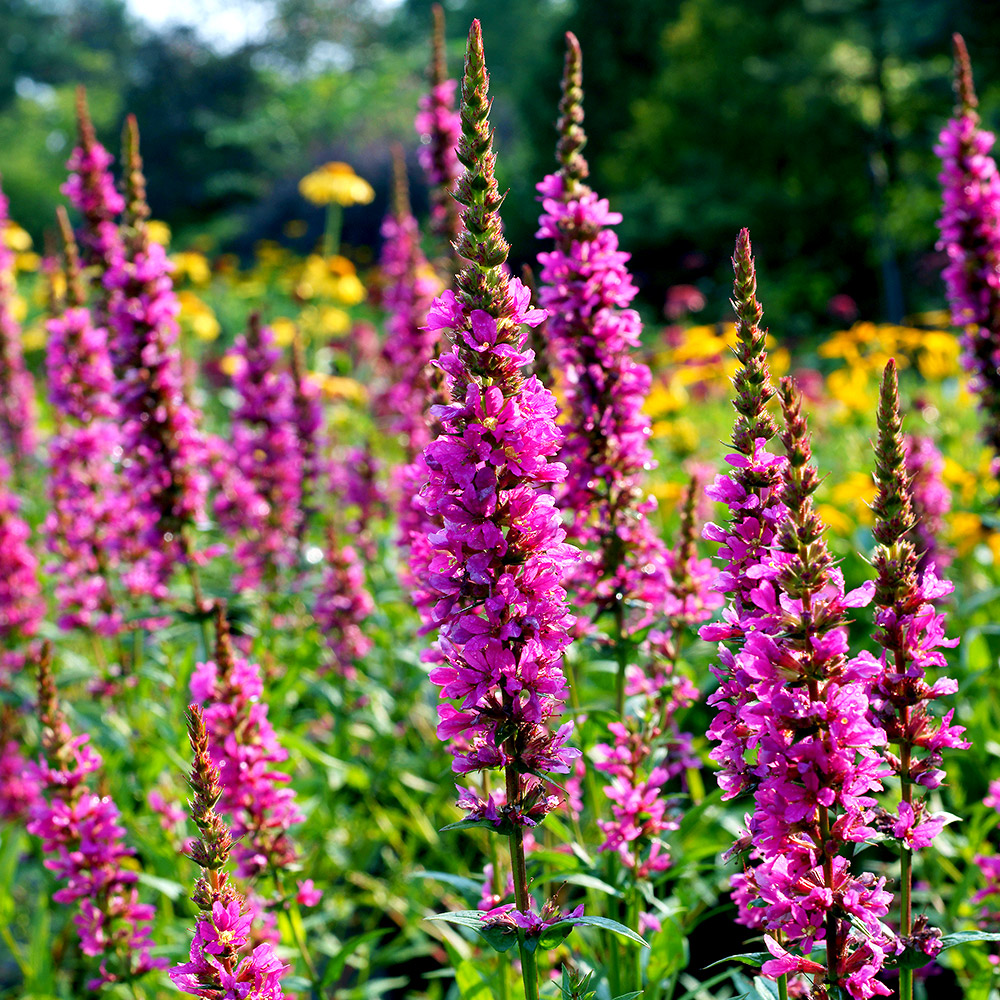
Lythrum salicaria ‘Robert’
Every gardener wants low maintenance, high performing plants, and this one ticks all the boxes. Lythrum salicaria ‘Robert’ is a compact form of loosestrife, covered in upright spikes of vivid rose-pink flowers throughout summer. It’s a moisture loving perennial and ideal to plant near the pond or in a boggy area. Unlike the taller loosestrife species, Lythrum salicaria ‘Robert’ maintains a neat habit, making it also ideal for garden borders as well as wild or damp settings. The cerise pink flower spikes are rich in nectar and adored by bees and pollinators, which bring life and movement to the garden at peak season. Snip off the dead flower heads to keep it flowering and extend the flowering season. This one is reliable, dramatic and easy to grow.
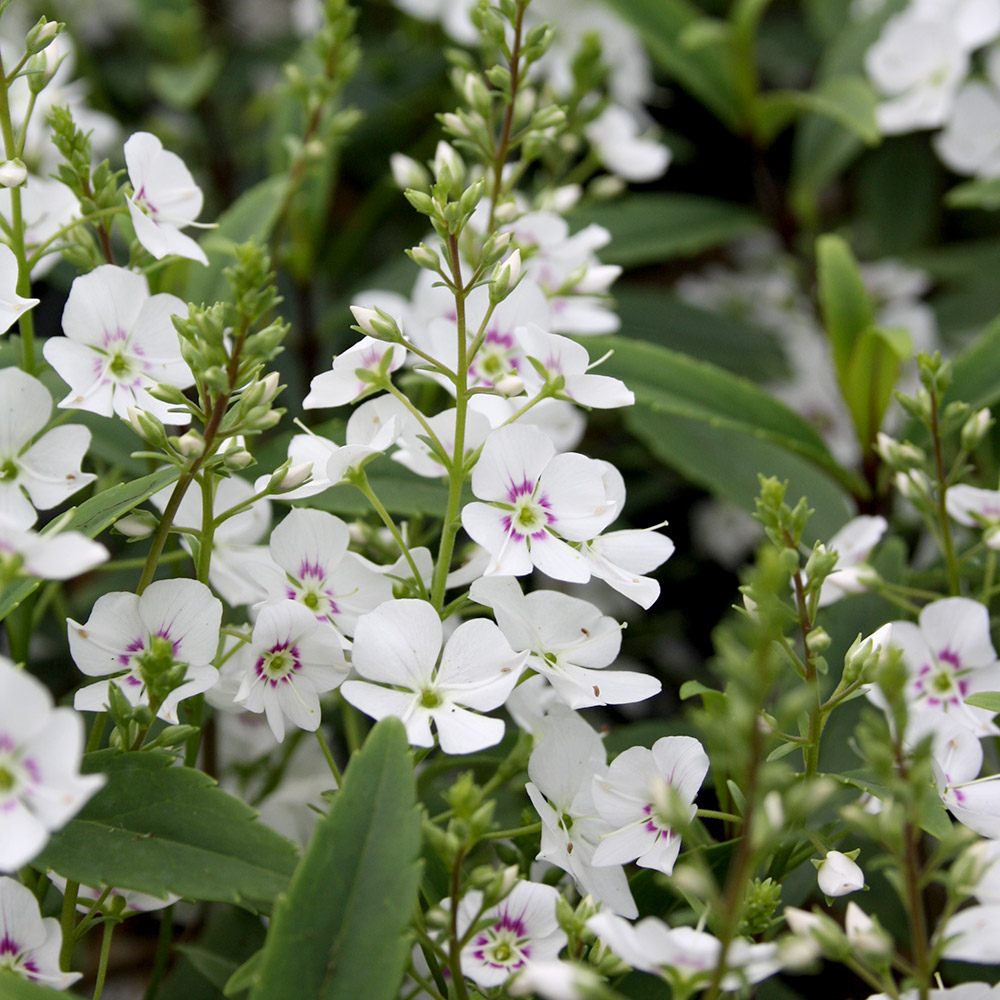
Parahebe ‘Snowcap’
For something a bit different, consider this pretty Parahebe ‘Snowcap’. It’s the perfect way to add a touch of cool white into your planting. This versatile, evergreen perennial produces delicate white flowers in dense clusters from summer through early autumn. Its long -lowering season and its neat, low-growing habit makes it perfect for pots and containers, rockeries, or planting at the front of borders. It has great wildlife value with the nectar-rich flowers attracting bees and other pollinators, adding life and movement to the garden. Make it a focal point of your potted plants, or use it as a table centre-piece in a lovely planter.
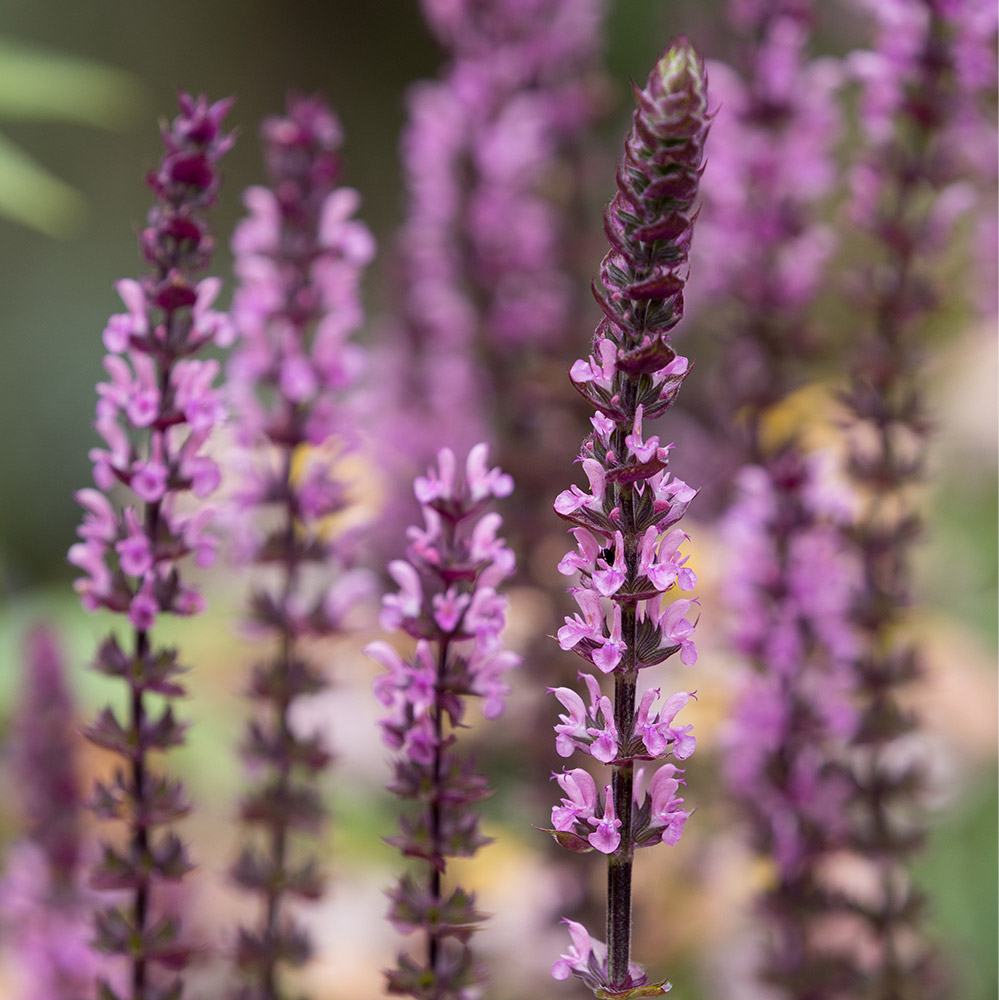
Salvia nemorosa ‘Caradonna Pink Inspiration’
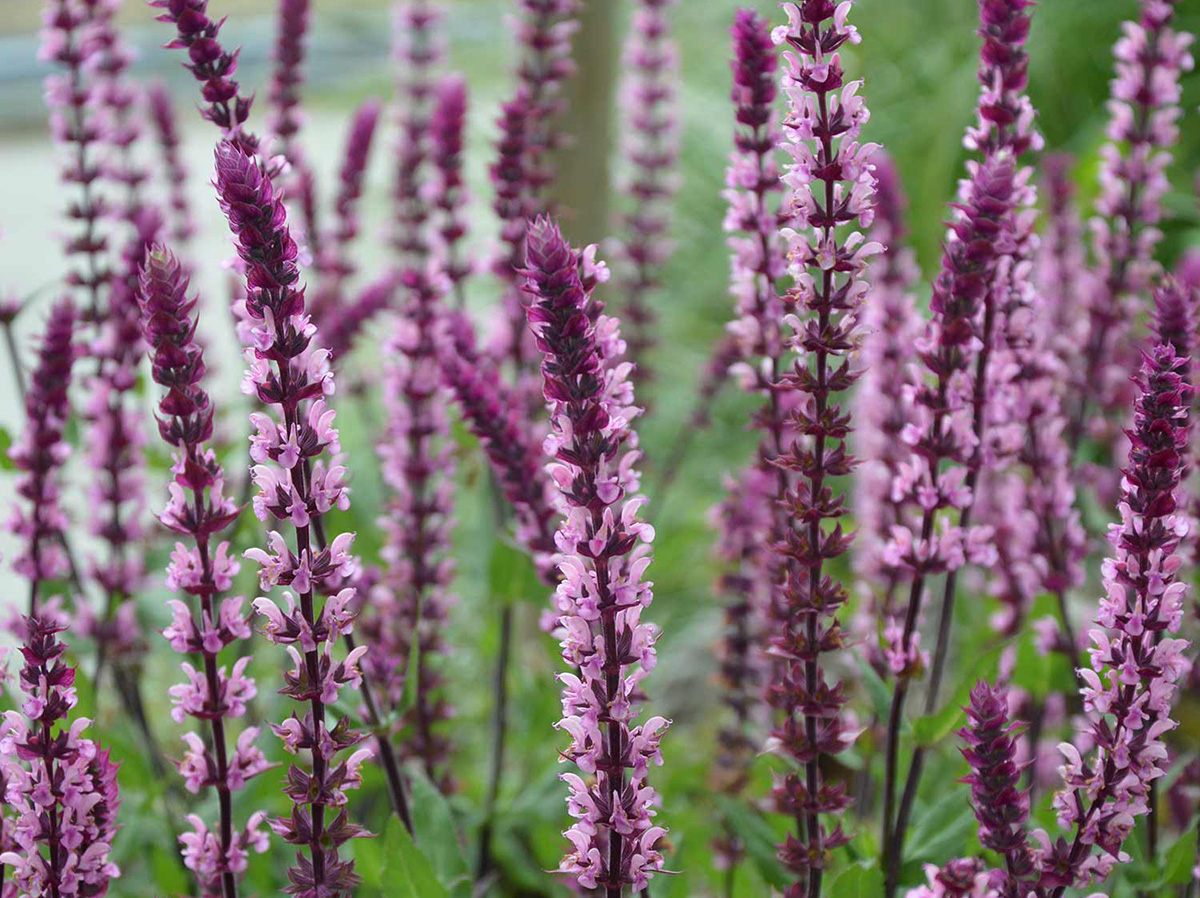
This ornamental sage is a stunner. It’s rich mauve pink flower spikes bloom from early summer into autumn on compact, mounds of aromatic foliage. Be sure to scrunch a leaf or two as you pass, or plant it beside the path where you brush the foliage as you walk. Year by year the clump will establish and grow into a strong reliable plant. The flowers are rich in nectar providing sustenance for pollinators and especially bees. Remove the spent flowers to extend the flowering period and bring some indoors for a pretty floral display in your home. This one’s low maintenance, high performance and a great border beauty.
Nepeta ‘Purrsian Blue’
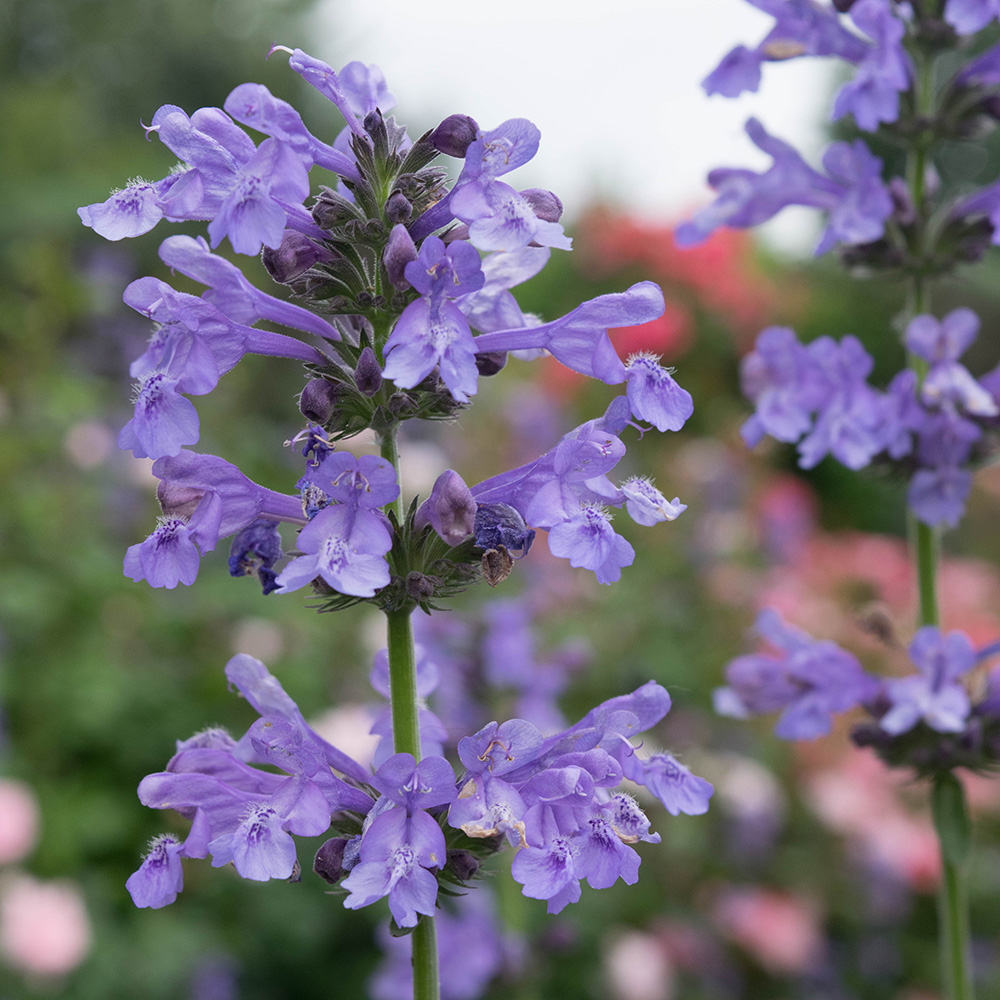
This one’s a stunner. It’s a great variety of this popular garden perennial and is a more compact and bushy form, producing masses of pale blue catmint flowers from late spring into autumn. Nepeta ‘Purrsian Blue’ combines beauty, fragrance and wildlife effort effortlessly. It responds well to the Chelsea Chop, which extends its flowering period, making it even more beneficial to the butterflies and bees that rely on its rich nectar. The longer, extended flowering period ensures months of colour and interest, making it ideal for mixed plantings, cottagey borders and sunny patio planters. Tidy mounds of aromatic foliage add texture and fragrance to flower borders, cottage gardens, and container plantings. It thrives in full sun with well-drained soil. Trim after flowering for a second, or third flush of flowers.