As gardeners we love the little birds, the finches and tits, the robins and wrens, but the big birds are magnificent and many of them live in and around our gardens.
The Corvids include an eclectic bunch of incredibly intelligent birds. They are members of the crow family (Corvidae spp) and aren’t always welcome in our gardens.
One of the reasons we don’t always like them is because they can wreak havoc on some of our garden wildlife. Magpies for example are known to take the eggs of songbirds. But they have a hugely varied diet and will adapt their food source depending on their needs and the seasons.
It’s always good to consider concerns from every angle and one of the most important thing about our corvid friends is that they scavenge on carrion and roadkill, removing the bodies of dead creatures and preventing the spread of disease.
But for gardeners corvids are also important pest control feeding on rodents and many insects too. If you’ve got slugs and snails in your garden, these are a vital food source for these incredible birds. In effect the corvids are free, natural pest control.
These are intelligent birds, they have big brains and can solve puzzles and can even recognise faces. Some of them can ‘talk’ too. Here are five of the more common corvids in the UK.
Raven (Corvus corax)
One of the most majestic birds that is often high in the tree tops or soaring over our gardens is the raven. You might have heard it cronking high up as it flies up high. It’s an unmistakable sound. Ravens are very vocal and can mimic other sounds too. I remember hearing some ‘talking’ at London zoo decades ago and was completely mesmerised.
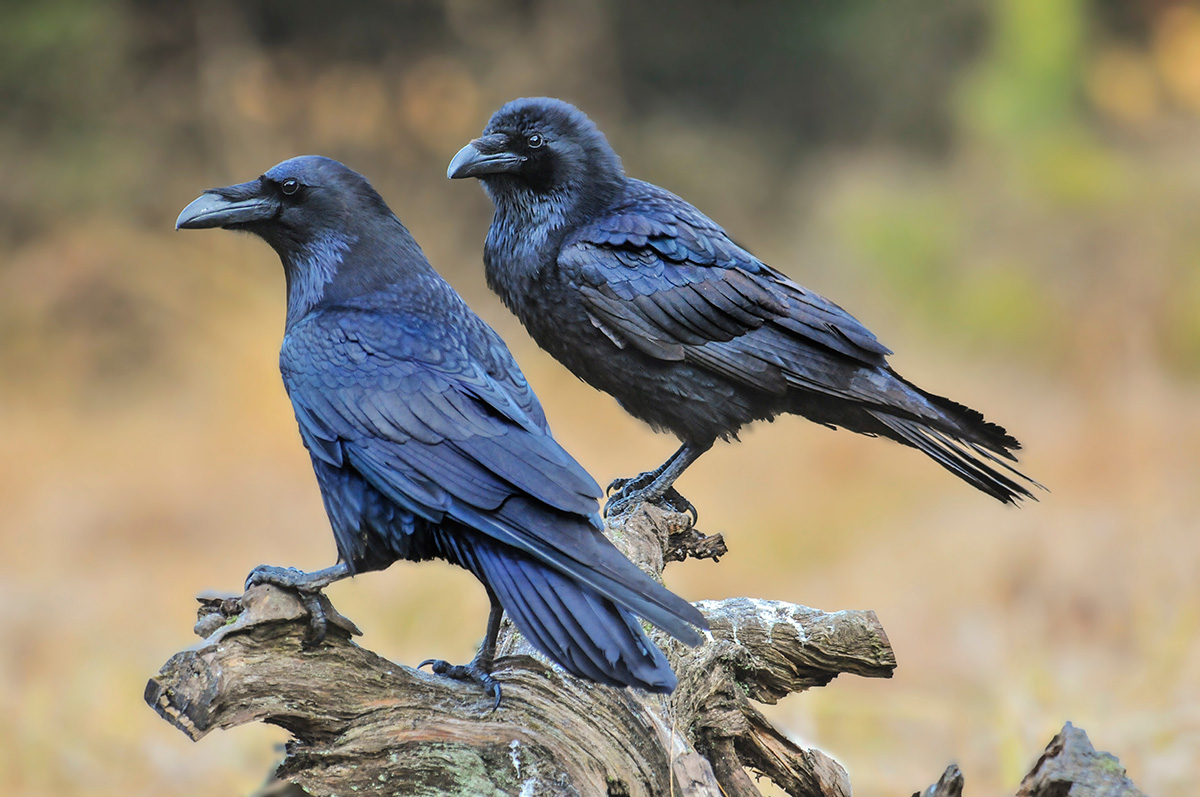
Ravens are the biggest species in the crow family. They usually mate for life and exhibit strong bonds with their offspring and their partner, becoming protective and territorial. Ravens can mimic speech and other sounds. Ravens will hunt rodents and feed on roadkill and other carrion. They make huge nests of sticks and moss, high up on ledges and in large trees. Once built the nest may be used multiple times.
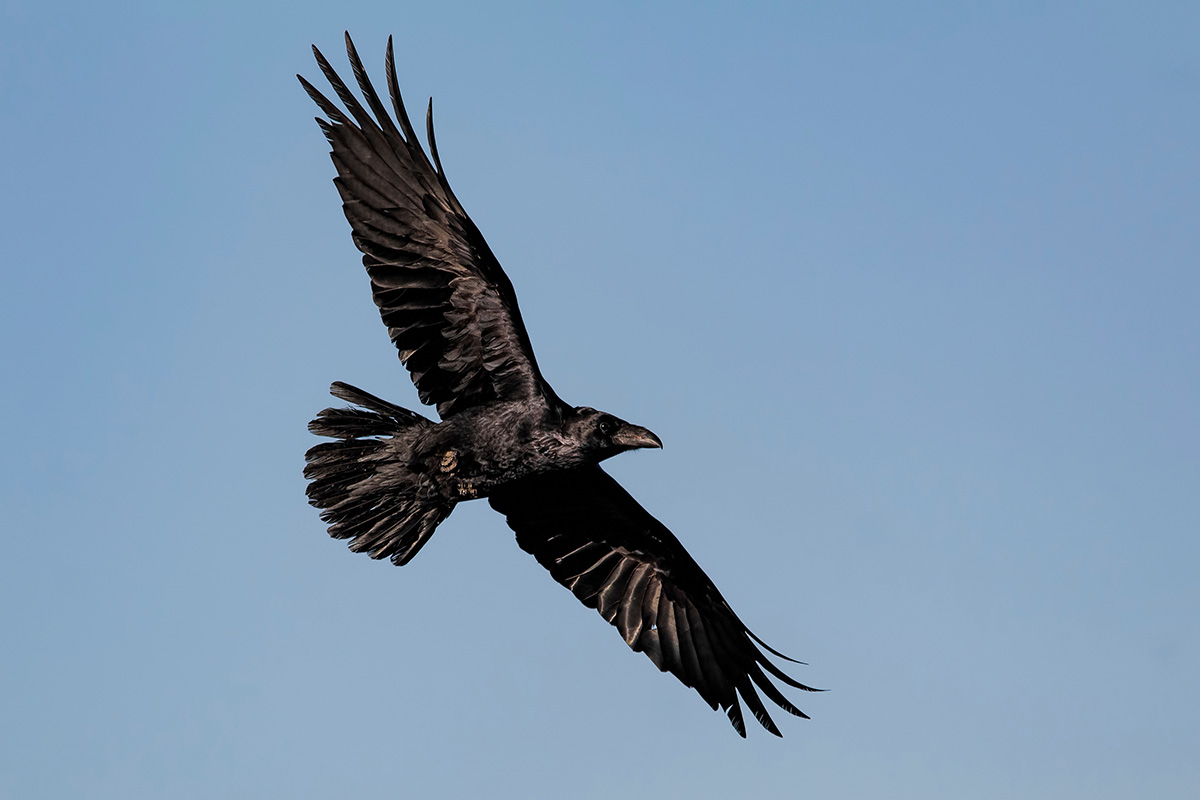
Look up in the sky when you see these birds soaring (usually alone or in pairs) and diving, a diamond shaped tail is one of the distinguishing features of these magnificent birds. Their plumage is black with petroleum-like sheen (see main image) and their beak is huge and thick. Ravens tend to eat carrion and roadkill, but will also eat insects, eggs and rodents.
Carrion Crow (Corvus corone)
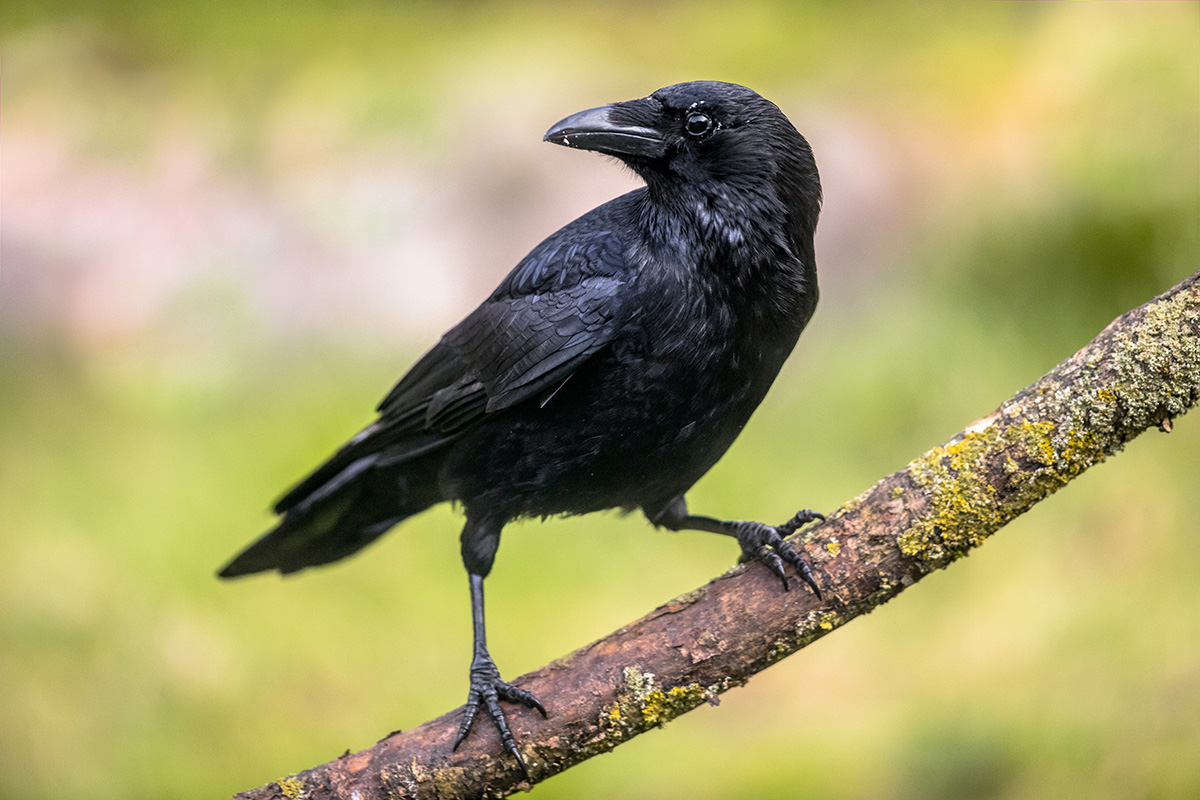
This black beauty will visit our gardens when they feel safe, feeding on bird food or natural insect food and returning for more. Crows are often solitary, but may also be in pairs and will soar and fly in flocks of loud calling birds. They can and will fly low and straight over the ground searching for food with a slow wing beat. They mostly eat carrion, hence their name, but will also feed on scraps, insects, worms, seeds and fruit, eggs and young birds. They may dive bomb a bird table for food. Crows make stick nests in trees and are quite secretive. They are large black birds, with big blunt beaks. They are territorial and very protective of their nests and are often seen mobbing and dive bombing buzzards and other large birds in the sky.
Magpie (Pica pica)
I can’t be the only one that salutes the Magpie when I see one, or start to recite the little magpie rhyme, One for sorrow, two for joy, three for a girl and four for a boy”, always hoping to see more than one of these enigmatic birds. Magpies get a bad rap. They eat songbird eggs. But so do many other creatures. And like all of our wildlife they are part of the natural balance. Magpies keep our gardens clear of many ‘pests’ including leatherjacket larvae in the lawn and devour masses of caterpillars and even slugs and snails. But much more importantly after years of research the RSPB has shown that magpies do not impact the overall populations of songbirds and are not the cause of songbird decline. Magpies are also part of nature’s clean-up crew and help devour road-kill and other carrion.
There’s something very dramatic about the striking livery of a magpie. They are so distinguishable from other birds with their black and white colours and their chattery vocals. But a closer look at their black plumage reveals an iridescent spectrum of colours from blue and green to purple.
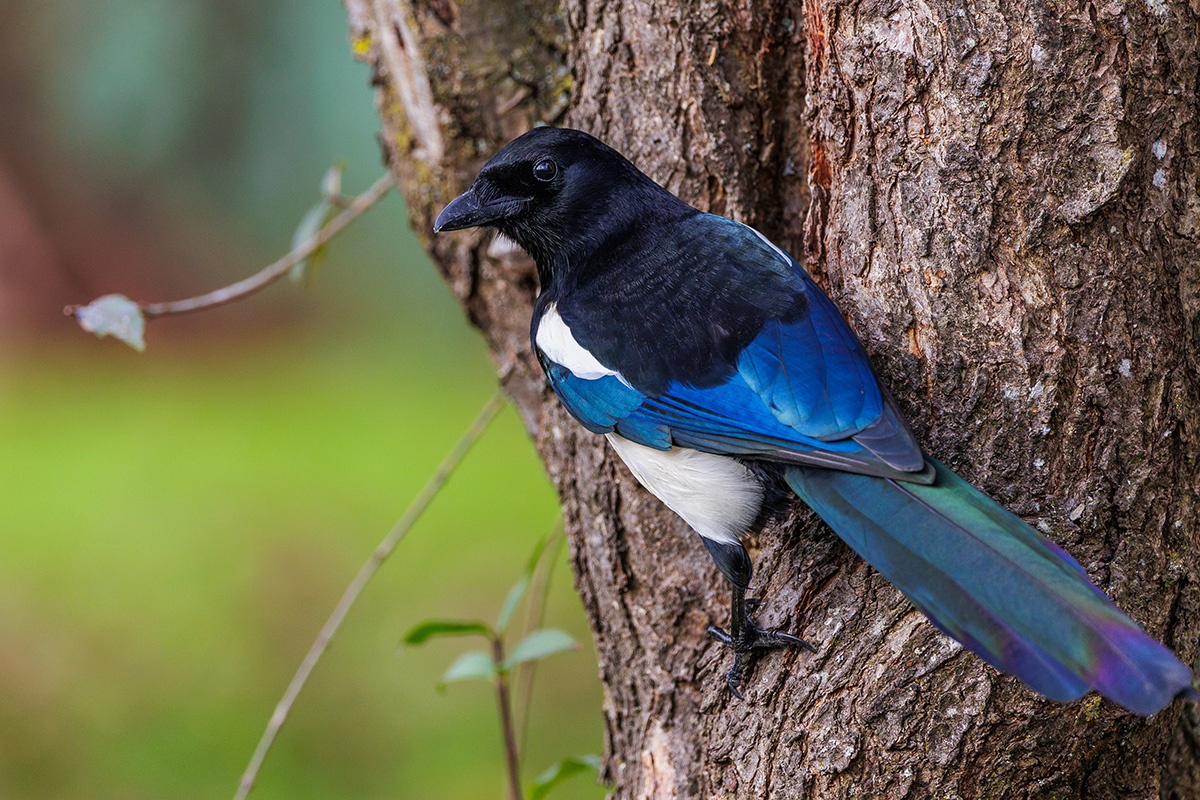
Like many of the corvids, magpies mate for life and stay close to their territory. Magpies stash all sorts of snacks in tree bark and crevices, that they return to later. By spreading their food sources they reduce the risk of losing it to scavengers.
There is a vast array of folklore surrounding these enigmatic birds, but it’s important to just enjoy their presence and support them if you can. Keep them safe with fresh clean water. Leave the leaves to support their natural food sources.
Jay (Garrulus glandarius)
We have Jays in the little wood behind our house. These beautiful birds are very shy and not easy to spot, but if you sneak outside and disturb them you get to see a flash of blue and dusky pink as they disappear into the trees. Their distinctive high pitch screaming chattering pierces the peace as they scrap with other birds and forage for food in the woodland. I don’t think I noticed them before we moved near the woods, but now they are a part of our daily lives.
Jays are very much a woodland species but often rarely seen. Of all the corvids the Jay is the most colourful, but also the least seen and actually quite small compared to the other corvids, about the size of a pigeon. Look out for a flash of white and the pinky feathers and a bright blue wing panel all at once. Coupled with its screaming call it is unmistakeable.
Jays have a long tail and a black moustache. They love acorns, but also eat insects, seeds and small rodents. They nest in the fork of tree branches and make their nests from twigs.
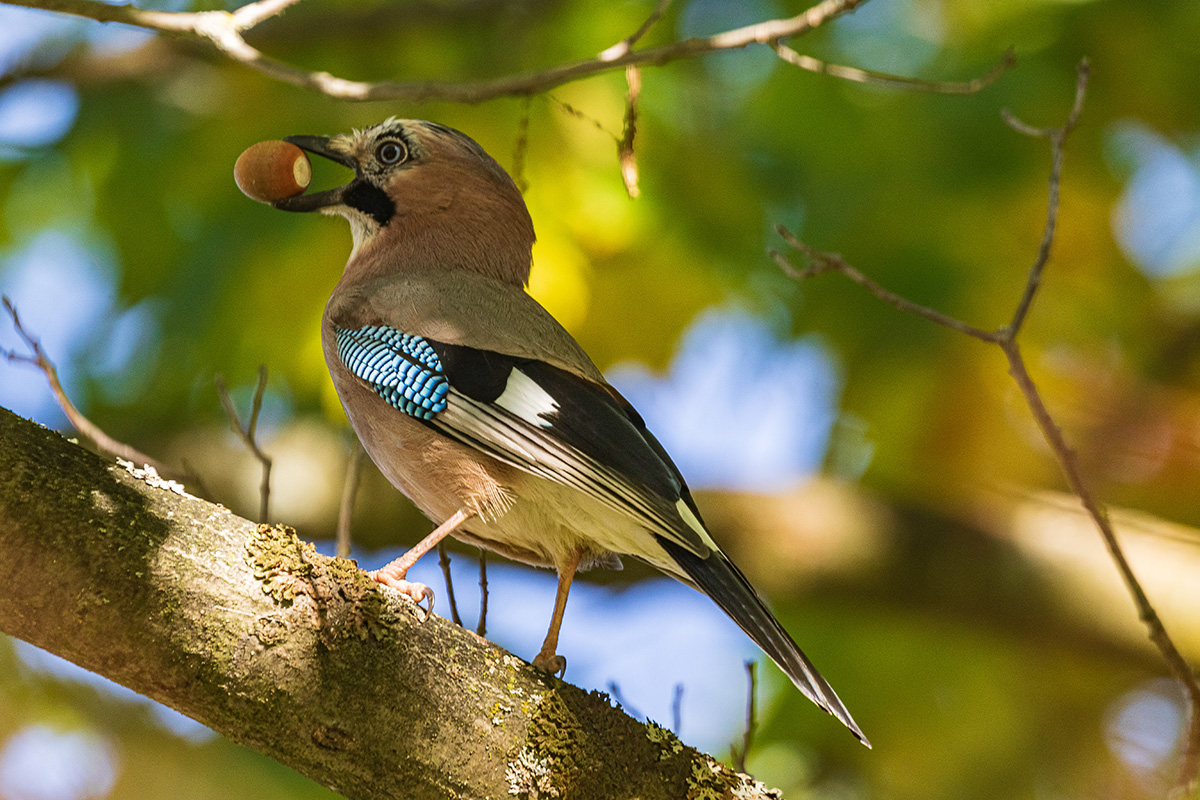
Jays often frequent oak woodlands and are known to collect and bury thousands of acorns for their winter food. Much like the squirrel the birds seem to forget the location of their stash, or maybe they don’t need them all and so instead their secret cache enhance the distribution of the majestic oak tree. Or maybe that’s the plan?
Jackdaw (Corvus monedula)
Jackdaws are the jokers of the corvids. They are cheeky, very clever and can cause total havoc with their noisy riotous antics. They nest in random cavities. Our local jackdaws lifted the heavy roof tiles from our neighbours roof and built a nest in their loft. They hang out in gangs in the tall trees near by and make stick nests in chimney stacks around the village.
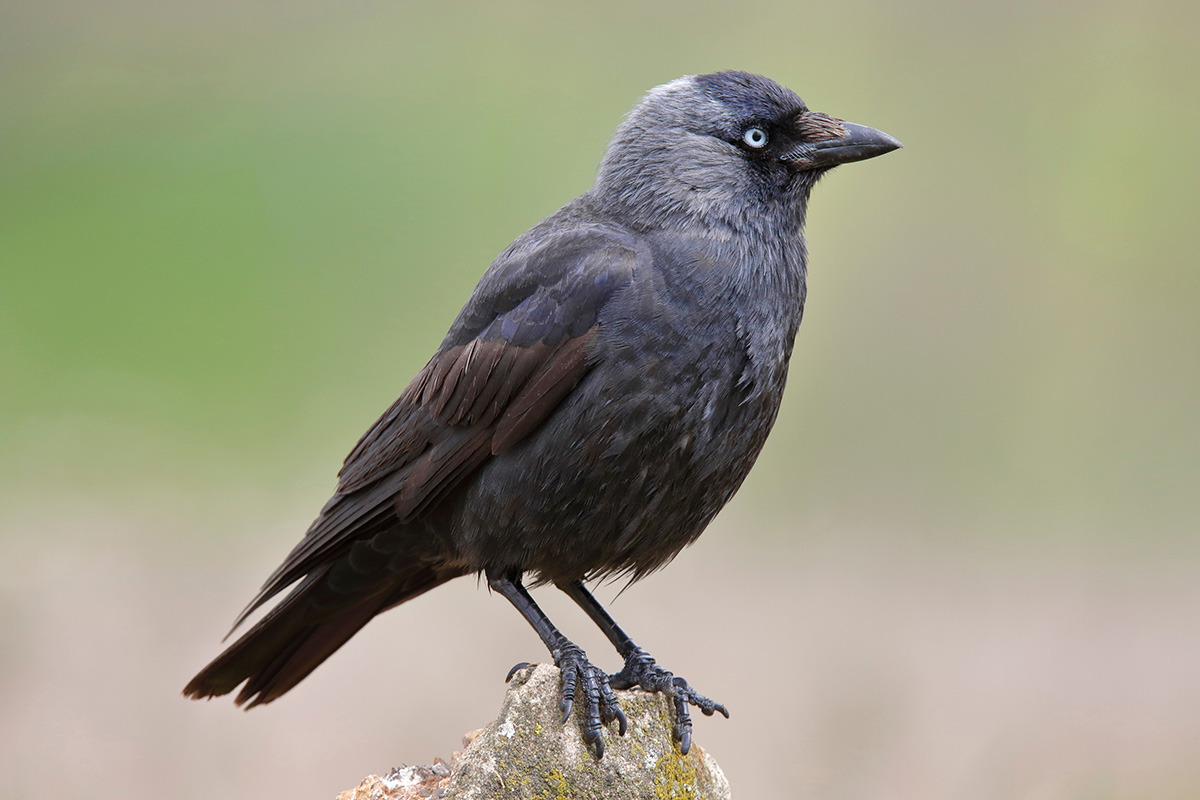
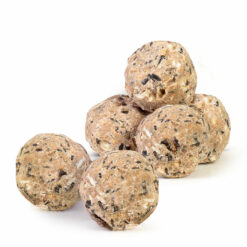
The jackdaws are the smallest corvid in the UK, but they make up for that with their rowdy behaviour, like a gang of teenagers messing about. They make a loud chat with a clear, almost metallic Tchack sound. The birds are dark grey with clear blue eyes and a grey balaclava. They will raid your bird feeders, especially if there are suet balls on offer. But they also devour natural food like insects, grubs, seeds, berries and fruit. Jackdaws love chimney stacks and will often drop sticks into the cavity, making an intricate stick nest across the top.