Gardening can sometimes seem a bit complicated. Those ‘in the know’ often use gardening terms and words that are unfamiliar to less experienced gardeners and garden owners.
Annual: A plant that completes its life cycle in one season or one year.
Bare-root: Plants that have been grown in the ground, dug up during their dormant period and supplied without soil around their roots.
Biennial: A plant that grows for two years, growing leaves (vegetatively) in the first year and flowering and setting seed in the second.
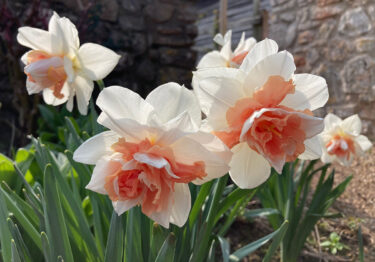
Bulb/corm/rhizome/tuber: Underground food storage organ of some plants, such as daffodil (bulb), crocus (corm), agapanthus (rhizome), dahlia (begonia).
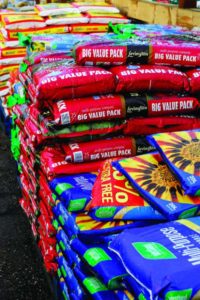
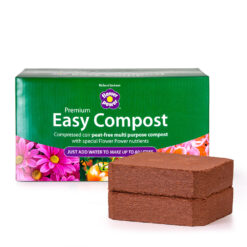
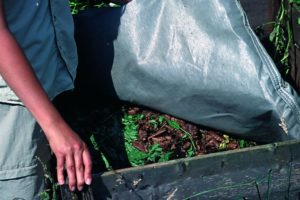
Compost: Used to describe several things! Garden compost is garden and household organic waste rotted down in a compost heap or compost bin. Potting compost is a blend of organic and sometimes inorganic materials used for growing plants in containers.
Cross-pollination: The transfer of pollen from the male reproductive organ (anther) in the flower of one plant to the female reproductive organ (stigma) of another plant.
Cultivar: Short for a cultivated variety, a plant variety that has originated in cultivation (usually from controlled breeding), rather than in the wild (see Variety).
Deciduous: Plants that loose their leaves in autumn or winter.
Dividing/division: Usually done to mature herbaceous perennials, splitting the plants apart to make several smaller plants.
Ericaceous: Plants that need acid/low pH soil (acid-loving) and will not tolerate alkaline/high pH soils (lime-hating), such as rhododendrons, camellias, blueberries. Ericaceous compost contains no lime.
Ericaceous compost: Potting compost free of lime, suitable for growing lime-hating, ericaceous plants.
Graft union: The point (sometimes called the knuckle) at which a cultivar (the scion) is grafted or budded onto a rootstock, such as with roses and fruit trees.
Half-hardy perennial: A long-lived herbaceous plant that is unable to tolerate frost, but is usually able to tolerate lower temperatures than a frost-tender plant, such as pelargonium (geranium) and bedding fuchsias.
Herbaceous perennial: A long-lived, non-woody plant.
Maiden whip: One-year-old tree that hasn’t developed lateral branches (see Whip).
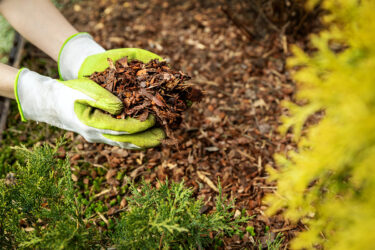
Organic matter/bulky organic matter: Material of animal or plant origin – such as compost, leafmould or manure. Used to improve soil structure and mulching.
Perennial: A plant living for more than two years.
Pollination: The transfer of pollen from the male part of the flower (stamen) to the female part of the flower (pistil) resulting in the formation of a seed, and essential for good fruit production.
Rootstock: Plant used to provide the roots for a grafted or budded plant.
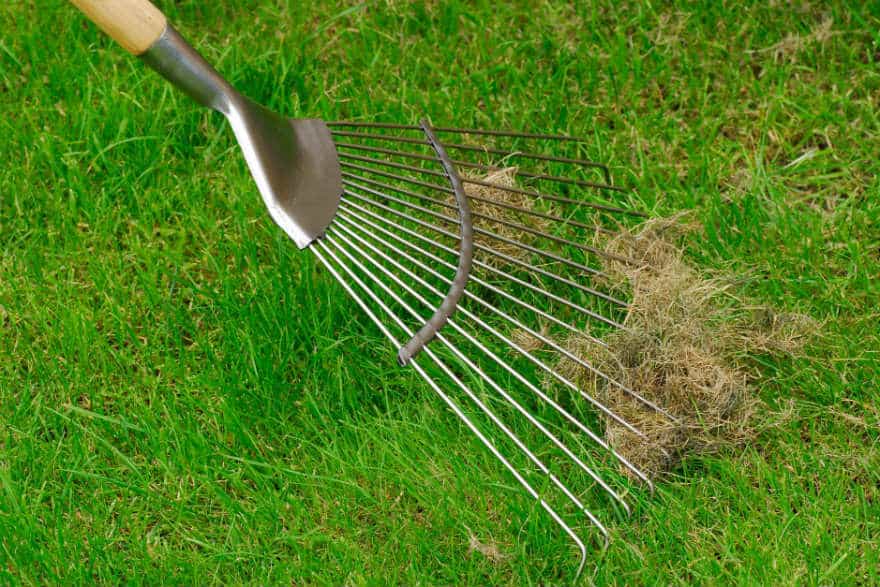
Scarifying: Thorough raking through the grass on a lawn (with a spring-tine rake or dethatcher) to remove dead grass (thatch) and loosen the compact soil surface to aid fresh new grass growth.
Self-fertile: A plant that does not need pollen from a second individual in order to fertilise it and set fruit, such as ‘Victoria’ plum and ‘Stella’ cherry.
Semi-evergreen: A plant that may, or may not, retain its leaves in winter depending on the severity of the weather.
Standard: A tree or shrub with a clear stem or trunk below a head of branches.
Thatch: The layer of dead organic matter and other plant debris on a lawn, most of which should be removed to aid water, nutrient and light penetration.
Transplanting: Moving a plant from its current growing position, and planting it in a new one.
Variety: A taxonomic (plant naming) ranking below that of species and subspecies, and abbreviated in a plant name to var. – such as Clematis cirrhosa var. balearica. It is often, but erroneously, used instead of cultivar (see Cultivar).
Whip: A young tree, consisting of a single stem that hasn’t developed lateral branches (see Maiden whip).
Wind rock: The buffeting effect of winds that results in destabilised plants with loosened and damaged root systems, such as with roses.