With the worrying trend in the last few years of scorching summers and the inevitable hose-pipe bans, many gardeners are having to think very carefully about their plots. As someone who has opened their own garden for 17 years now and seen in excess of 23,500 visitors since 2009, it is vitally important for me to ensure that my garden looks it very best for family, friends and especially paying visitors, throughout the summer months and beyond.
Until a few years ago, that meant filling the garden with 300 plus containers, proudly displaying hundreds of summer annuals, very easily purchased from local nurseries and garden centres. Something had to give, not only was it becoming time-consuming and extremely stressful in times of a hose-pipe ban, but it was becoming increasingly more difficult, as I approach 73 this year.
Finding alternative ways
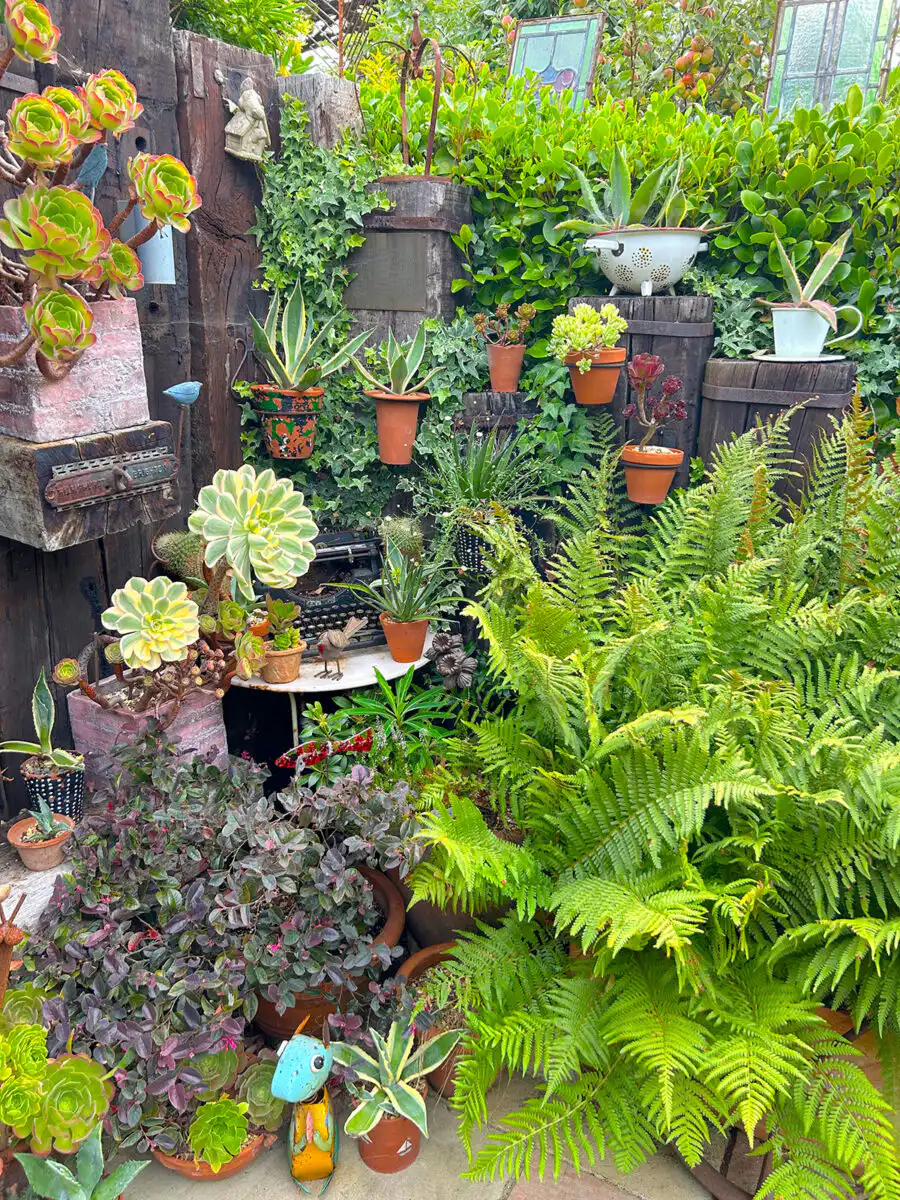
My garden, introduced on Gardeners’ World by Monty Don with the words “we’ve been across Britain, looking at inspiring planting and design and this week we’re at Driftwood in East Sussex, small garden by the sea, that’s full of character”, had a well-established reputation for the amazing colours, created by the many vibrant displays each summer. But, I and many other gardeners have become very conscious of the need to find alternative ways to inspire family, friends and visitors, encompassing the many issues around drought tolerance and climate change.
Like many garden-owners, both those who open and I guess many others, I decided there had to be an easier way of creating that necessary wow factor to sustain visitor interest and make life a little easier for myself in my 70’s, but at the same time creating something that I too enjoyed looking out on from the kitchen window!
Climate change will continually present garden owners with the challenge of using much less water, thereby forcing them to choose plants to suit their growing conditions. Gardening through the use of drought-tolerant plants enables us to do our bit for the environment with the resulting reduced water use. Not to mention the reduction on household bills if metered. It has been said that around two-thirds of domestic water used on hot summer days goes on gardens, which is going to be extremely hard to sustain. We have all experienced the recent low rainfall, with a hosepipe ban here in Sussex since the late Autumn, meaning water companies asking gardeners to reduce their water consumption or the inevitable enforcing bans.
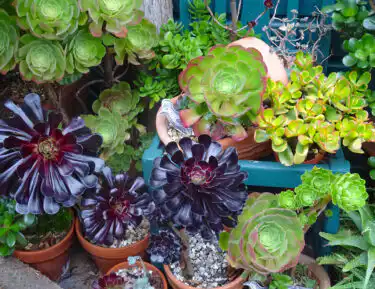
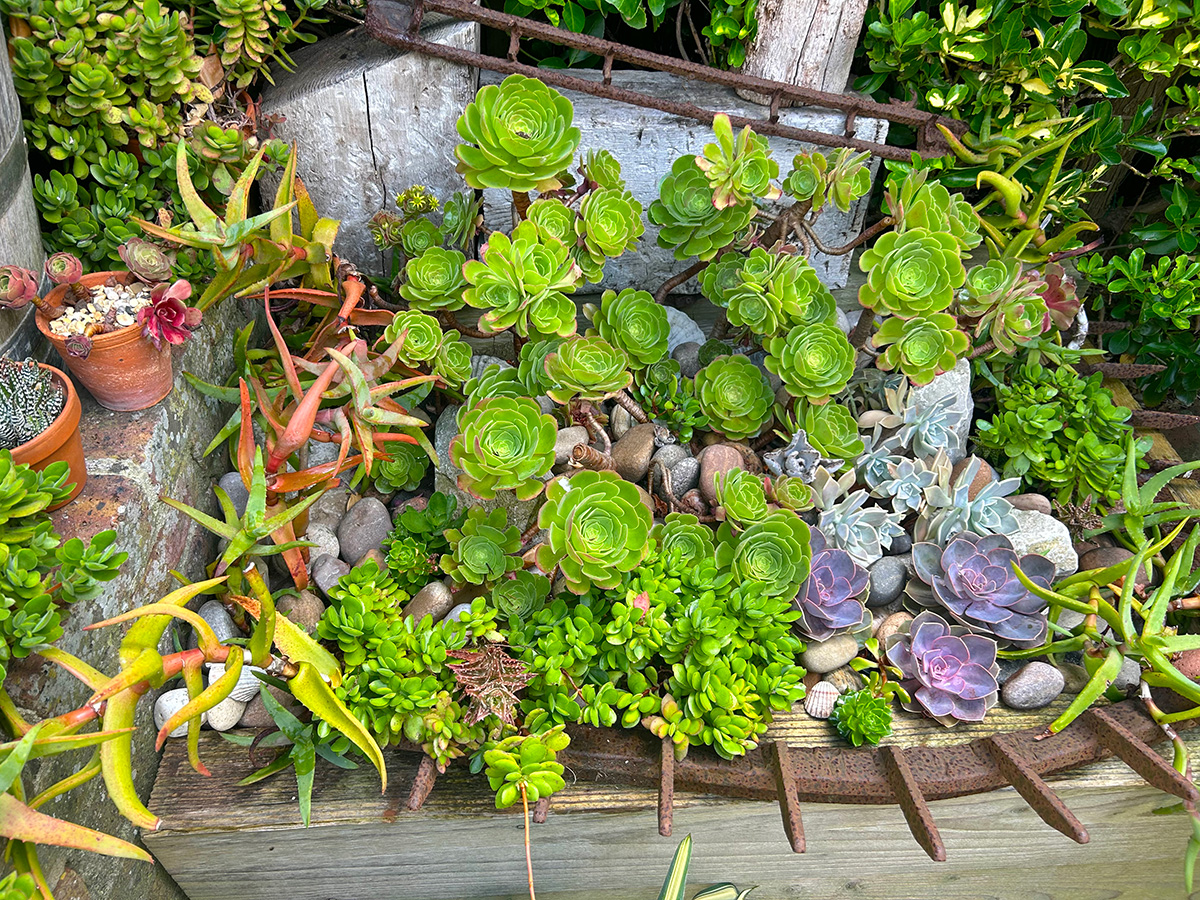
Beautiful displays are still possible by utilising succulents such as aeoniums, mangave, agave, sedums and sempervivums, all of which are great drought resistant plants with some lovely varieties available that equally attract bees and other pollinators. These plants are able to store water in their fleshy leaves and stems during wetter spells, and draw on that moisture when needed.
Major changes
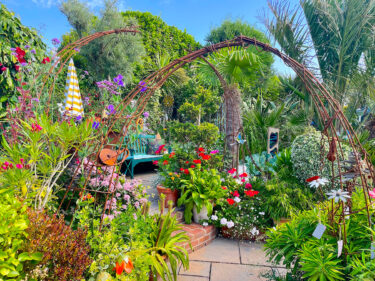
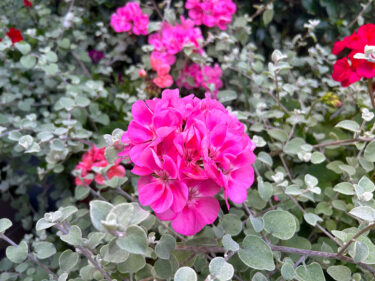
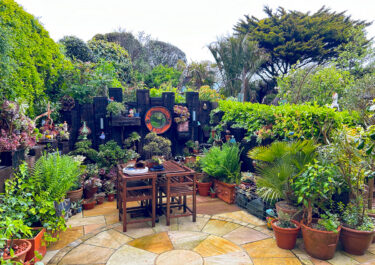
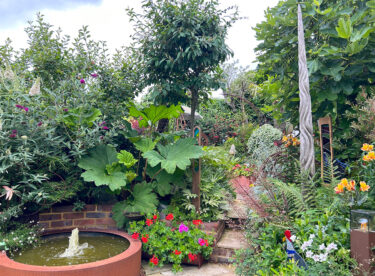
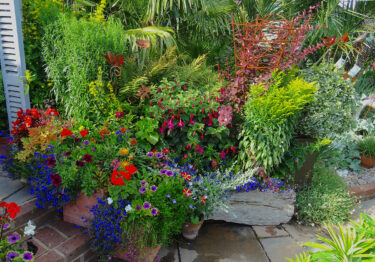
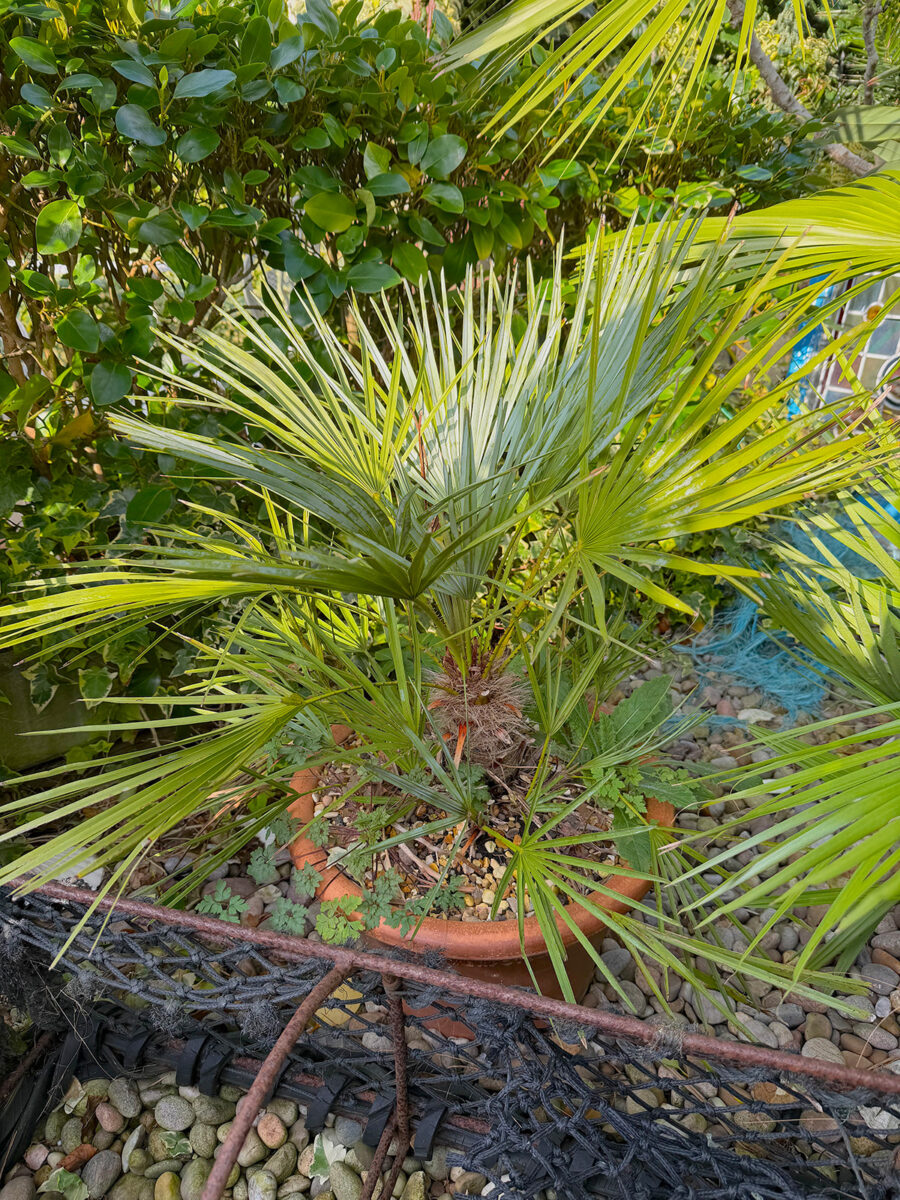
Back in the autumn of 2021, I personally decided to make major changes to my own garden, in order to facilitate more space to display my existing drought-tolerant collection, along with many new additions. I opted to create a patio bounded by upturned railway sleepers that created the perfect backdrop for displaying some of my collection, along with the extended use of many geraniums, pelargoniums, eucomis, osteospermum and gazania. Potted palms like the Chamaerops humillis var. cerifera , cacti and ferns greatly added to the mix creating a Mediterranean look too.
I have found that over the years, there has been a relatively small selection of suitable plants available in garden centres and I have to confess to making many of my appropriate purchases online, due to the sheer frustration of not being able to find what I want locally.
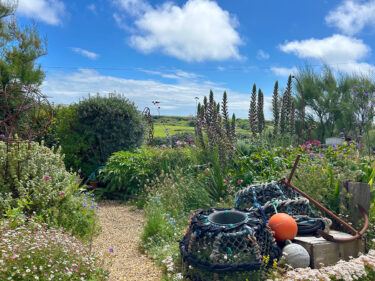
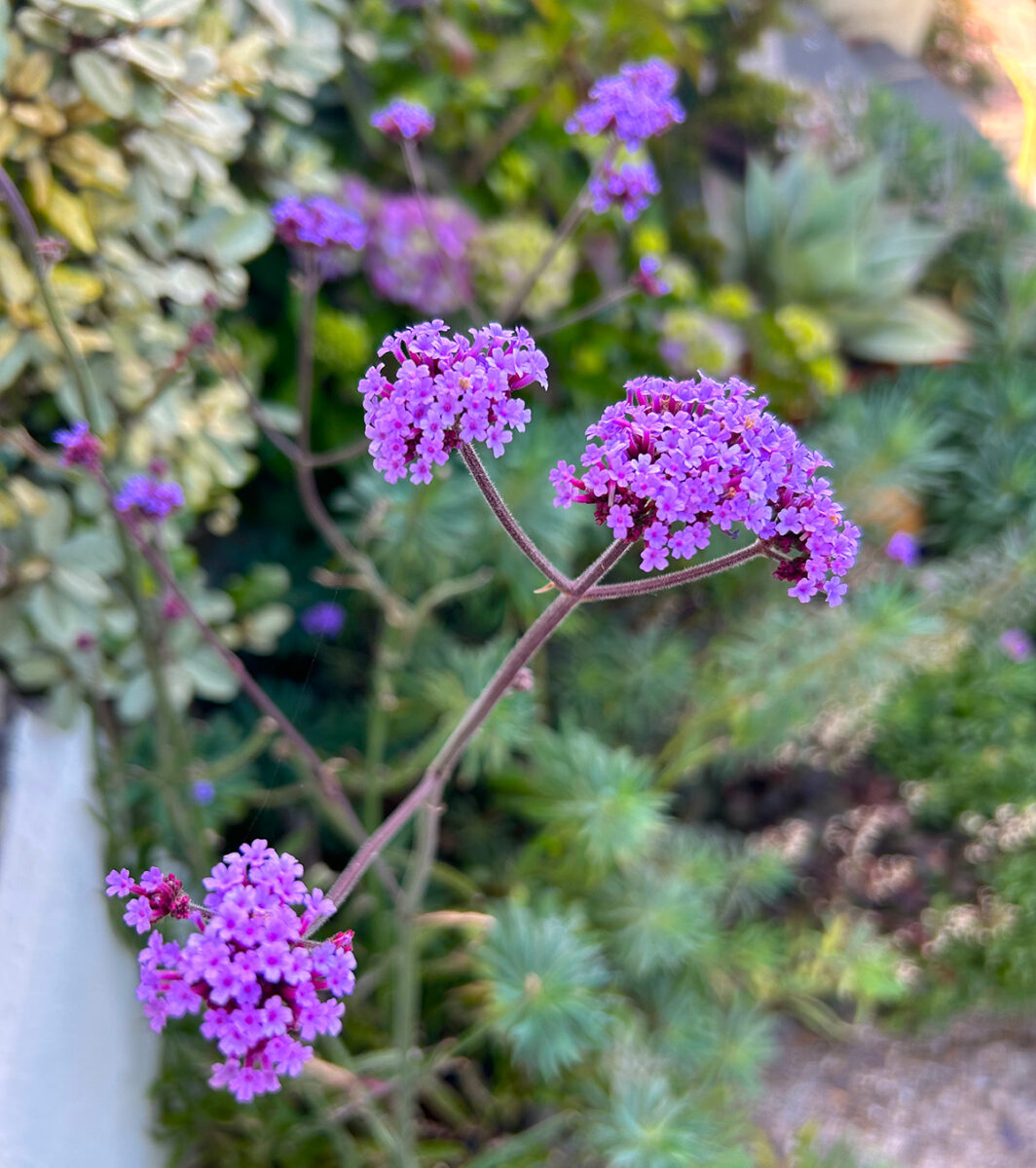
Great choices I’ve found in my garden are Verbena bonariensis, perfect plants to sway in the breeze, especially appropriate in a seaside garden like mine. I have a great deal of it growing in my beach garden at the front of the house and smaller amounts interspersed across the back garden too.
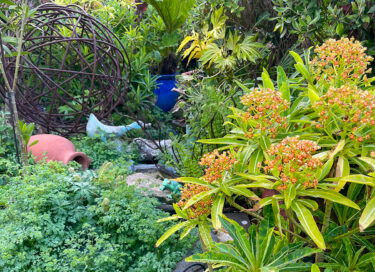
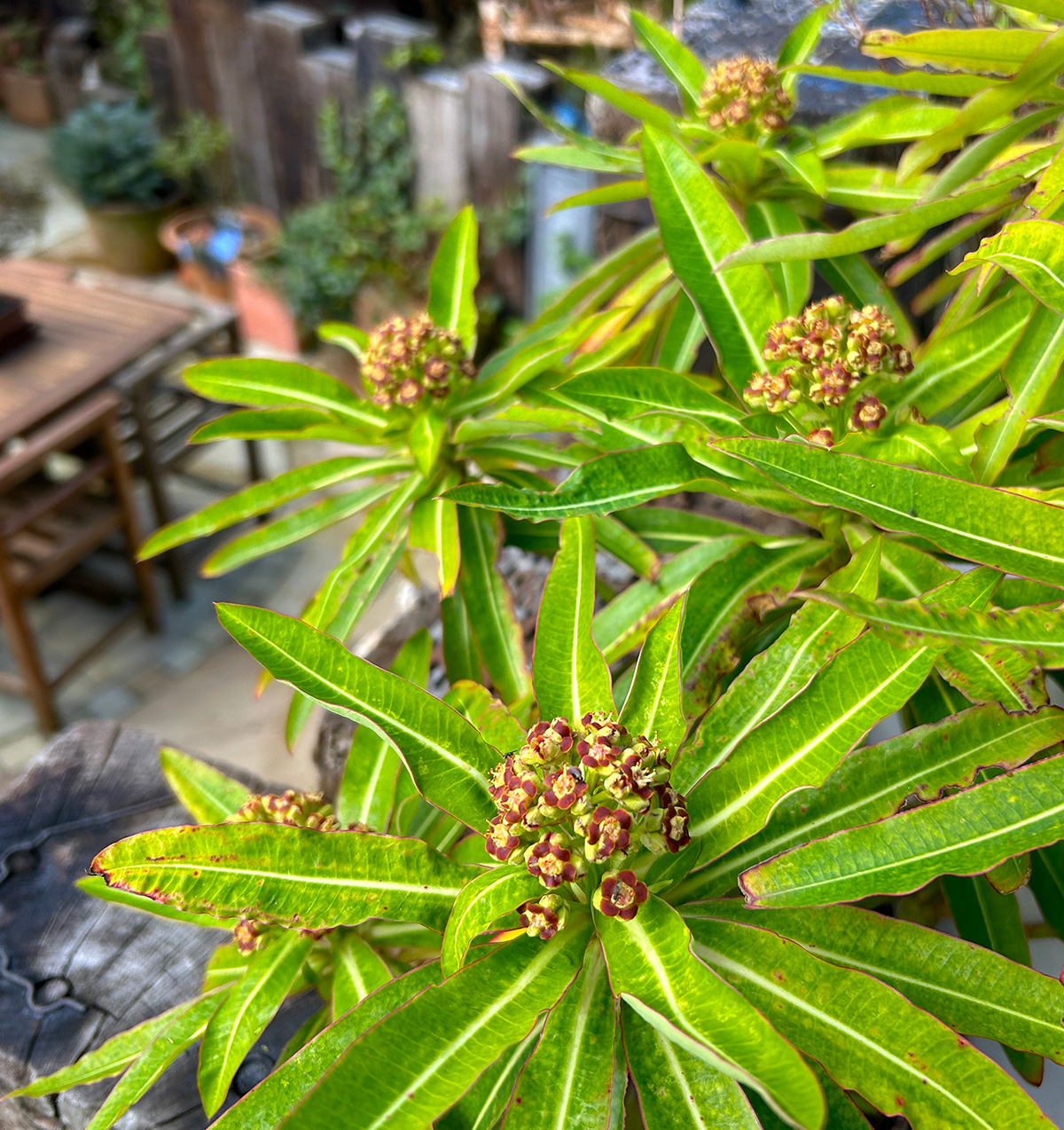
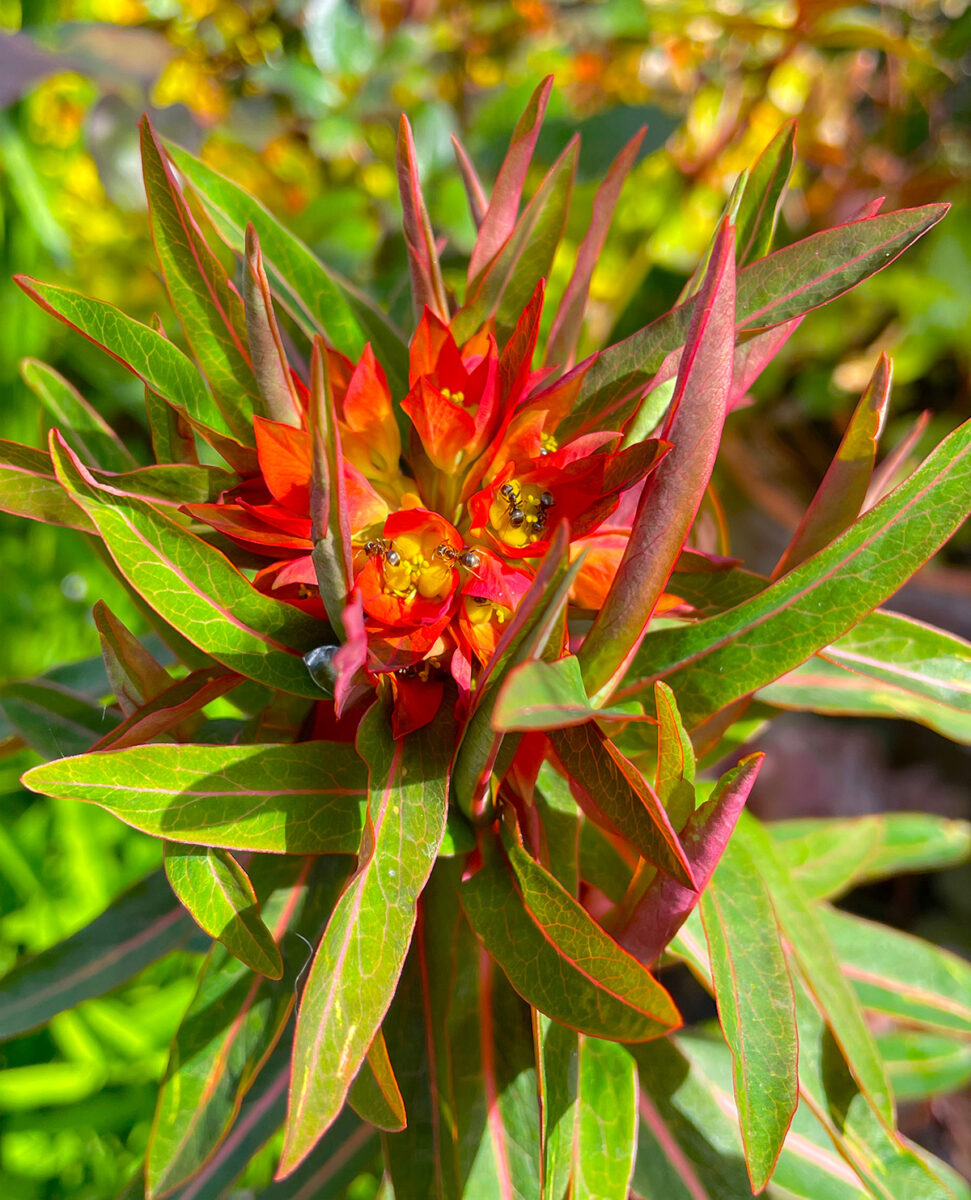
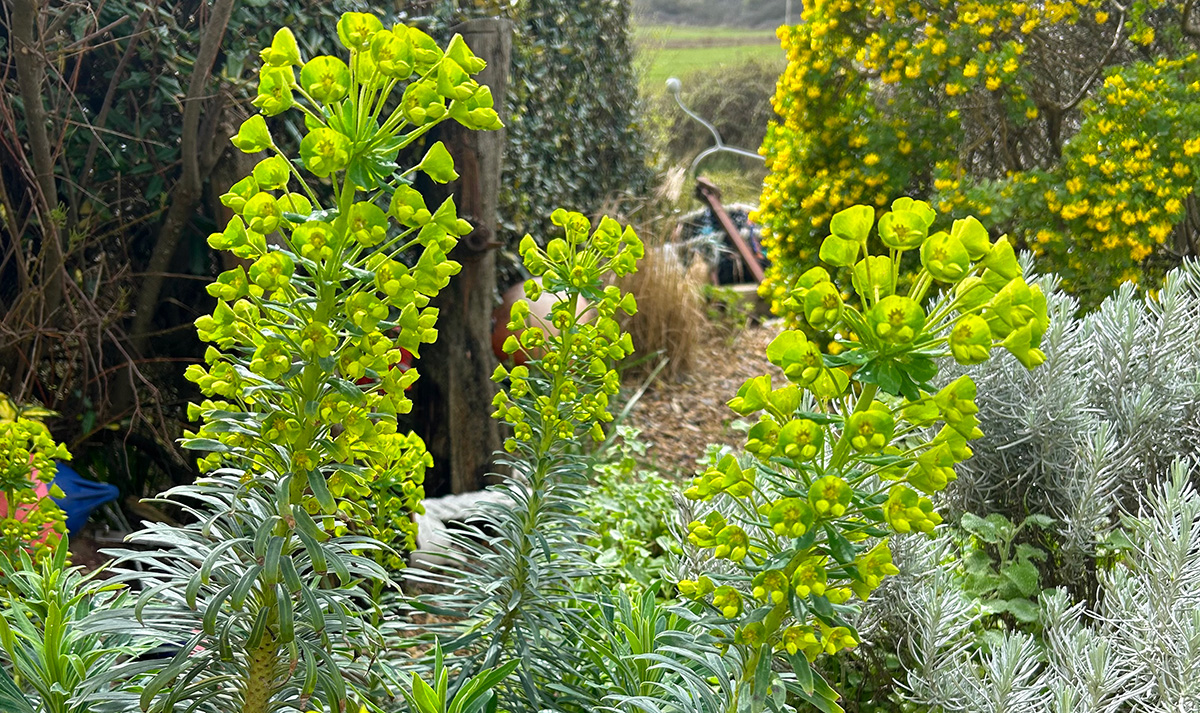
The many colours of osteospermum work well too as mentioned earlier, along with euphorbia, three of my favourites being Euphorbia griffithii ‘Fireglow’, Euphorbia mellifera and Euphorbia characias. Euphorbia, commonly known as spurge, are easy-to-grow, drought-tolerant perennials that are excellent in a container or border. Different varieties encompass a wide range of sizes, and the brightly coloured foliage in shades of acid yellow, green and orange suits any palette.
Learning more
Many gardeners need to be educated about trying to make their gardens more resistant to drought and advising them that it is not necessarily about digging them up and starting again, but thinking about appropriate soil cultivation, plant choice and garden maintenance.
Using different plants may mean that the feel of the garden will change, but dramatic plantings can easily be achieved from plants that have very low moisture and maintenance demands. How wonderful it would be to see planted up examples in more garden centres that can clearly show customers what is really possible.
A design trick much used in my own garden is to plant everything close together to make sure there’s no open ground that will dry out faster in the summer sun. The addition of water features and fountains around the plot also adds a cooling effect, no matter how hot and dry the weather gets.
If pressed on the matter, I’d have to say my 5 favourite drought-tolerant plants would have to be these:-
- Erigeron karvinskianus. While Erigeron karvinskianus loves full sun, it will also grow in partial shade and will grow happily in most locations. It prefers a moist soil but will grow even in poor soil and is considered drought-tolerant too, making it a versatile perennial, popular for all types of gardens.
- Aeoniums of all types. Aeoniums are fleshy, succulent plants native to Madeira, the Canary Islands and North Africa. They have rosettes of glossy, waxy leaves and range in height from a few centimeters to up to a metre. They are mostly grown for their distinctive, unusual shapes and foliage that comes in shades of green or purple-black or variegated in shades of white, yellow and red. Their only drawback is that they do need winter protection.
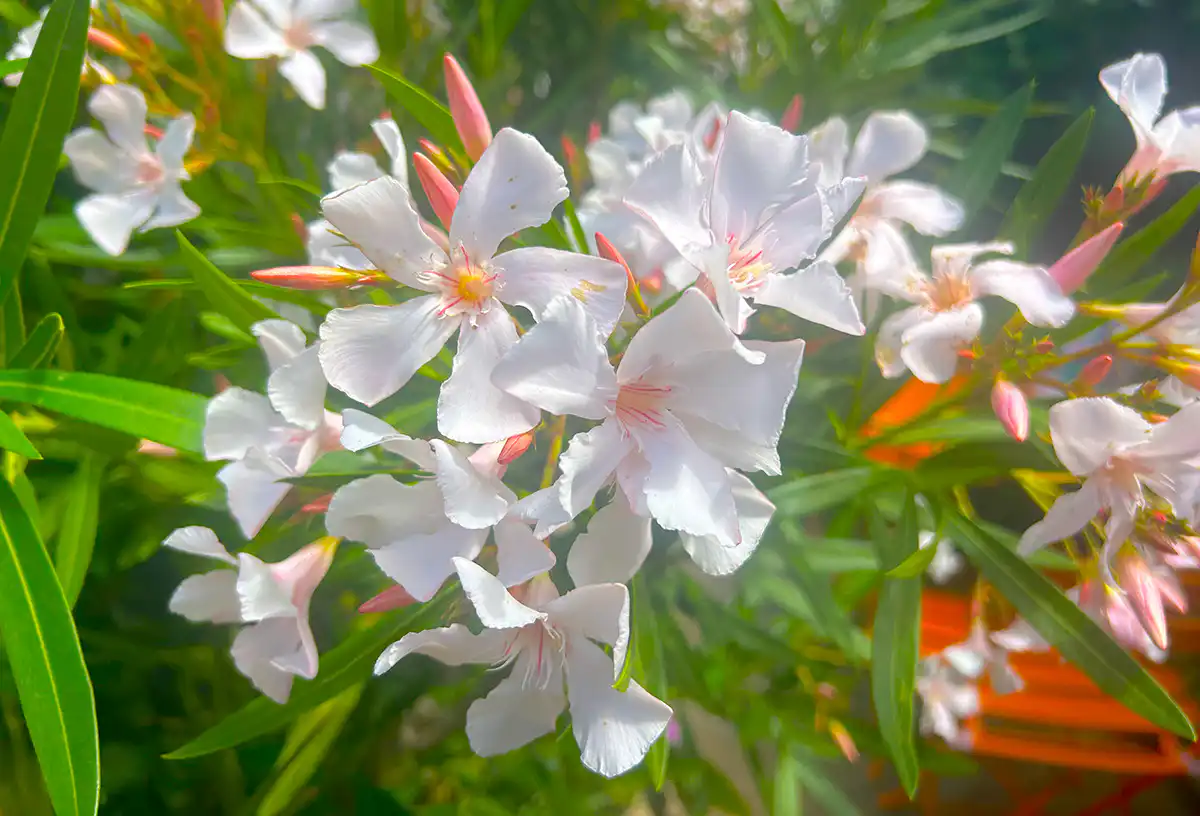
- Nerium oleander (see main image). Whilst they are very drought-tolerant, surviving long periods without water, they will thrive if well-fed and watered. They also need to have the right nutrients in order to thrive. Use a good quality general purpose fertiliser in spring, naturally I use Richard Jackson’s Flower Power to help produce these fabulous flowers.
- Euphorbia characias. An architectural perennial, perfect for adding a touch of drama to the border. Bluish-green foliage looks fresh all year round, and in early summer it’s joined by large, dome-shaped, lime-yellow flowers that tower above it. It’s ideal for growing in a sunny border or gravel garden like my beach garden.
- Aloe striatula. This makes for the perfect outdoor or houseplant for the absent-minded as they tolerate drought and neglect with a smile. It can take temperatures of -10c outside too and in summer produces these pretty flowers.
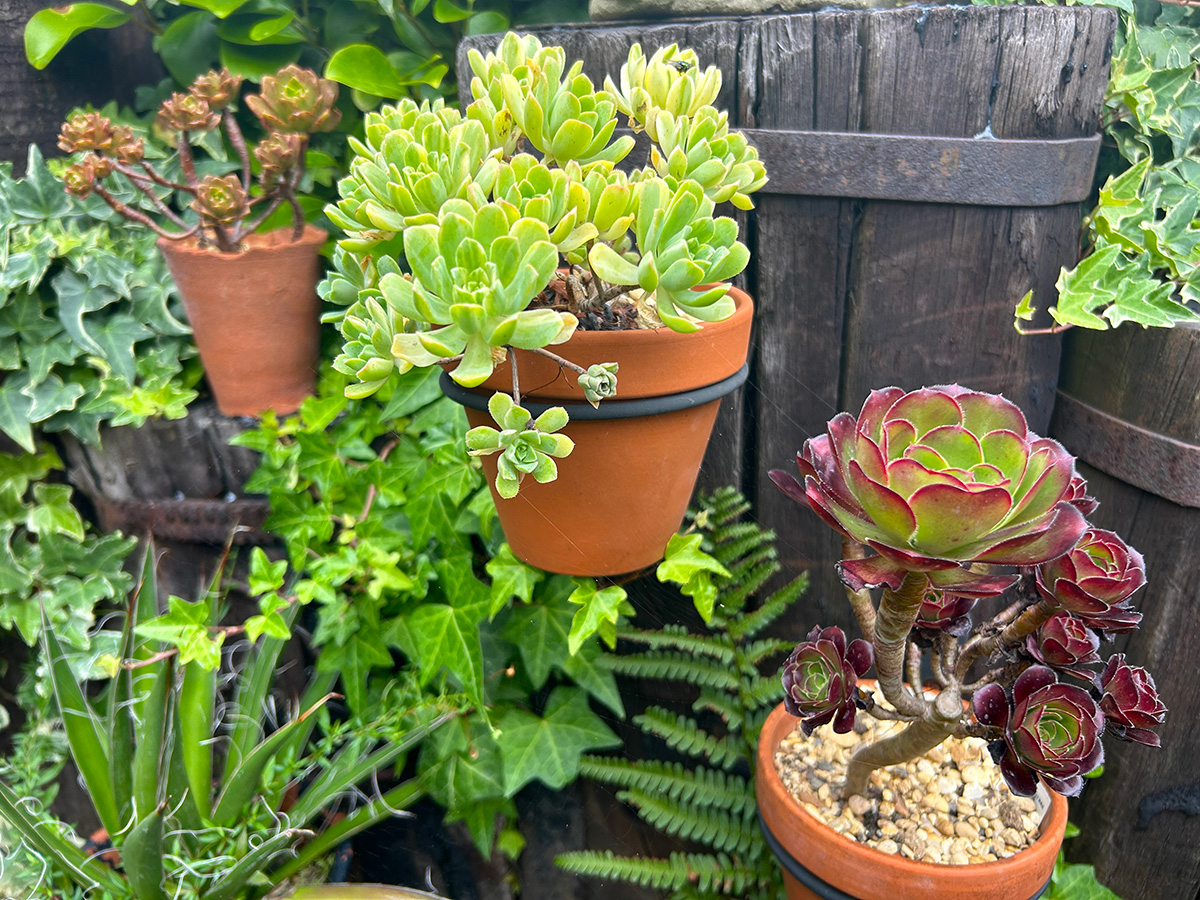
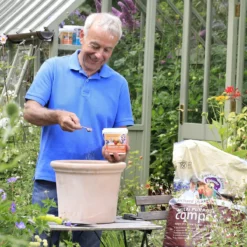
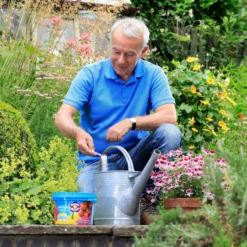
In terms of winter wet, most of those plants mentioned seem to cope well but my collection of Agaves are all moved under cover to keep dry through the winter months. When potting up the succulents, I always use general purpose compost, mixed with 50% horticultural grit. Despite being drought-tolerant I still feed them all at the start of the season and maybe once during the summer with Richard Jackson’s Flower Power.