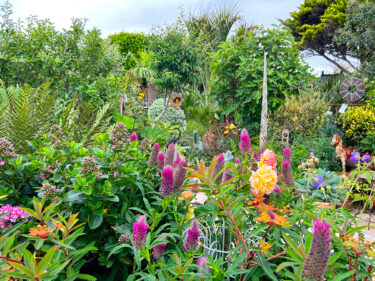
There was a time when I had several hundred containers across my plot, with a mix of summer annuals, shrubs, palms, succulents and much more. As I get older, I find that it is increasingly difficult to manage that number across the year, especially when you need to consider that some of them will require protection through the winter months too!
So, back in 2021, I made a conscious decision that I needed to drastically reduce the number of containers in my garden, while still maintaining the dramatic interest across the garden and subsequently making the overwintering task marginally easier.
The net result has been the need to secure dry cover for my extensive agave collection, greenhouse protection for my aeonium collection and a few plants around the garden that are fleeced for winter protection.
Temporary cover
Last season, I made a big mistake of purchasing a large temporary greenhouse. While in principle this was a good investment and a practical idea, reality told another story. The unit is securely set against the railway sleepers behind the house and was a great addition in providing dry cover for many of the garden succulents that don’t mind the cold so much but cannot tolerate the wet. Despite securing it and placing heavy pots around its perimeter, after a couple of strong gales I decided that it may not last the winter, even though I’d positioned it in what seemed like a safe spot. I opted to cut my losses, empty it and relocate the contents elsewhere!
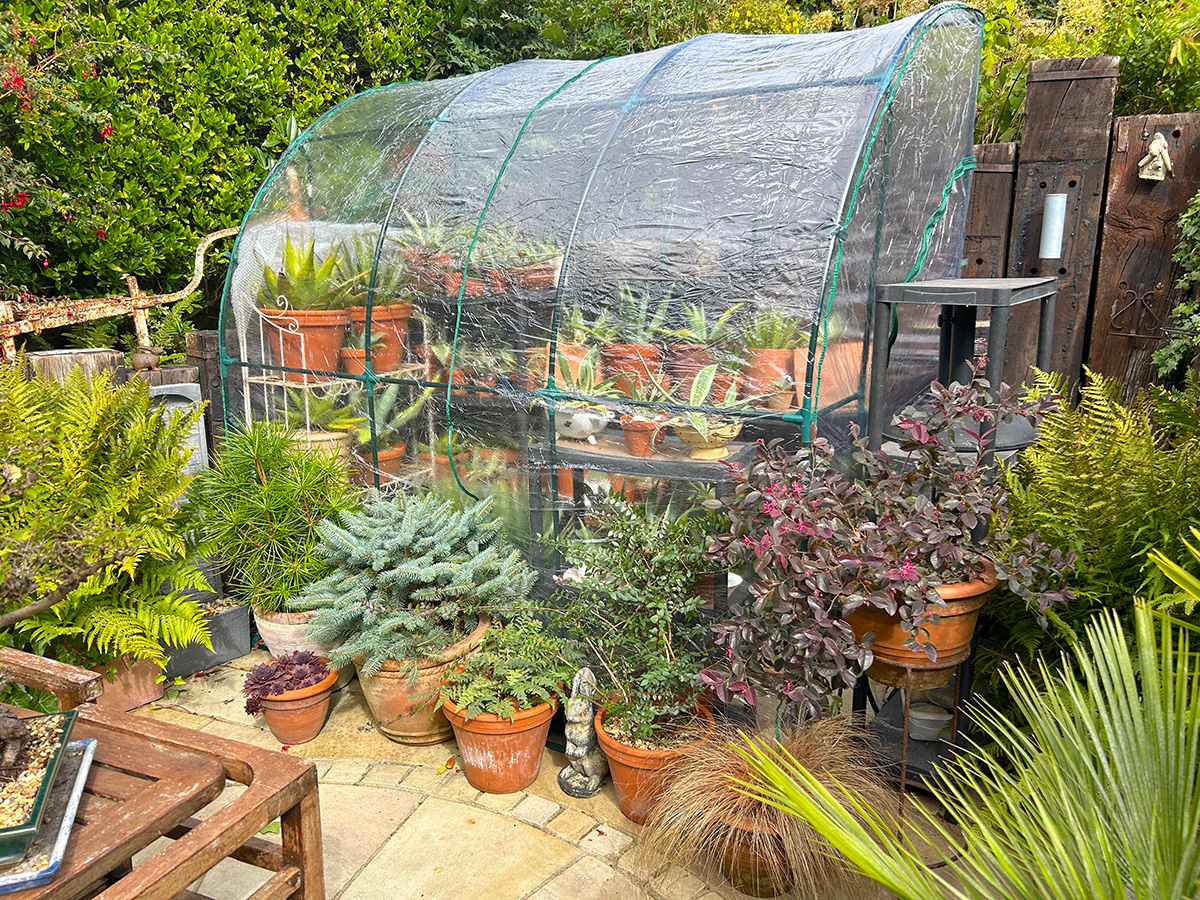
A selection of the agave were transferred to the shed, which has reasonable light from windows all down one side and placed on a long trestle table I had in there. There’s no danger of things getting wet in there and the plants will not need watering at all while stored in there.
Winter bonsai care
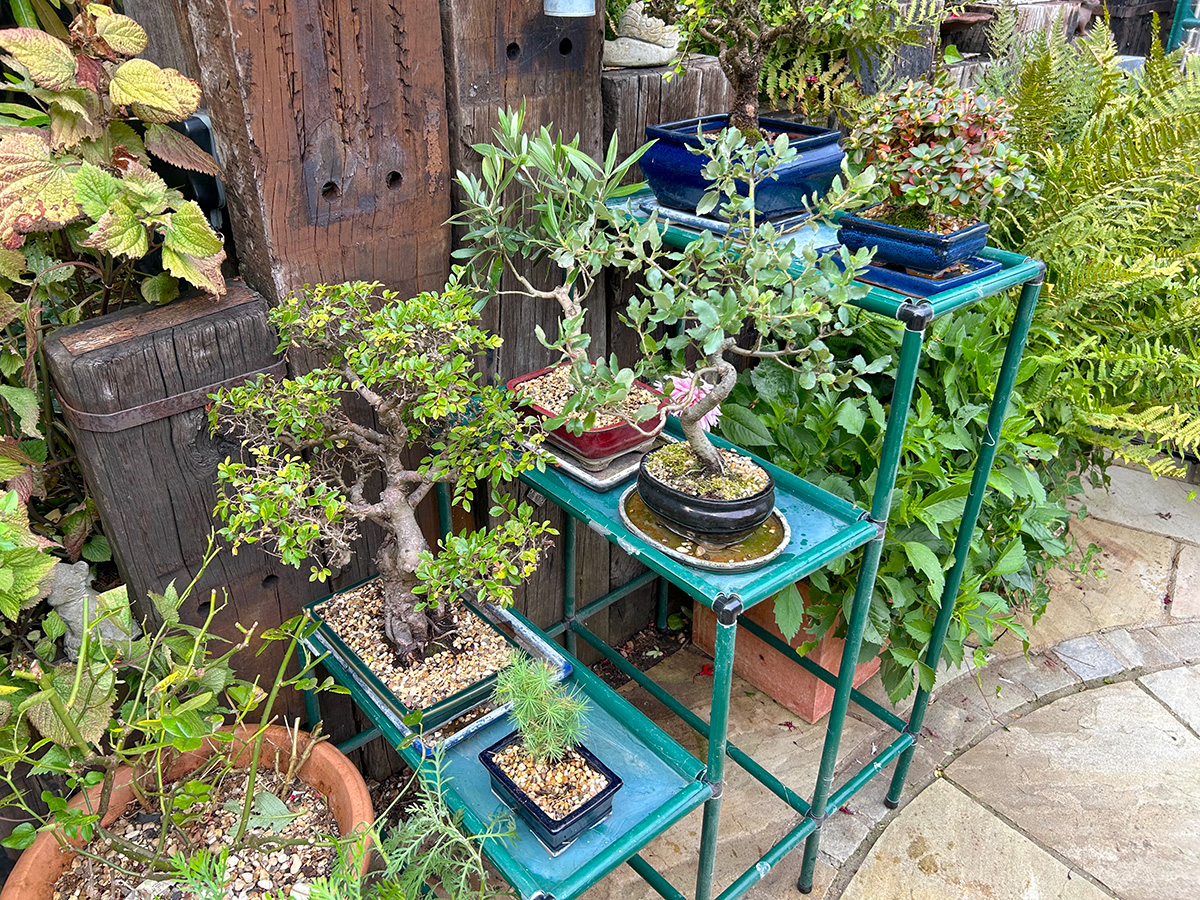
I have a small collection of bonsai trees dressing part of the garden through the summer too. There are three Chinese elms, a cork oak, an olive tree, a small rhododendron and small conifer. While they are all suitable to leave outdoors all winter I tend to bring them all together, so they can be seen from the house, in order to keep a watchful eye over them until the spring.
Walls provide protection
The north wall at the back of the house, while shady and cold, does also provide some additional protection for larger containers from the wind and too much damp.
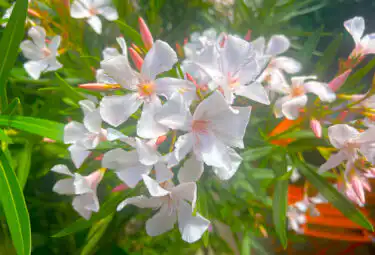
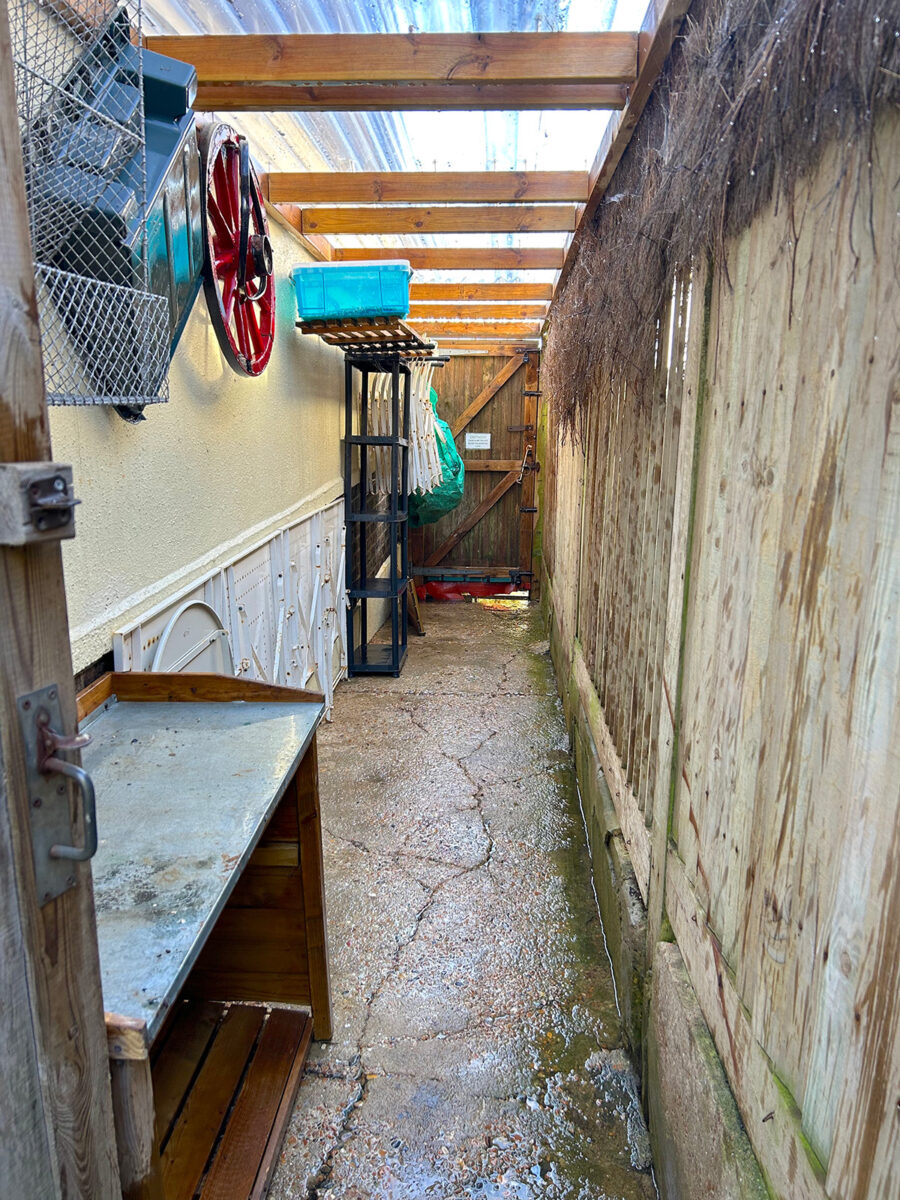
An extremely useful and very practical thing I did several years ago now, was to have a clear perspex roof fitted between my house and the tall fence between my neighbour and I! This effectively creates a large covered area with doors both ends. It is the perfect spot to store other plants like containers of fuchsias, oleanders, geraniums to be kept for the following year and a few other more delicate shrubs. If those plants require some frost-protection then I overlay them with fleece. The big plus is that there is no wind to tear the fleece off, it has worked quite well over several winters now.
Warm and cosy
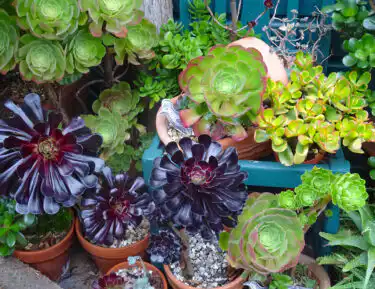
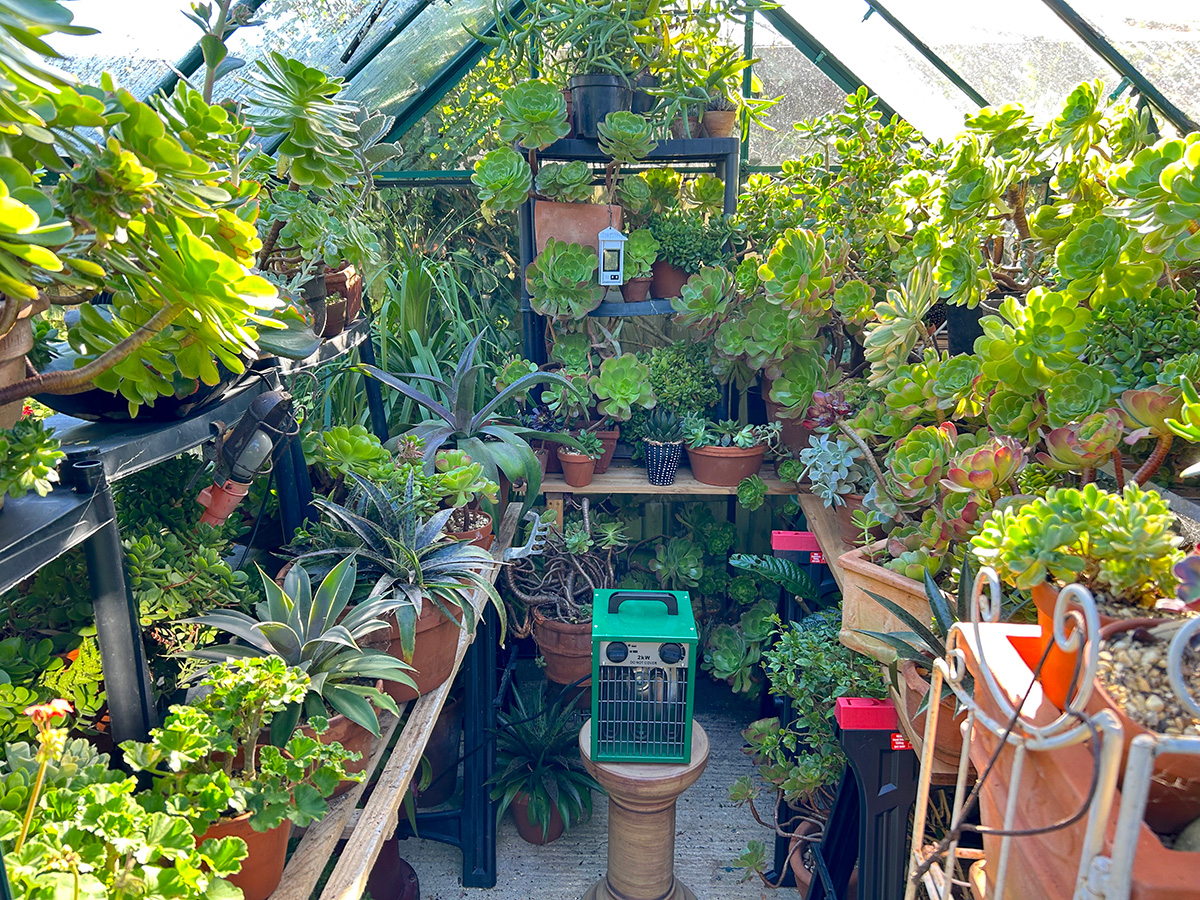
In terms of the many aeoniums and other succulents in pots across the garden, these are meticulously gathered up and stored in the heated greenhouse. Usually the raised bed hides the fact that all the individual plants contained therein are actually all in their own containers and are just positioned and hidden with small stones and rocks making them seem fully planted. They are all removed to the greenhouse for the winter.
It really is a work of art, almost like assembling a large 3D jigsaw puzzle to get everything in. This year, I acquired a new trestle table to get more pots under cover. The unit has mains power, so the central temperature controlled heater is a great bonus to ensure it kicks in when the temperature drops below 8 degrees.
Too big to move
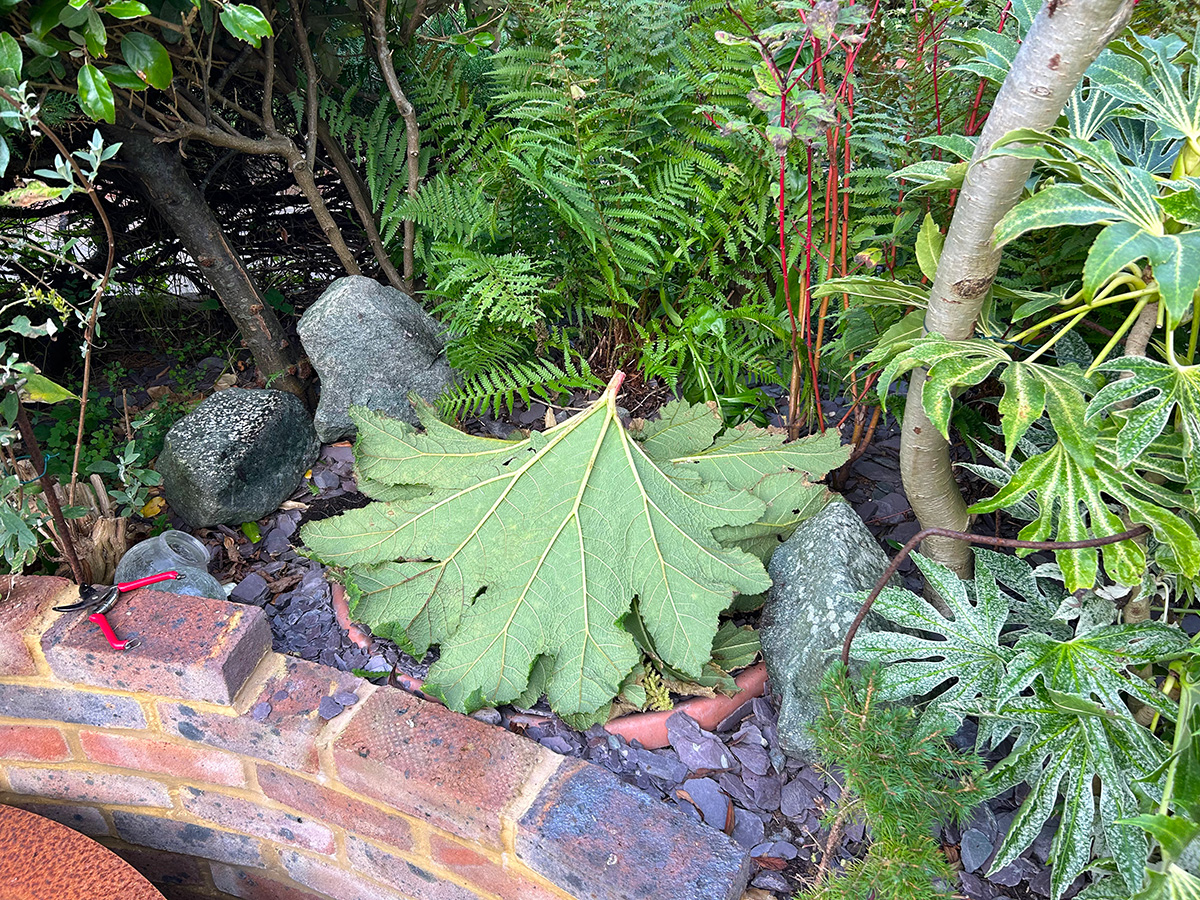
Another winter protection task is to ensure those containerised plants that I can’t move get protection in-situ. I have two gunnera plants growing behind the corten steel pond; both are in containers! One is in a container buried in the ground and the other one grows in a large heavy blue ceramic container. Rather than attempt to move them, I lay the cut leaves across the top and then add a layer of fleece to keep it all in place. It’s important to secure the fleece bag tightly around the pot.
In addition to the several oleanders in containers placed in the side alley, there is one that is just too heavy to move that also gets fully fleeced all winter to keep it safe .
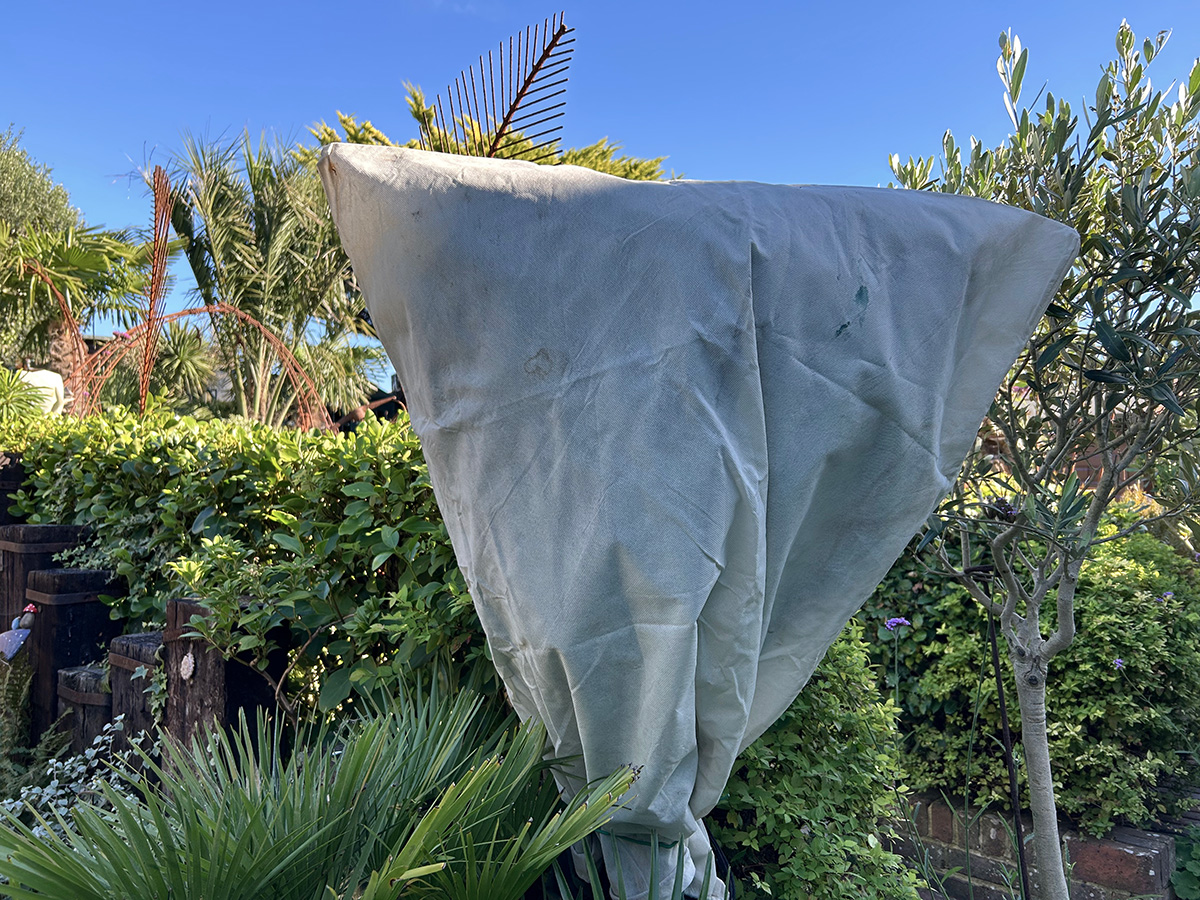
There are a few other containerised shrubs, like the Coprosma ‘Pacific Sunset’, which definitely benefits from fleecing to guarantee it survives the winter. All fleece used in the main garden are carefully secured with wire to make sure strong wind does not tear them off.
Safety in numbers
If you are leaving containers out through the winter, a good way to make sure they don’t break or get damaged is to group your small containers together and wrap them all with bubble wrap and place a frost blanket over top of them. Keeping these smaller plants together will make it easier to cover them all at once too. These containers would benefit from being lifted above the ground with plant stands or pot feet to keep the moisture from gathering at the base of each vessel.
Best of the bunch
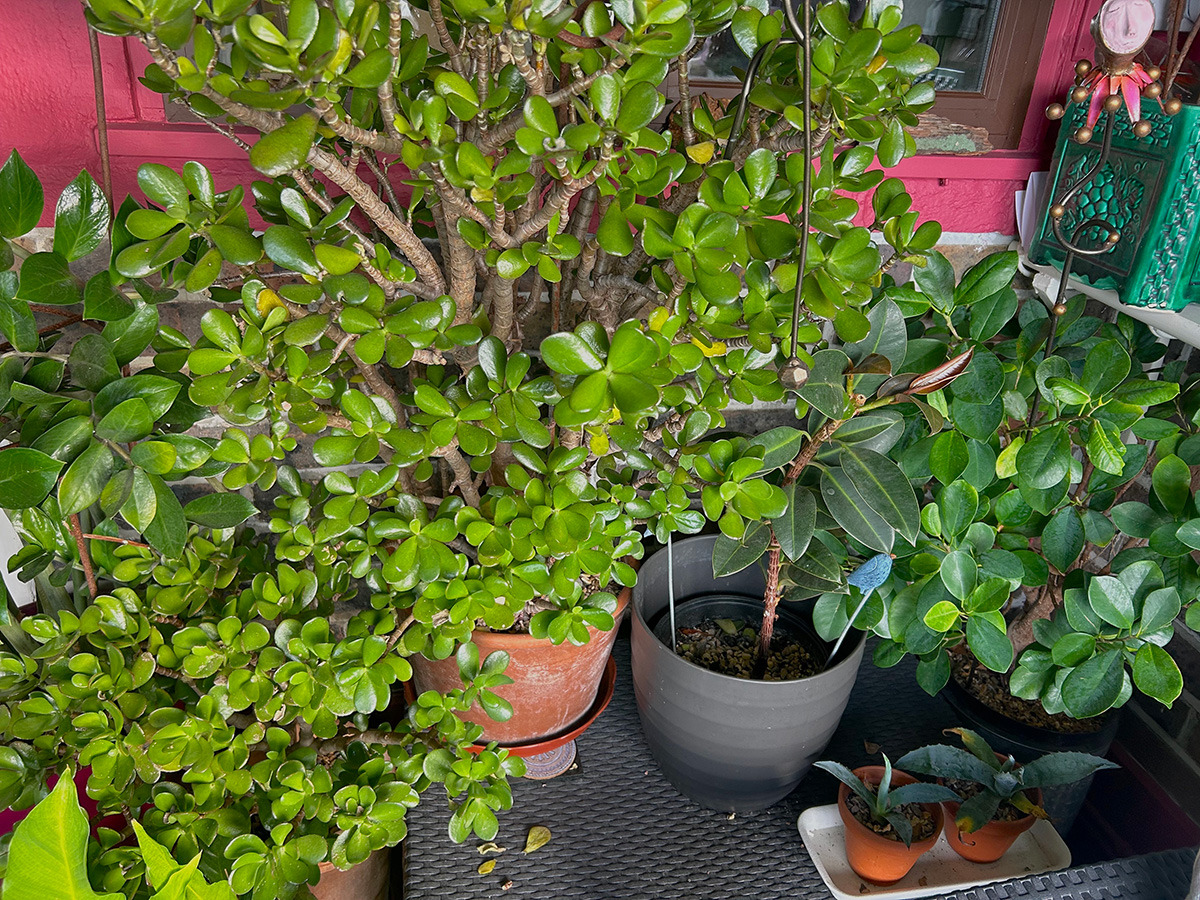
One of the final things I do once the greenhouse is full, is to utilise the front and back porches of the house for some of the good looking pots of succulents so that I can enjoy them all winter long.
Once all the hard work has been completed, it is simply a case of checking the plants at regular intervals through the winter, especially those in the greenhouse that may need watering and the pots gathered in the side alley, like the fuchsias etc. I tend to keep maximum and minimum thermometers in all the areas my plants are stored, just as a safeguard, and I do check on them regularly, especially if it gets bitterly cold.