Watching the birds is a bit addictive, especially in our gardens, but look skywards as the weather warms and you might see a raft of swooping, soaring larger winged birds that can, at first glance, be tricky to tell apart.
At the start of summer our skies are alive with a range of birds returning to the UK to breed. Swallows are one of the birds that we tend to associate with the start of spring and summer. Often one swallow is seen in spring, that may have been blown off course en-route to its nesting ground, but two or more swallows is a more reliable sign that the warmer weather is going to last. The swallows are the harbingers of summer. But there are other similar birds in our skies, like the swifts and martins, so how do we tell them apart. Here’s a simple guide to these birds and a glimpse at some of the rarer ones too.
Swallow (Hirundo rustica)
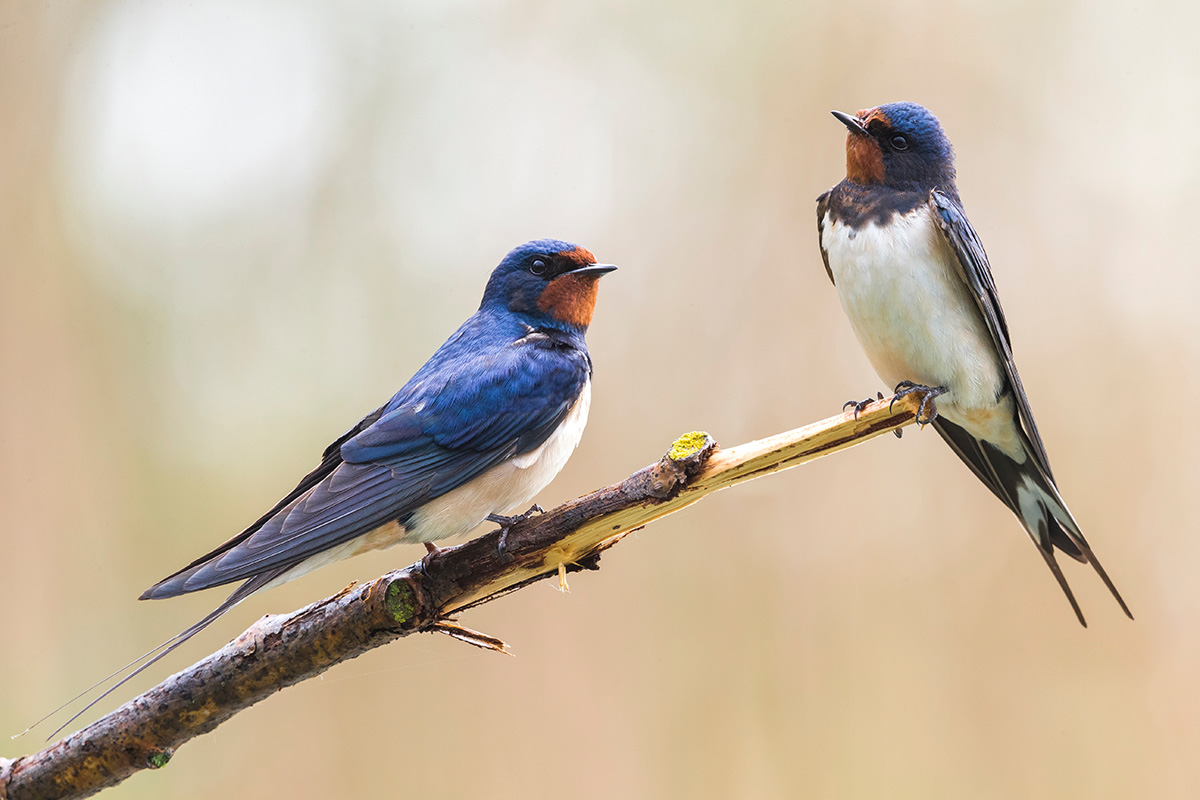
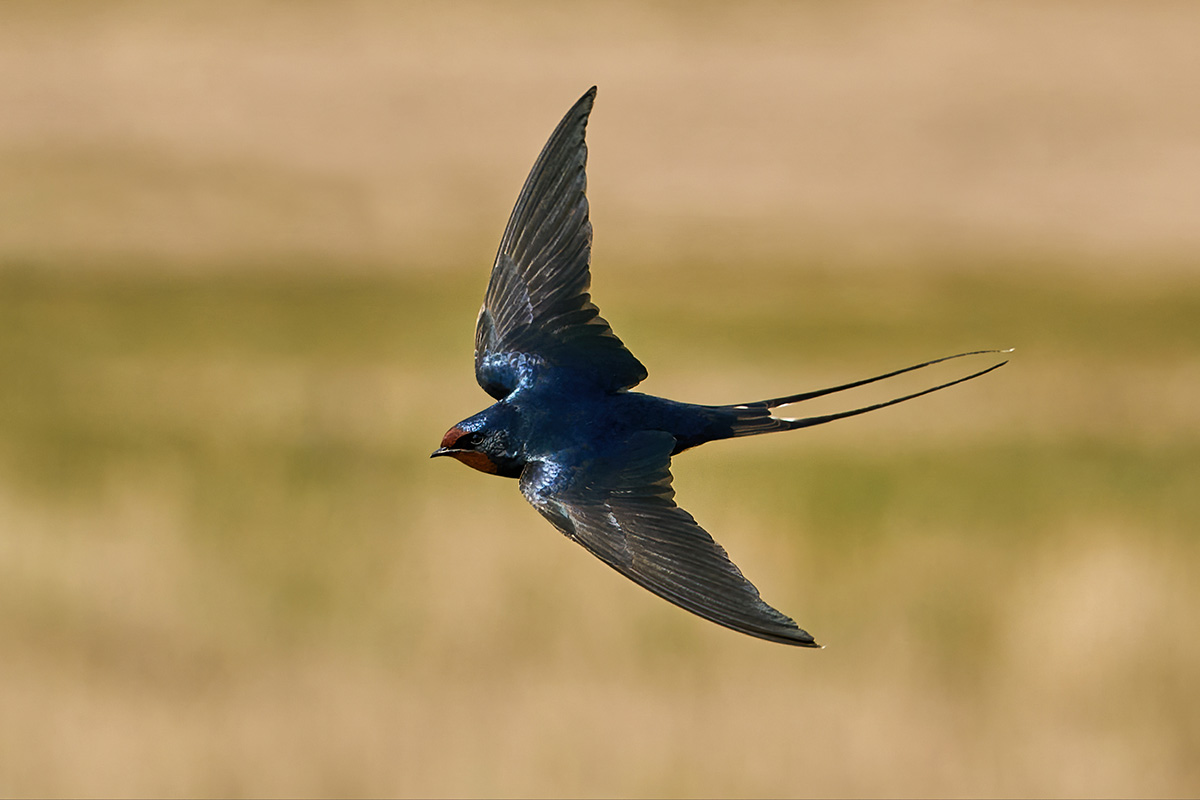
The swallow is an agile, sky acrobat, as it swoops and swirls to catch its insect prey. Swallows usually arrive in the UK in April and are a sign that the warmer summer weather is imminent. These birds spend the winter in Africa and arrive in the UK for nesting season, returning to Africa in September and October. The swallow is sometimes called the barn swallow as it will nest on ledges inside barns, building its nest from mud and straw. It’s smaller than the swift and has a white underbelly with a glossy blue-black back and a chestnut throat and forehead. Look for the black band across its chest and its long, forked tail. The swallow may perch on overhead cables. As the summer ends swallows will roost in reedbeds before they start their long journey back to Africa for winter.
Common swift (Apus apus)
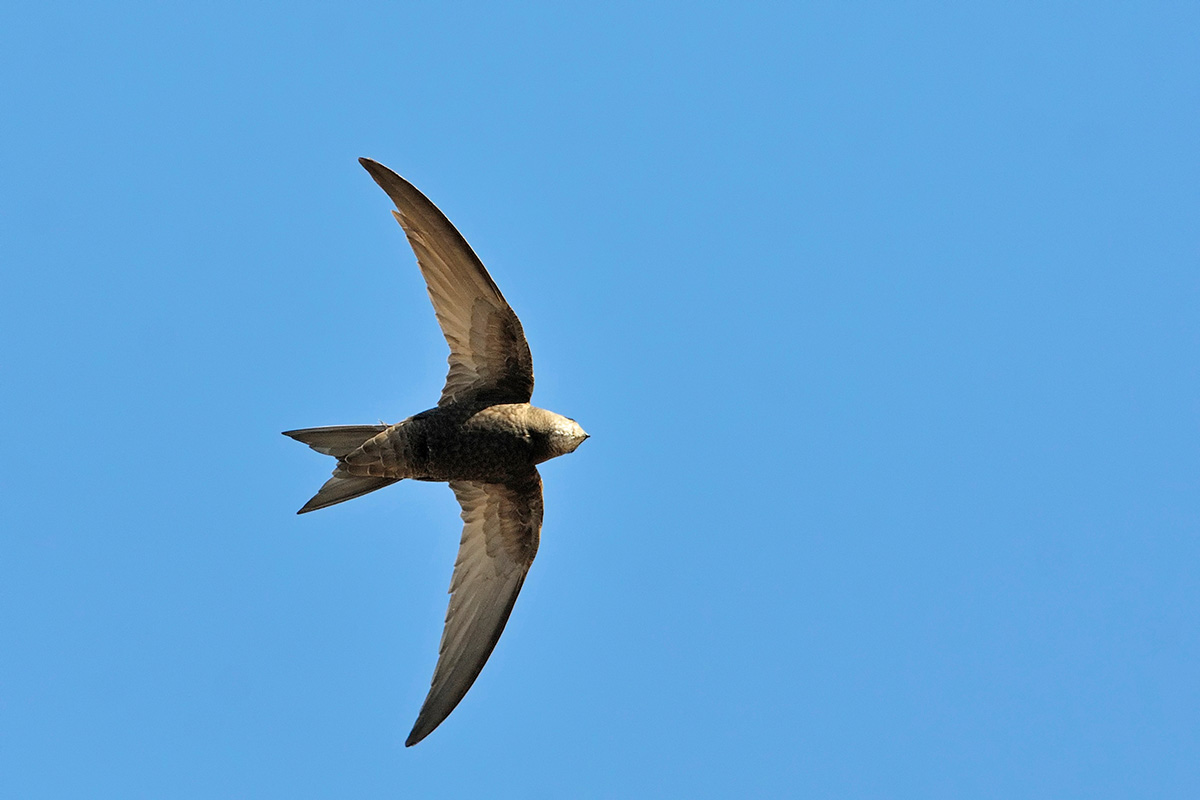
Swifts are summer visitors to the UK, they fly here from their winter roosts in Africa. They eat insects and collect them in their throat, forming a cluster of insects, glued together with saliva into a lump called a bolus. The bolus is regurgitated to feed the chicks and can contain up to 1000 insects. The common swift is a noisy bird, one that literally screams as it swoops. It’s also a social bird, so you might see it in swooping gangs over the roof tops. It’s dark in colour, dark brown all over, though it sometimes look black, especially in silhouette. It has long curved wings so it looks a bit like a boomerang. Swifts are larger than swallows and martins and have a distinctly forked tail. Swifts rarely perch, and spend their lives flying, even when eating and drinking in-flight, they only land to nest. Despite the name, the common swift is no longer common, mostly due to a sharp decline in nesting sites. They choose to nest in older buildings, like churches with holes in the roof. Install a swift nesting box to the eaves of your house to offer more nesting sites to these elegant birds.
House martin (Delichon urbicum)
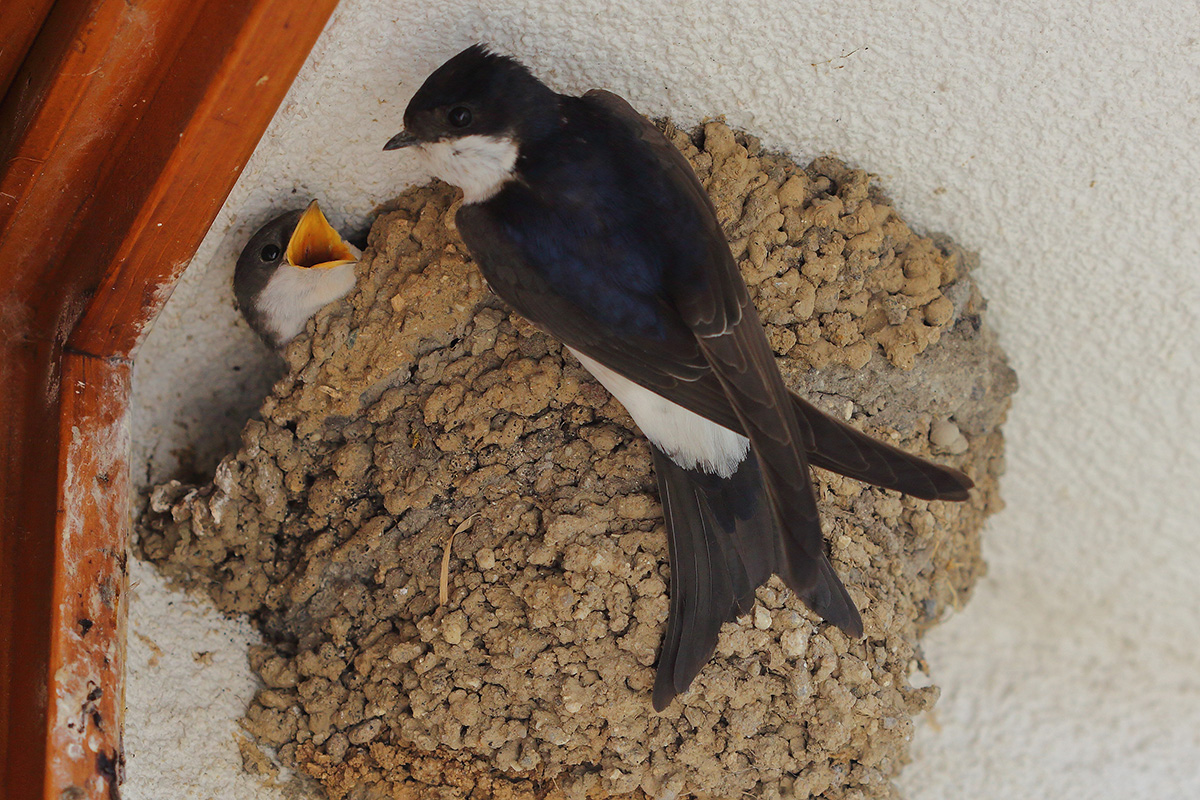
If you’ve ever had slender elegant birds making a mud nest at the eaves of your house, it was probably the house martin. These birds make substantial mud nests that they return to year on year. If you have an empty nest, leave it in place as the birds will reuse it. Like the swift, the house martins are now on the red list and in sharp decline. They have a preference for nesting in villages and older houses. House martins feed on flying insects and aphids. The house martin has a shorter forked tail and a white underbelly and rump. On top it is glossy black. Like the swallows and swifts, the house martins will return to Africa after the breeding season here in the UK.
Sand martin (Riparia riparia)
There is a lesser-known type of martin, that nests en-masse in sheer sandy cliffs and around freshwater waterways and wetlands, and is aptly named the sand martin. These birds dig burrows, sometimes up to a metre deep, into the cliffs, with a chamber at the end. The nest is made of straw and feathers, and the clutch is usually four or five eggs. Sand martins are sociable birds and nest in colonies if the conditions are good.
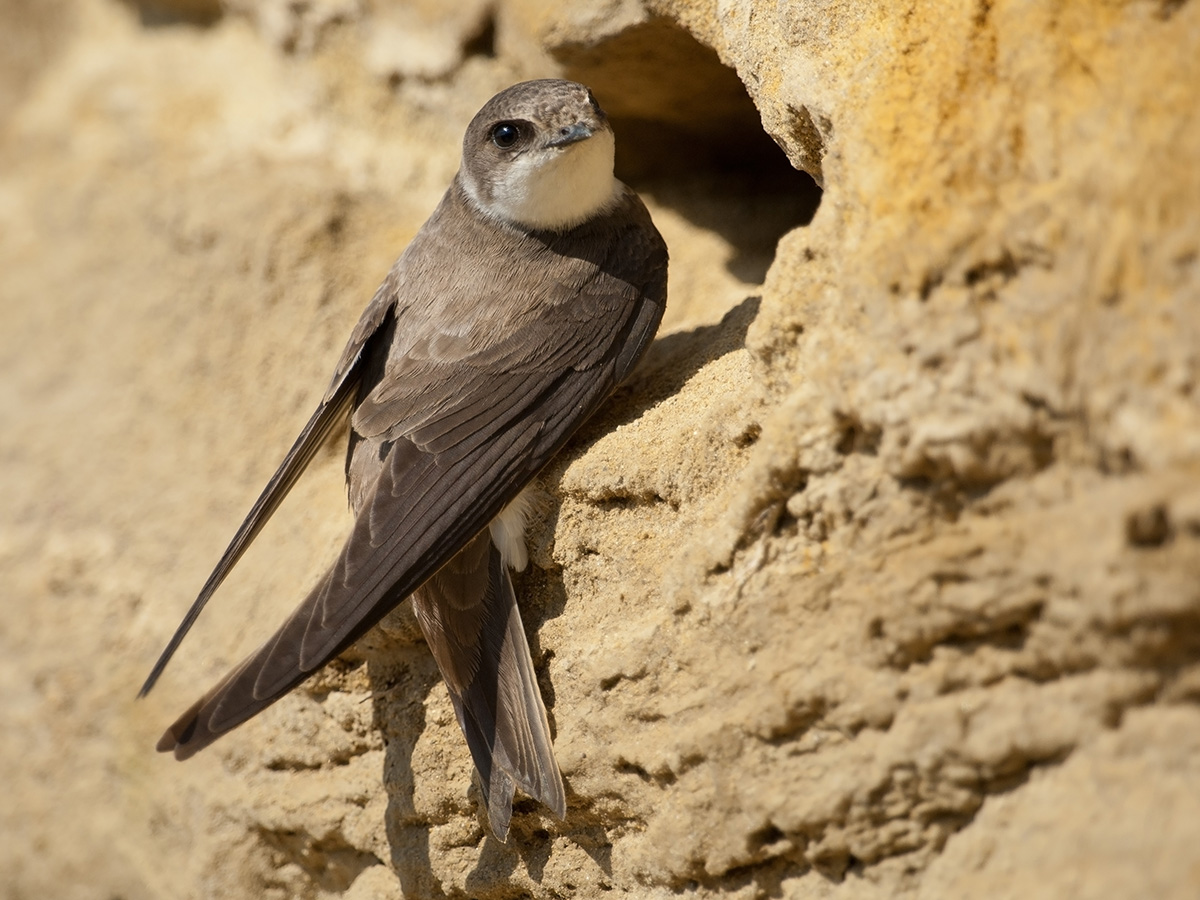
These birds are much smaller than the swifts and swallows. Their nesting behaviour gives a clue to their identity, but they are brown on top, white below with a brown band across the chest and a short, forked tail. Like the other summer visitors these birds are insectivorous, they catch small flying insects like gnats, mayflies, flies, caddisflies and aphids while flying in groups. Specialised and bristly feathers around their beak helps them to catch insects as they fly.
Night jar (Caprimulgus europaeus)
The night jar is another summer migrant, making the precarious journey from Africa to the southerly conifer woodlands and open heathland arriving in April and May.
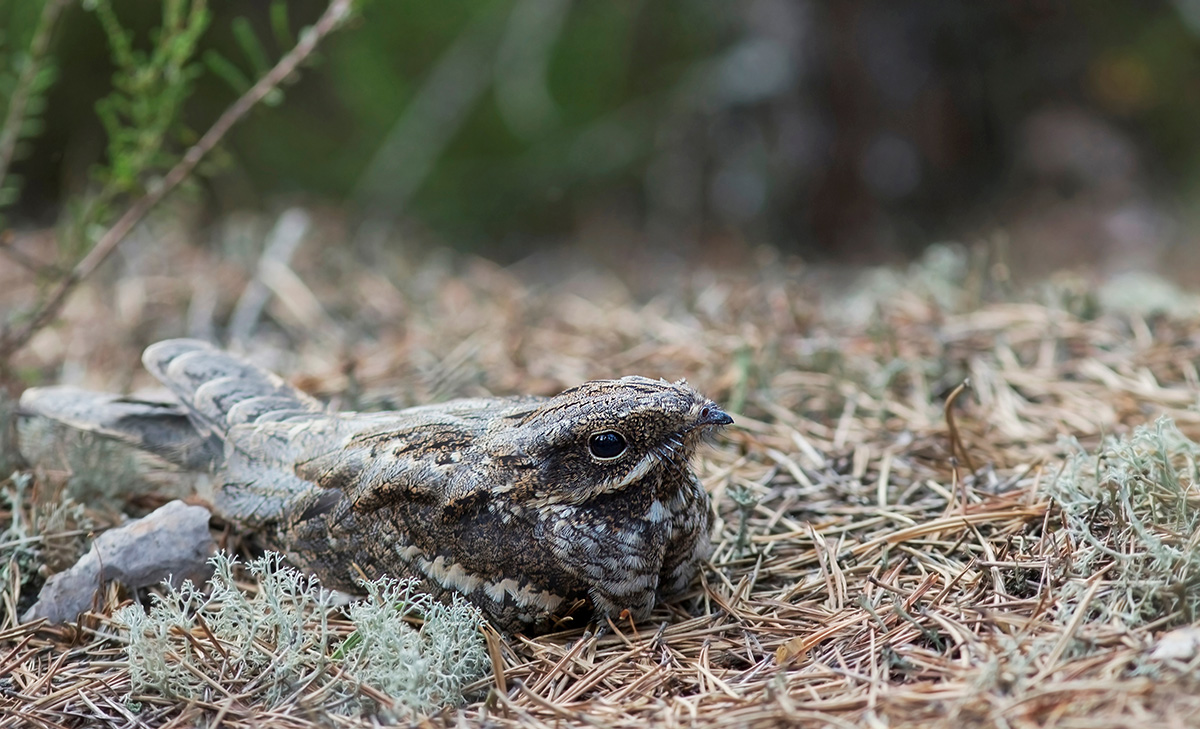
If you’ve never heard the incredible churring sound these nocturnal birds make at dusk you are missing out. The noise is almost electronic, like space aliens trying to make contact. And if you get to see these birds in flight, flying open-beaked catching bugs you are very lucky indeed. If you know where to look, in peak breeding season you may be treated to an incredible display as the male birds churr high up in the trees and then fly, clapping their wings to impress the females. These are ground-nesting birds, very susceptible to marauding animals and dogs off the lead. The adults are cleverly camouflaged with almost bark-like markings, so they can hide in the undergrowth. They have flat heads and a small beak and big eyes. The males have white markings on their wing ends and at the tip of their tails. Night jars feed at night (hence their name) and are a rare sight in the UK.