With the worrying trend in the last few years of scorching summers and the inevitable hose-pipe bans, many gardeners are having to think very carefully about their plots. As someone who has opened their own garden for 18 years now and seen in excess of 23,500 visitors since 2009, it is vitally important for me to ensure that my garden looks it very best for family, friends and especially, paying visitors throughout the summer months and beyond.
Container conundrum
Until a few years ago, that meant filling the garden with 300 plus containers, proudly displaying hundreds of summer annuals. Something had to give, not only was it becoming time-consuming and extremely stressful in times of a hose pipe ban, but it was becoming increasingly more challenging, as I was 73 this year. I and many other gardeners have become very conscious of the need to find alternative ways to inspire family, friends and visitors, encompassing the many issues around drought tolerance.
Make life easier
Like many garden-owners, both those who open and I guess many others, I decided there had to be an easier way of creating that necessary wow factor to sustain visitor interest and make life a little easier for myself in my 70’s, but at the same time creating something that I too enjoyed looking out on from the kitchen window!
Climate change will continually present us with the challenge of using much less water, thereby forcing us all to choose plants to suit our growing conditions becoming far more paramount. Gardening through the use of drought-tolerant plants enables us to do our bit for the environment and results in reduced water use. Not to mention the reduction on household bills if metered. We experienced the low rainfall through last summer and autumn, meaning some water companies, including mine here on the south coast enforced bans and it’s looking highly likely again this summer.
Beat the ban
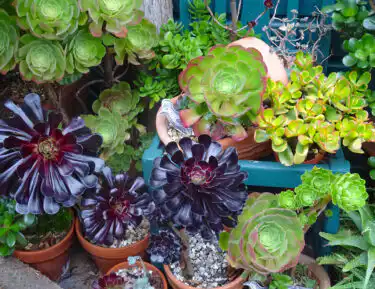
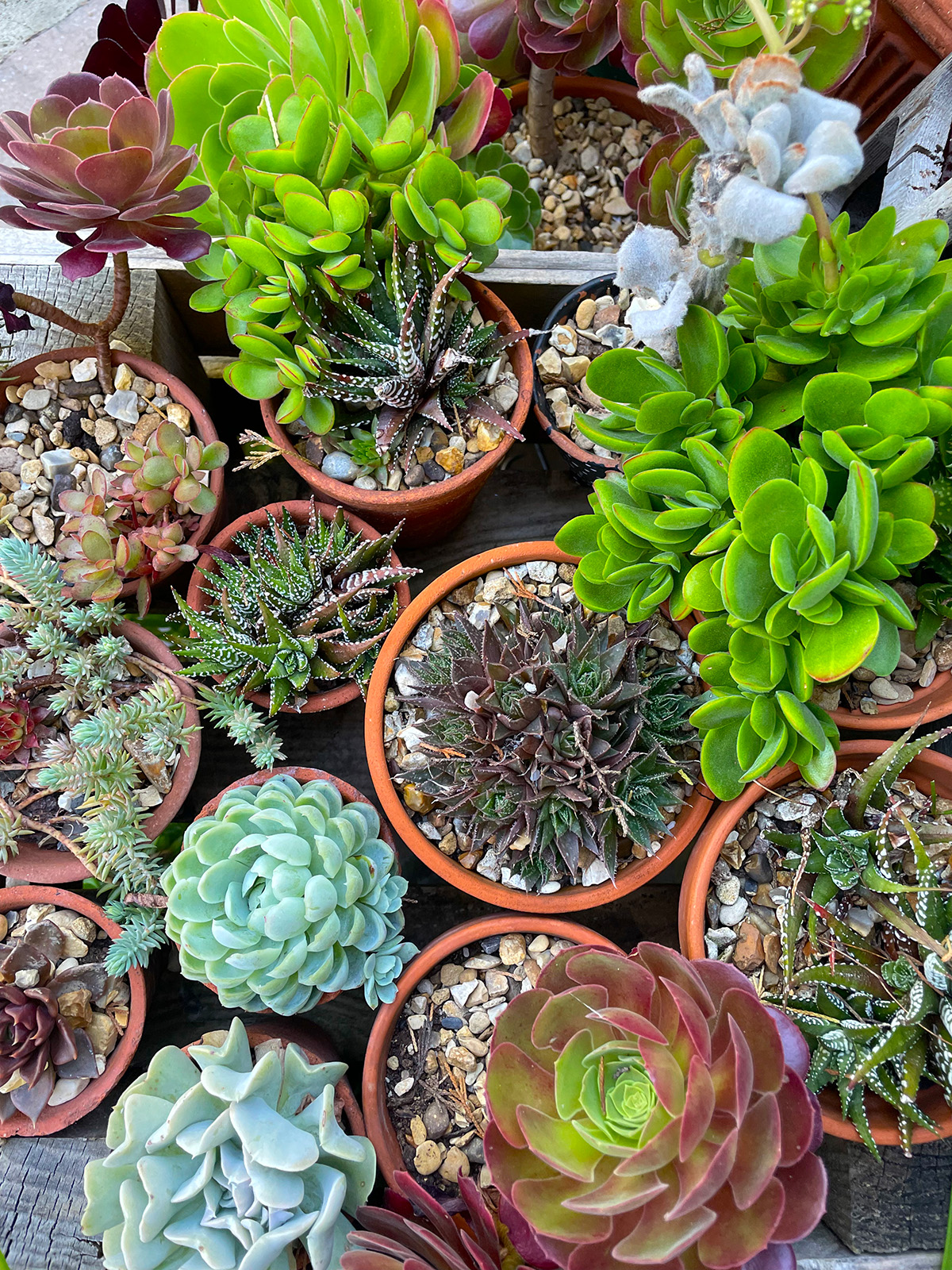
Beautiful displays are still possible by utilising succulents such as aeoniums, mangave, agave, sedums and sempervivums, all of which are great drought resistant plants with some lovely varieties available that equally attract bees and other pollinators. These plants are able to store water in their fleshy leaves and stems during wetter spells, and draw on that moisture when needed.
Hot loving
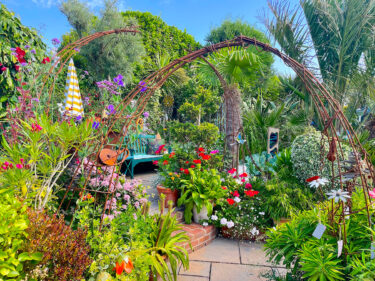
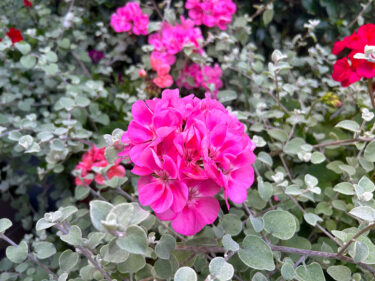
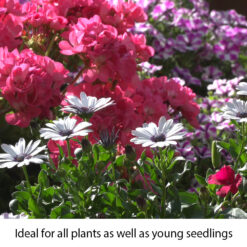
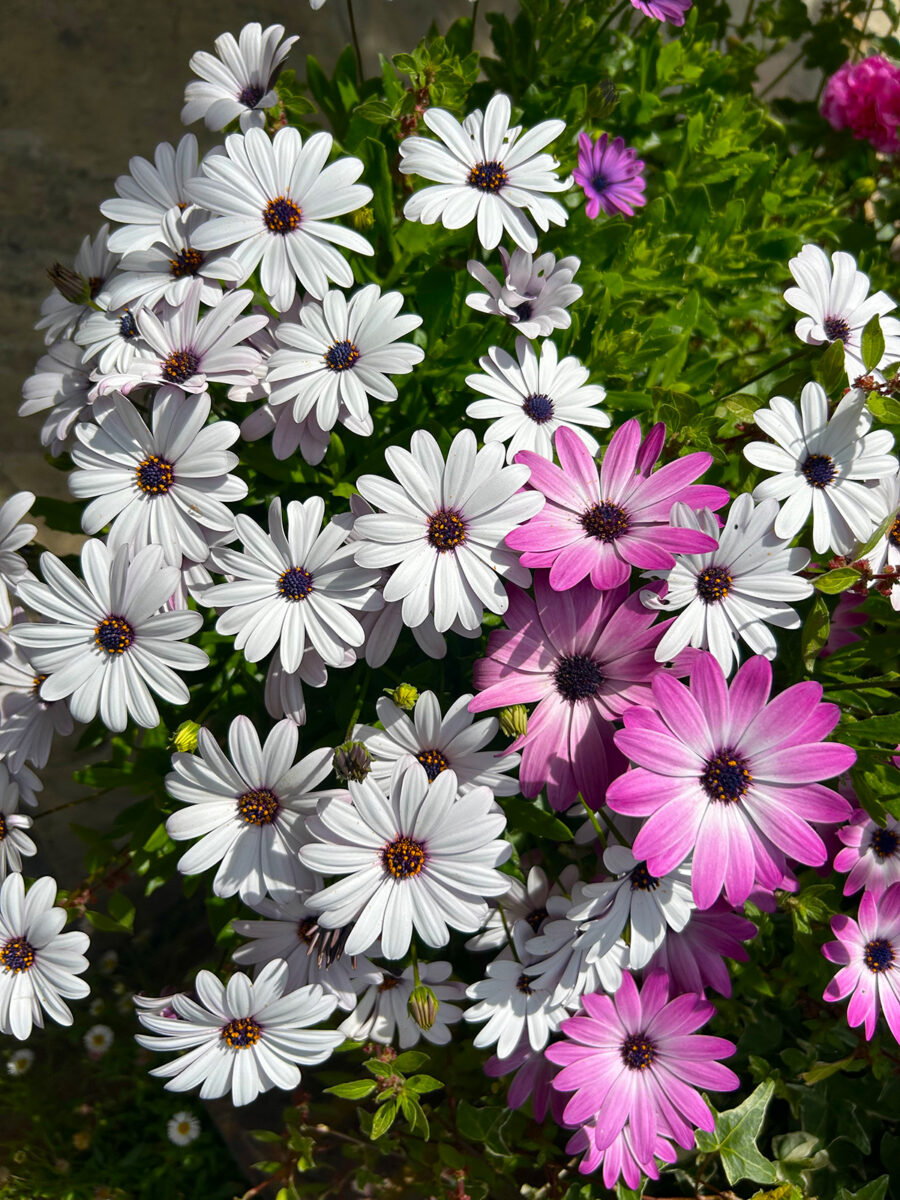
Back in the autumn of 2021, I personally decided to make major changes to my own garden, in order to facilitate more space to display my existing drought tolerant collection, along with many new additions. I opted to create a patio, bounded by upturned railway sleepers that created the perfect backdrop for displaying some of my collection, along with the extended use of many geraniums, pelargoniums, eucomis, osteospermum and gazania. Potted palms and ferns greatly added to the mix.
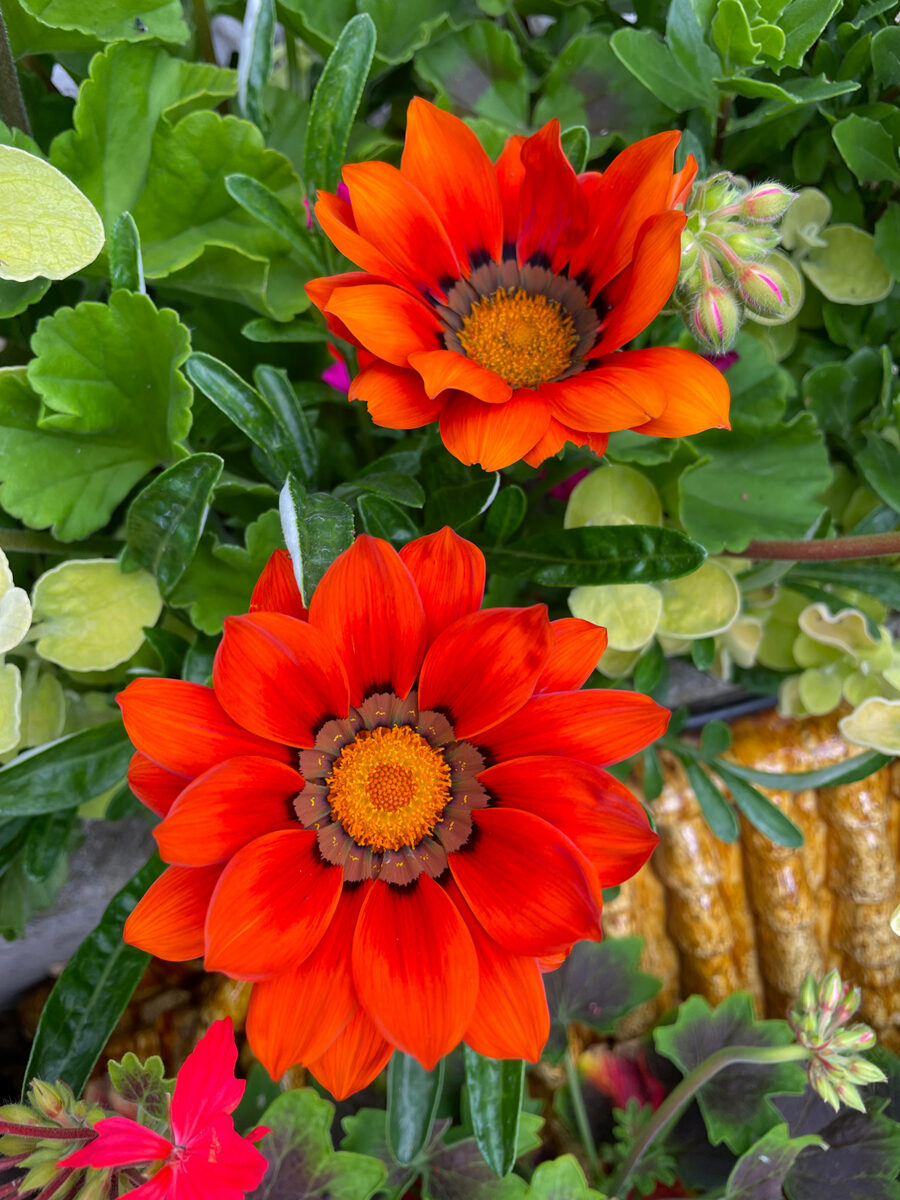
I have found that over the years, there has been always been a limited selection of suitable plants available in garden centres. Many of my appropriate purchases have been made online, due to the sheer frustration of not being able to find what I want locally.
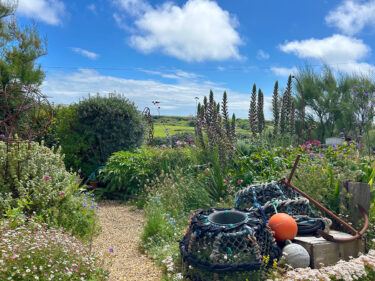
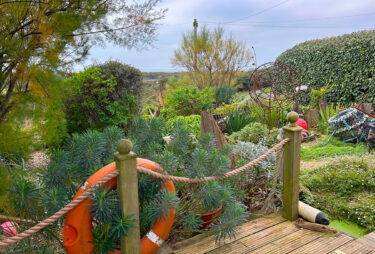
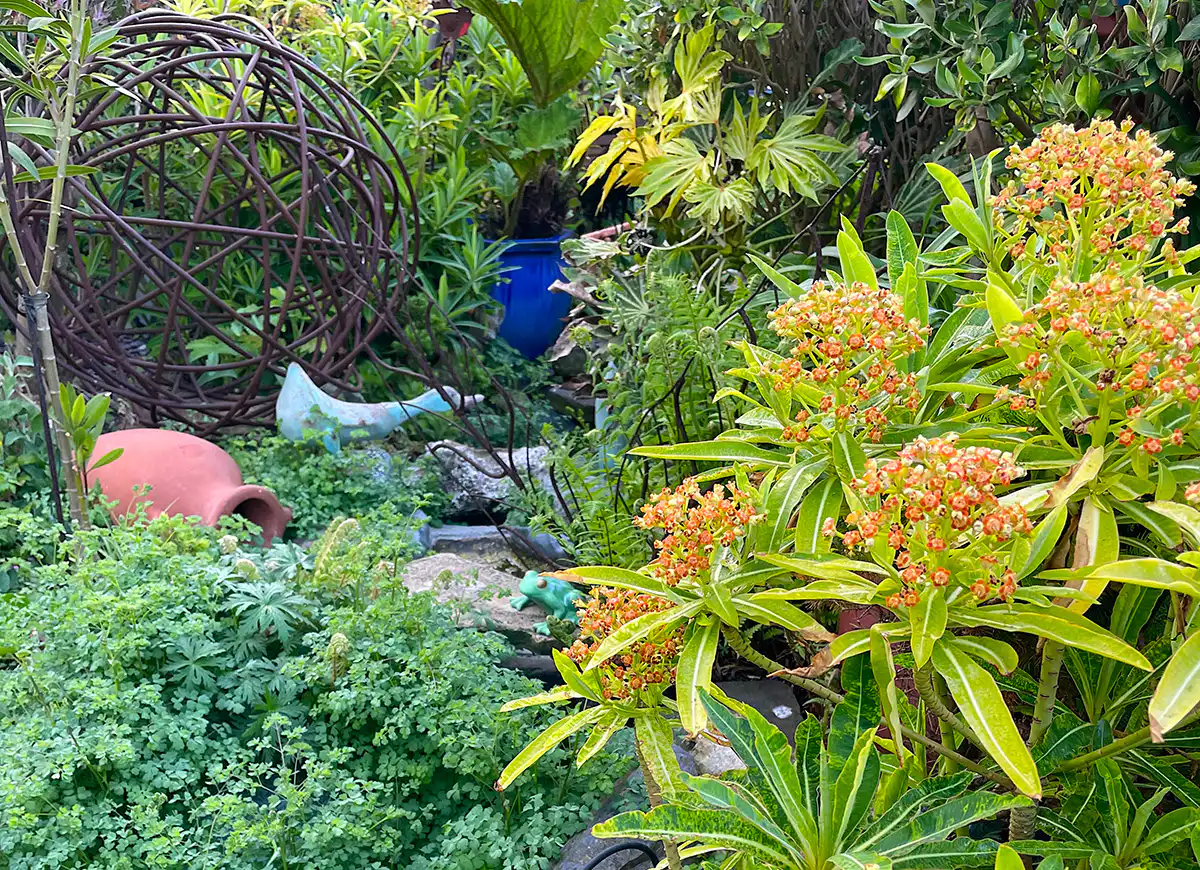
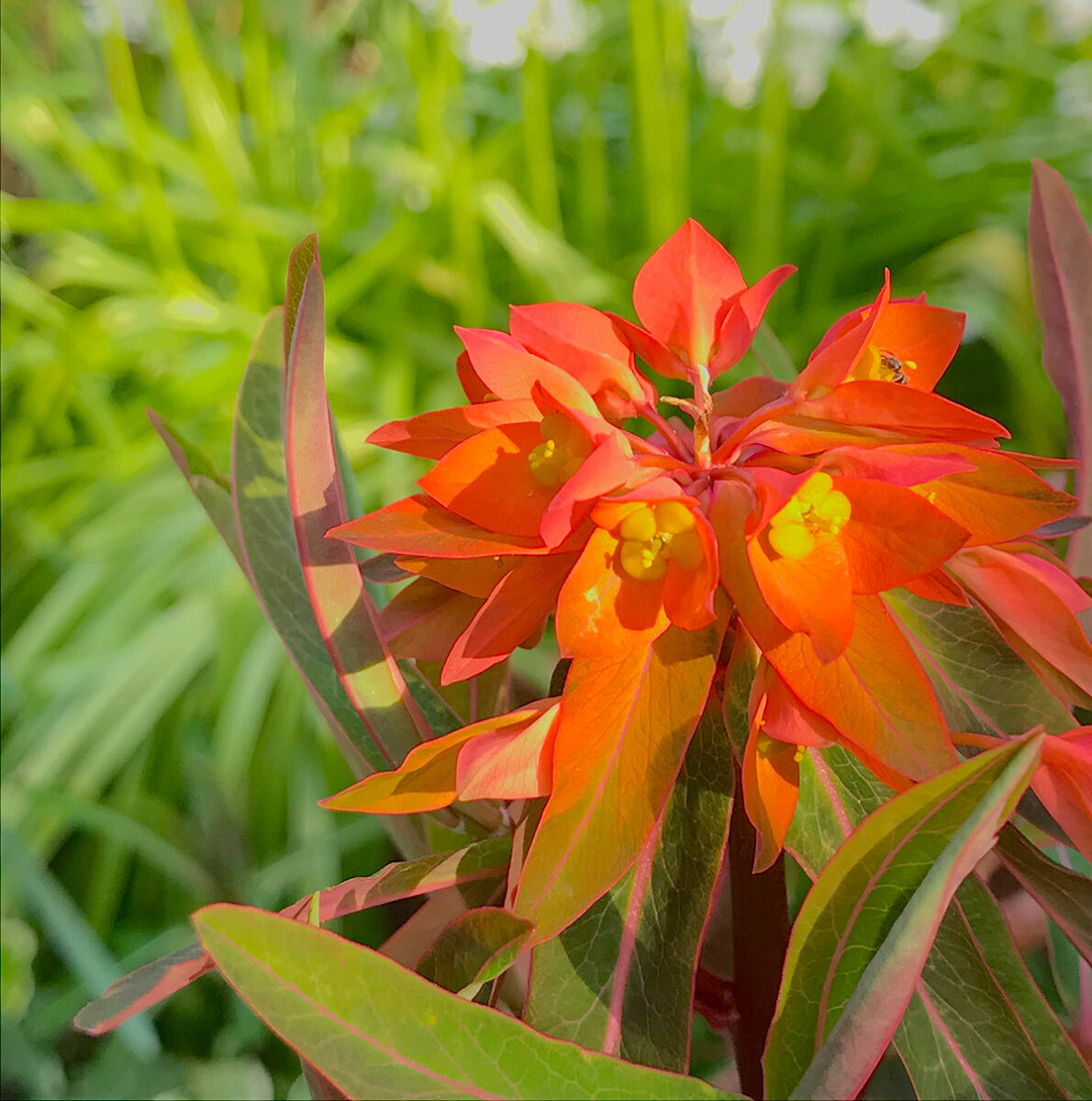
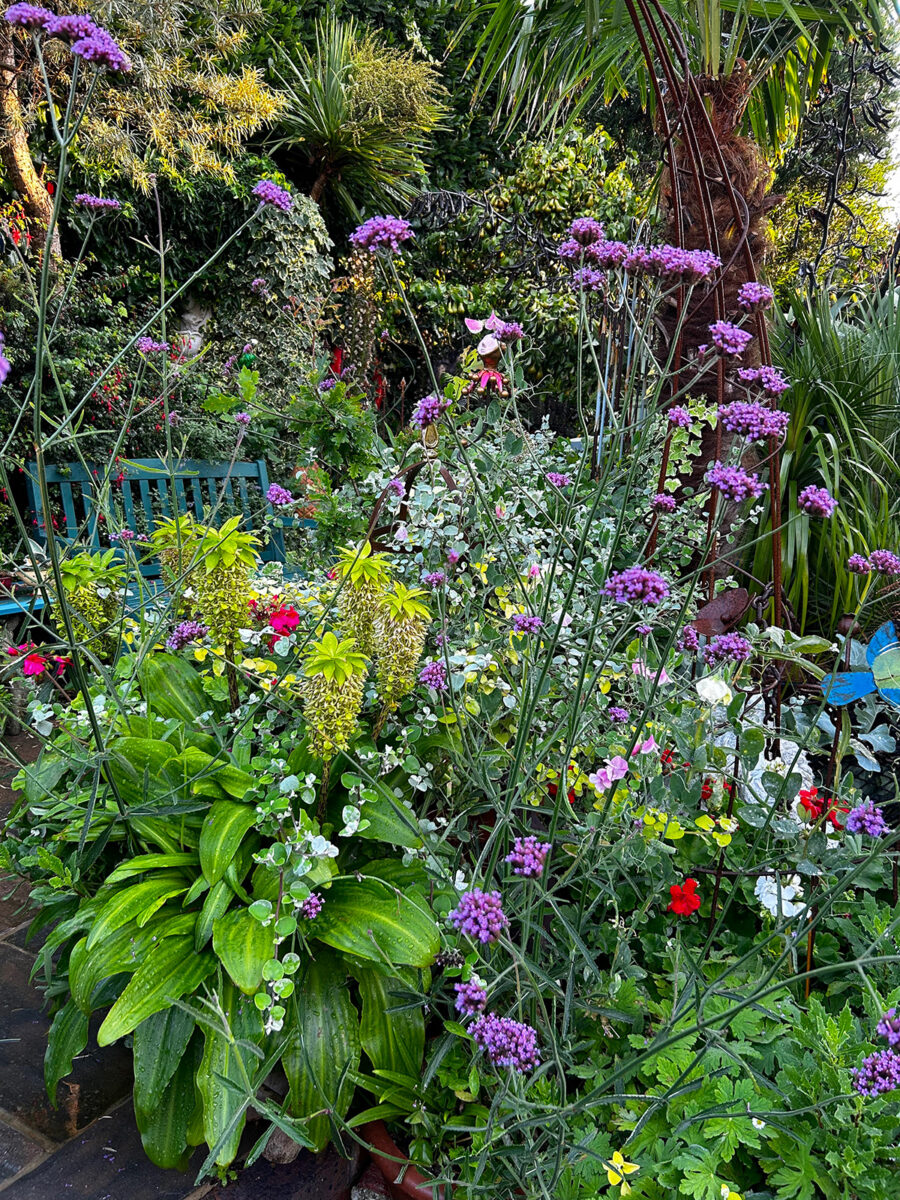
The many colours of osteospermum work well, along with euphorbia, two of my favourites being Euphorbia griffithii ‘Fireglow’ and Euphorbia mellifera (see main image).
Gentle persuasion
Many gardeners need to be educated about trying to make their gardens more resistant to drought and advising them that it is not necessarily about digging them up and starting again, but thinking about appropriate soil cultivation, plant choice and garden maintenance.
Using different plants may mean that the feel of the garden will change, but dramatic plantings can easily be achieved using plants that have very low moisture and maintenance demands.
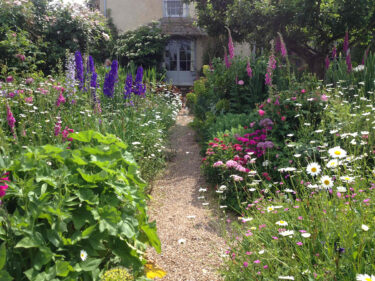
A design trick much used in my own garden is to plant everything close together to make sure there’s no open ground that will dry out faster in the summer sun. The addition of water features and fountains around the plot also adds a cooling effect, no matter how hot and dry the weather gets.
I firmly believe I am saving time with the use of more drought tolerant plants, simply from the watering perspective and the time it used to take me, equally with not having to invest in as many summer annuals (I used to spend up to £700 every summer to dress the garden), I am saving money too, as my succulents can get through the winter and be put back out the following year!
Hot weather first-aid for plants
After years of gardening, here are my five top tips on keeping plants alive in hot weather.
- A tip passed on to me many years ago, by my favourite aunt, was to ensure you place a small amount of tin foil inside terracotta wall pots, in order to retain some moisture. By creating an inner saucer, where excess water can flow over the side and through the hole at the base, you ensure some is retained to be able to be absorbed by the plants!
- Another good way to conserve water in container gardening is double potting. If you have one pot with a plant, place it inside a slightly larger pot, then fill the gap within the larger pot with soil and add moss and/or stones and pebbles on top. When you water, water both the plant and the soil around the first pot. It’s a great alternative for plant watering if you go on holiday too.
- Finish off with a level of shingle or gravel over the top of the compost, once the flowers have been planted, which provides a double whammy, not only does it help prevent moisture escaping but also aids protection from slugs and snails too.
- More soil takes longer to dry out, so larger containers retain moisture longer than small ones. The same goes for garden borders, if you have trouble with your garden drying out, opt for a deeper bed that requires more soil.
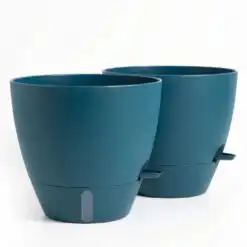
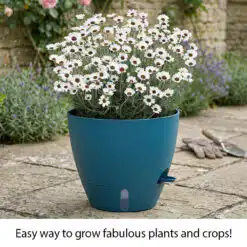
- Over 28 years ago, I opted for a self-watering system in my small north London garden. As I had a demanding job it was important to have a means of hydrating the plot while I was busy. When I retired in 2004, I lifted the entire system and brought it with me to the coast and installed it at Driftwood to make life a little easier here too.
Shade techniques
I’m very fortunate to have a north facing rear garden, which means a great deal of available shade behind the house. It’s the perfect location for a variety of plants and certainly aides water retention in excessively hot periods. Moving potted plants into a shady spot while you are away will help them to remain damp and it will really slow the rate at which they dry out.
Alternatively, you can utilise garden fleece to drape over plants in hot periods and give them some protection from the overhead sun.
If you’re going to water, try to do it ideally first thing in the morning, or if not at dusk. Temperatures will be much lower, compared to midday, so there will be less water evaporation and plants will be able to hold onto the water longer. Aim for the base of the plant, that way roots have direct access to the water and the immediate soil is drenched.
Try not to frequently water the garden, instead, do it less but water for longer periods. Short bursts of watering can mean that the water doesn’t have the opportunity to sink into the ground, before being evaporated. A heavy douse will ensure plant roots remain moist for longer.
Also, by watering less you are encouraging plant roots to push wider and deeper to reach the required moisture. Constant watering can cause roots to become lazy and remain near the surface, making them susceptible to harsh sunlight.
Drought tolerant plants
Here are some of the plants I’ve chosen for my garden that are less needy and more drought-tolerant are shown below.
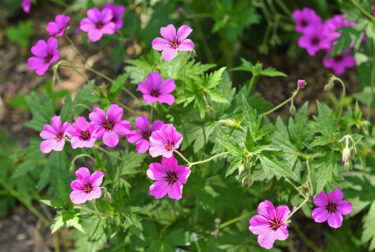
- osteospermum and geraniums (hardy and tender)
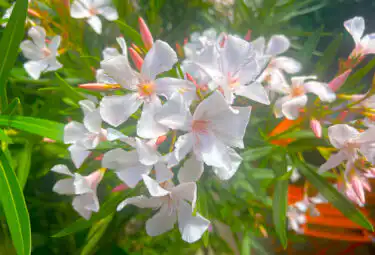
- palms, oleanders
- succulents including aeonium, sedums, sempervivums, aloes
- euphorbia – notably E. characias, E. mellifera, E. griffithii ‘Fireglow’
- artemisia along central path
- catmint (nepeta)
- buddleia
- Verbena bonariensis
- Yuccas
- Aster – I love the island series
- Sea thrift, sea campion and santolina
- Shrubby Hare’s Ear (Bupleurum fructicosum)
- Acanthus
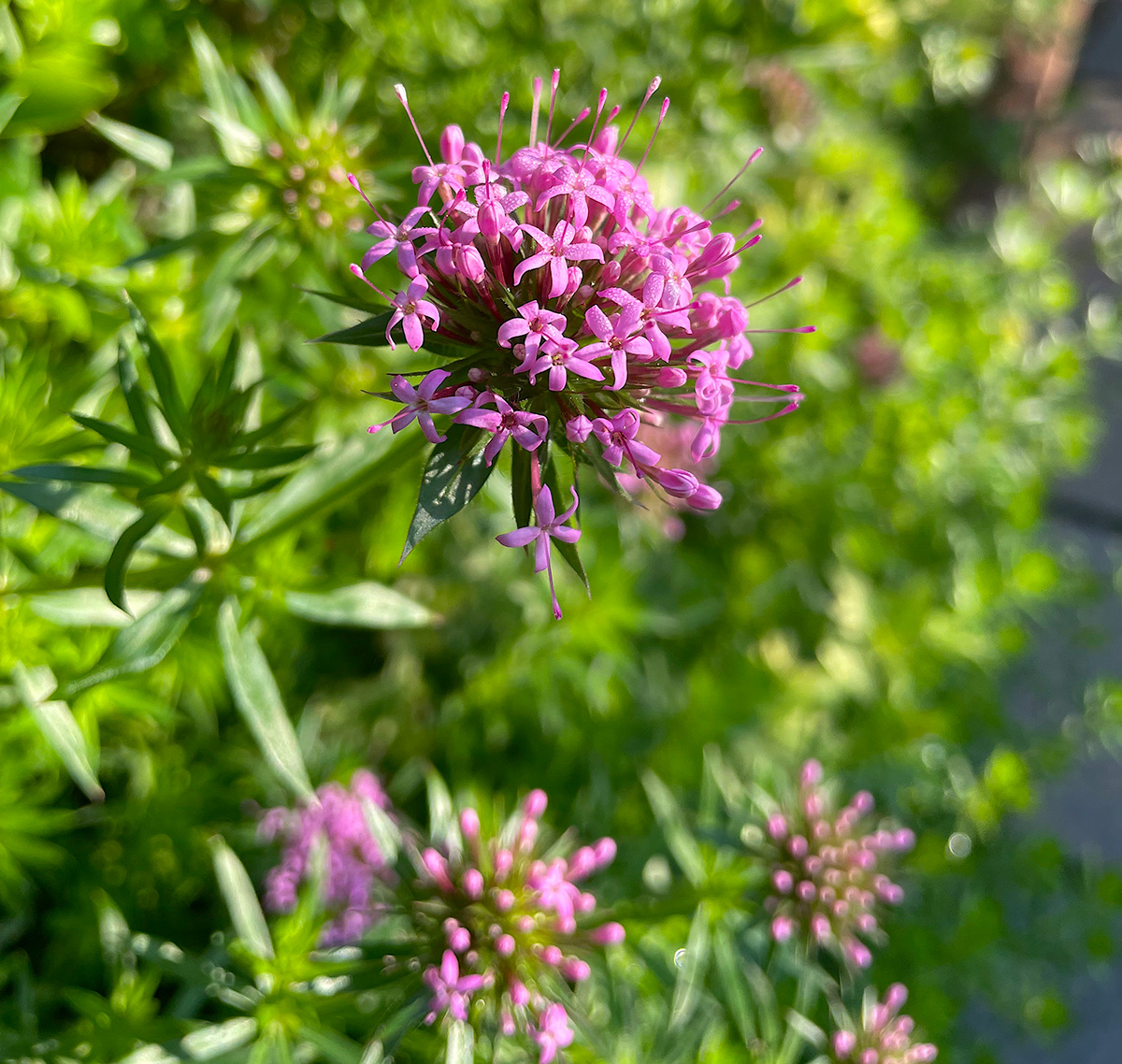
- Phuopsis ‘Pretty pink’
- Escallonia ‘Pink Elle’
- Sea buckthorn
- Coronilla glauca drought tolerant once established
Happy Gardening