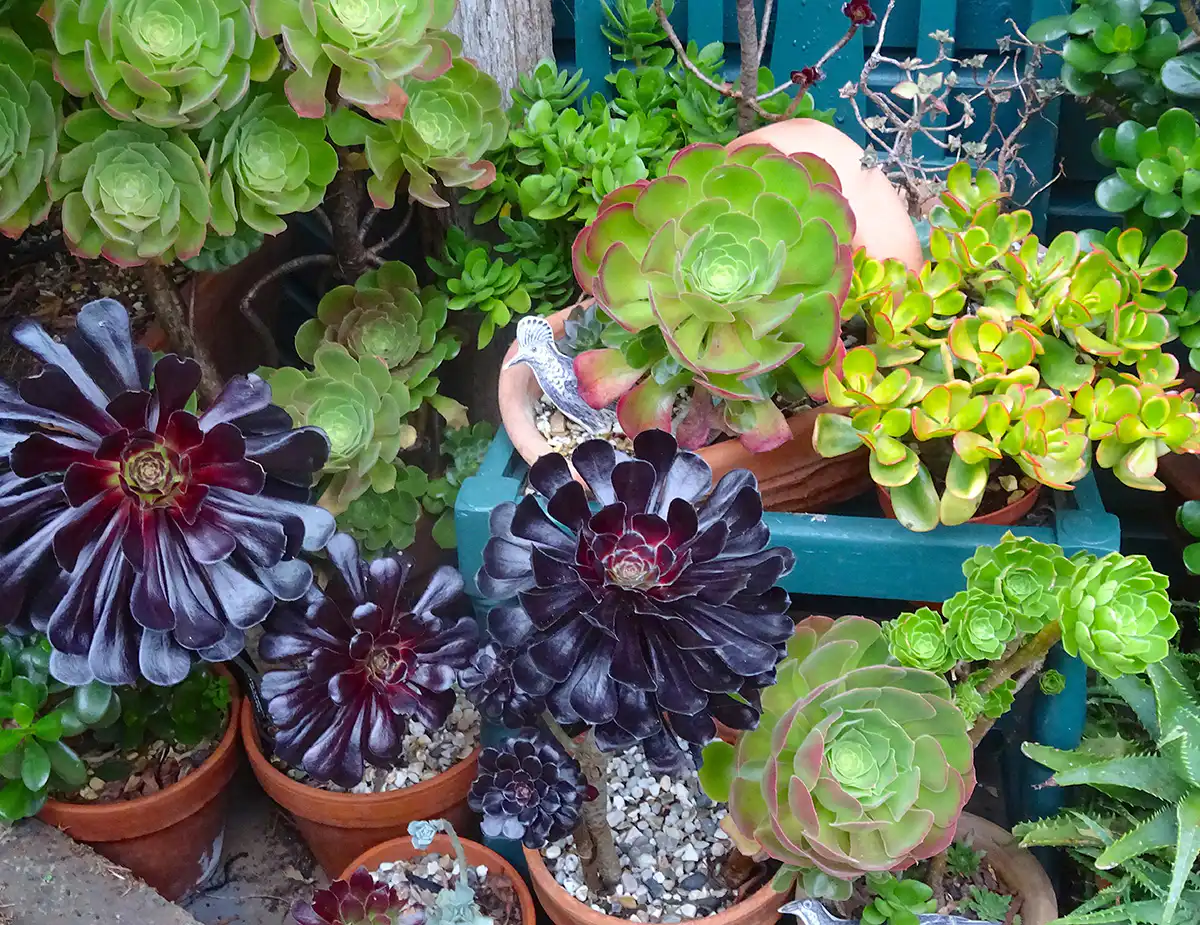
For the last 15 years or so, I have been providing garden talks to local horticultural societies and clubs. Over the winter of 2024/2025, I decided to write a third presentation to go with my other two. Due to the large volume of succulents on display in the garden through the summer, I wrote one entitled “My Succulent Obsession” which I have now delivered four times across Sussex with five more bookings this coming autumn!
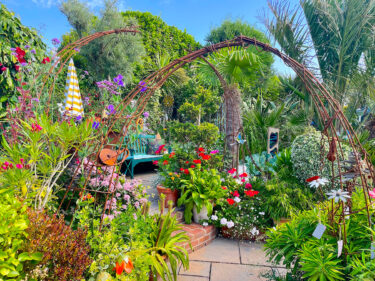
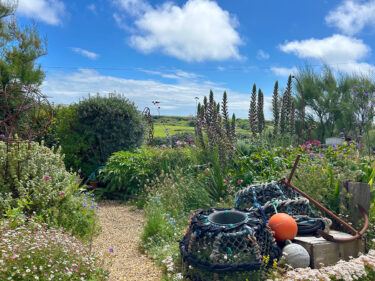
So, where did this obsession begin? The first evidence, in looking back at images I’ve taken of my garden, is 2012, when I started to introduce a large collection of Agave americana to create a Mediterranean coastal feel to the beach garden. Over the years I’ve acquired some 80 specimens, all in containers, bar two Agave americana planted into the shingle at the front. There are probably 10 or 12 different types, all of varying sizes. I prefer to have them in pots, as they don’t like the wet, so I can lift them and place them undercover through the winter months to keep them dry. I guess I clearly fell in love with them as the obsession has now spread to aeoniums, echeveria, mangave, aloe, cacti semponiums and sedum.
Why I love succulents
In my world, succulents are more than just trendy houseplants or additions to the garden. They symbolise resilience, adaptability, and the potential for growth. Their ability to thrive in challenging environments makes them a perfect representation of new beginnings.
I suppose the first question has to be why I love succulents? They are the ultimate sustainable plant, with fleshy leaves and stems to store their own water supply. They have evolved to cope with extreme drought, adapt to a wide range of conditions and are very easy to grow. They come in a wonderful array of forms and colours and their shallow root system is excellent for containers. Great news for last summer’s droughts and hosepipe bans, only lifted in Sussex in February this year.
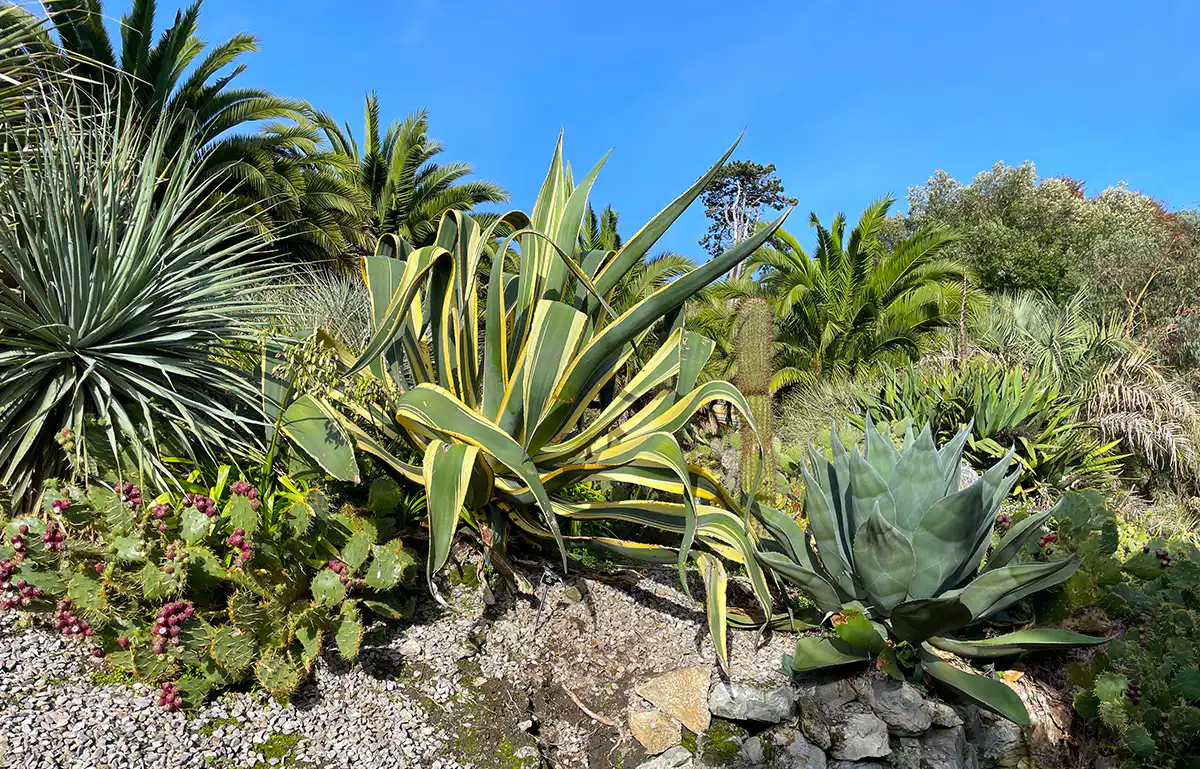
I mentioned Agave earlier, which hail from Mexico. In Mexican culture, they are considered a symbol of purity, strength, and health with over 250 different species, each with its own unique characteristics. They can vary in size from small varieties that can be grown in pots, to large specimen pieces forming the bulk of a gravel garden display, like this amazing collection I saw a couple of years ago in Ventnor Botanic Garden on the Isle of Wight.
Not just pot plants
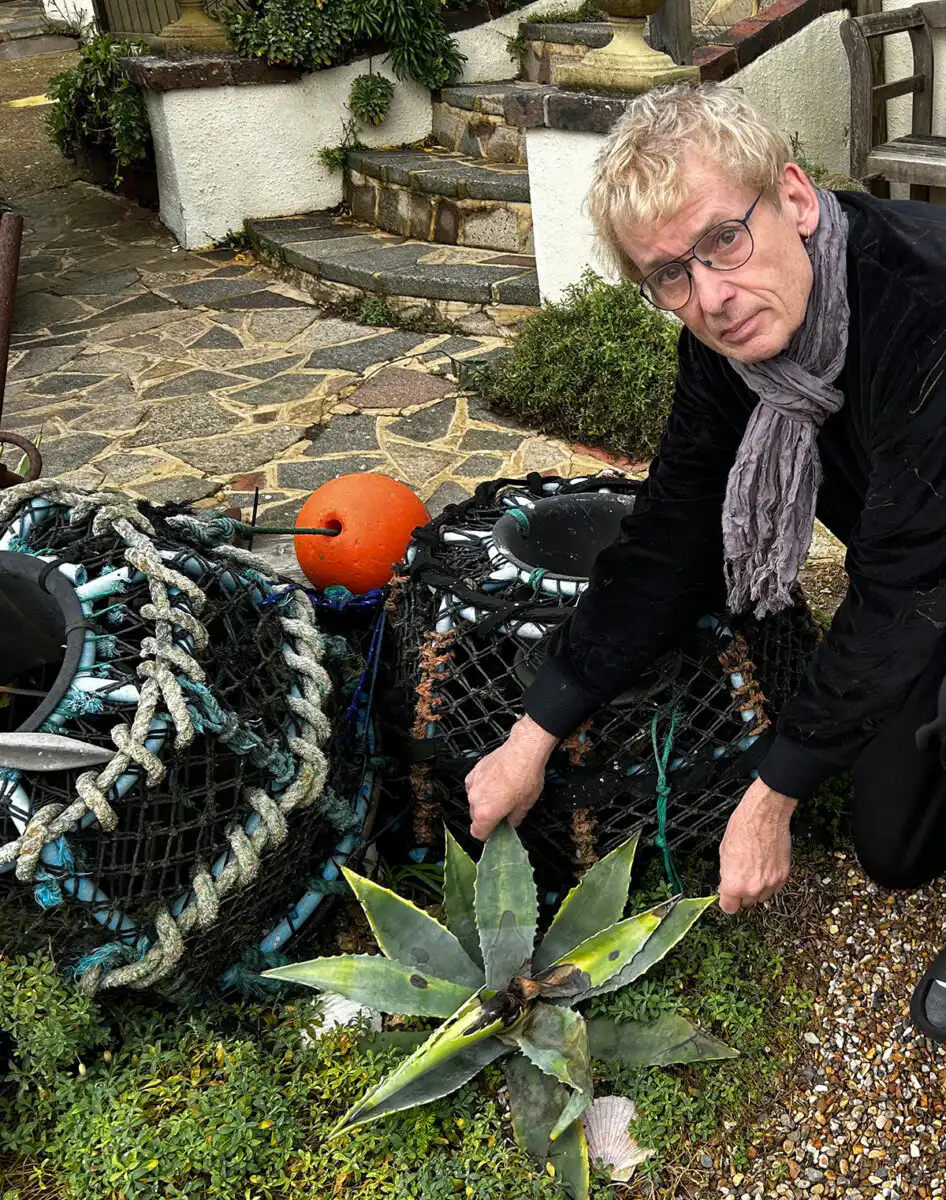
These are amazing plants in the ground! I did have a disaster with some I planted out a few years ago, where they all rotted in the wet winter weather.
The one trick I learnt, soon after, was to try and plant them at a slight angle, so the crown of the plant does not get a build-up of water around it. This seems to have worked with my two in the ground now, which have been there for four years and are growing really well. The other big plus with agave is their ability to reproduce very easily. Just extract the pups that grow up at the sides of the plants and pot them up.
Favourite succulents
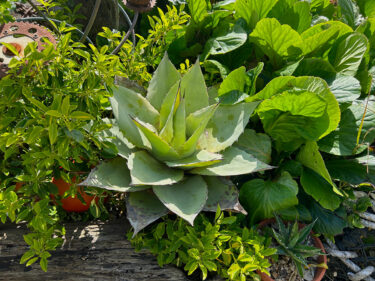
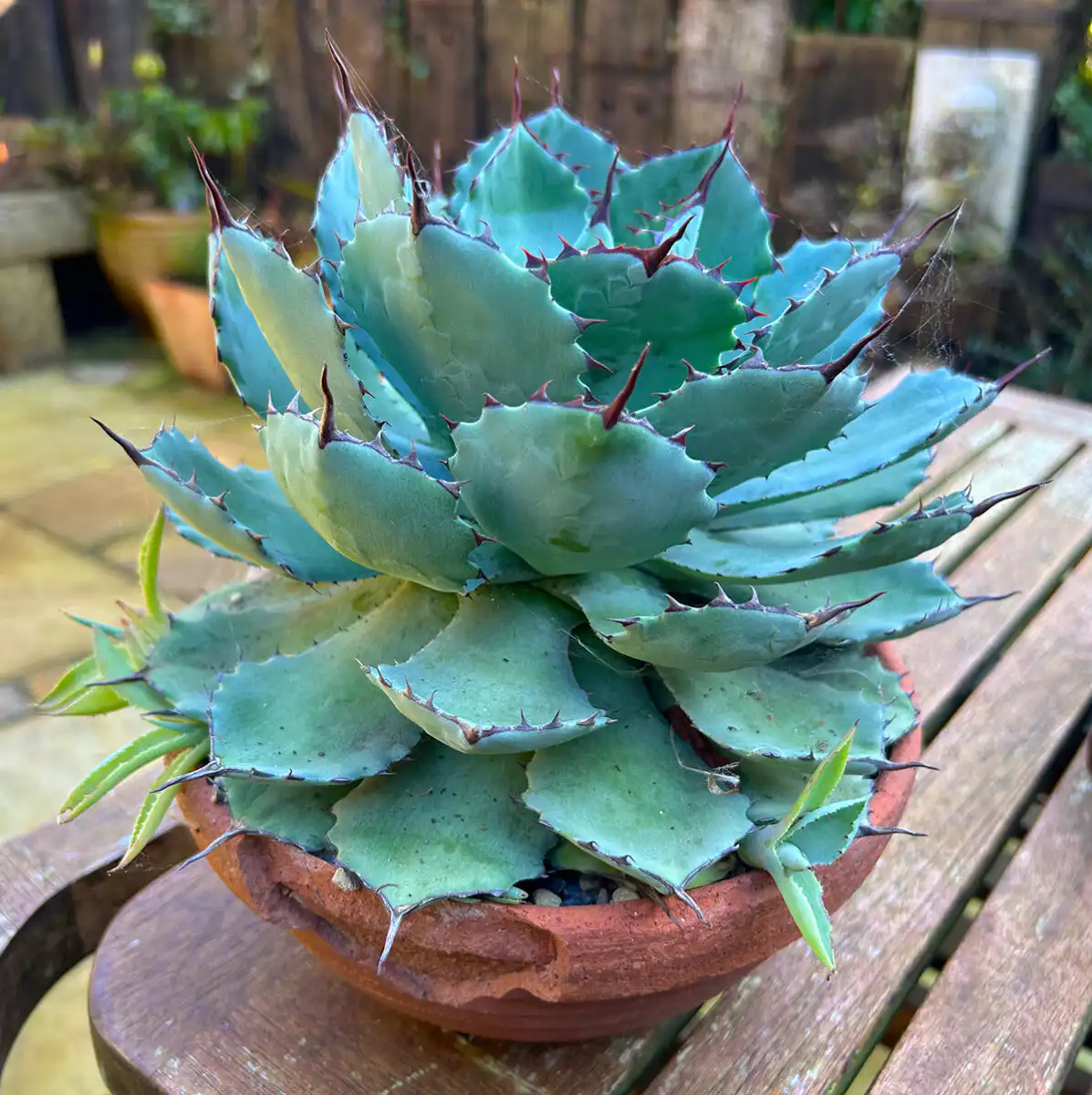
If I had to choose one as a favourite, without doubt it would be the beauty named Agave kichiokan ‘Glow’, which forms compact rosettes with up-curving short, thick, fleshy leaves, pale green in colour with margins of yellow to pale green and beautiful imprinted patterns on their upper surface. I keep this one in the house to appreciate it through the winter, as I love its form and shape, then out it goes into the garden for the summer.
A fairly new kid on the block comes in the form of a mangave! These are a cross between an Agave and Manfreda and can grow outdoors in spring and summer. They do like to be watered regularly in summer, having allowed the compost to dry out between, but ultimately, they are drought tolerant, low maintenance plants, but they need to be kept frost-free in winter. They make a fabulous display and there are many unusual ones to choose from. I have about six different types, which are over wintered in the heated greenhouse.
Plant collector
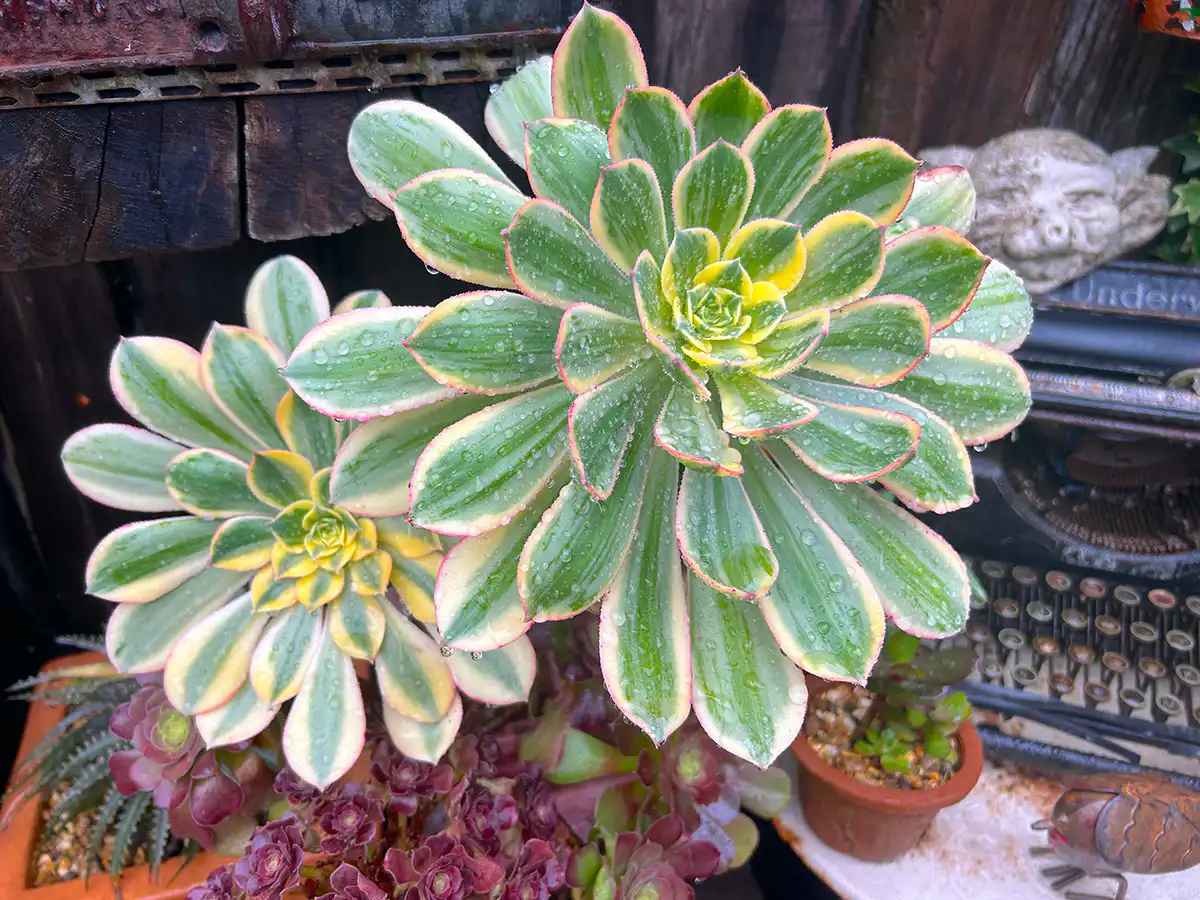
I suppose the largest collection of succulents in my garden are the stunning aeonium, with over 100 on display each. Aeoniums are fleshy, succulent plants, native to Madeira, the Canary Islands and North Africa. They have rosettes of glossy, waxy leaves and range in height from a few centimetres to up to a metre. With such a vast range of colour and texture too, it’s hard to choose! They are excellent, low maintenance plants and need very little care, other than winter protection. I would have to say they actually thrive on neglect. If you allow the soil to dry out in between watering this will make the colours more vibrant and the plant stronger.
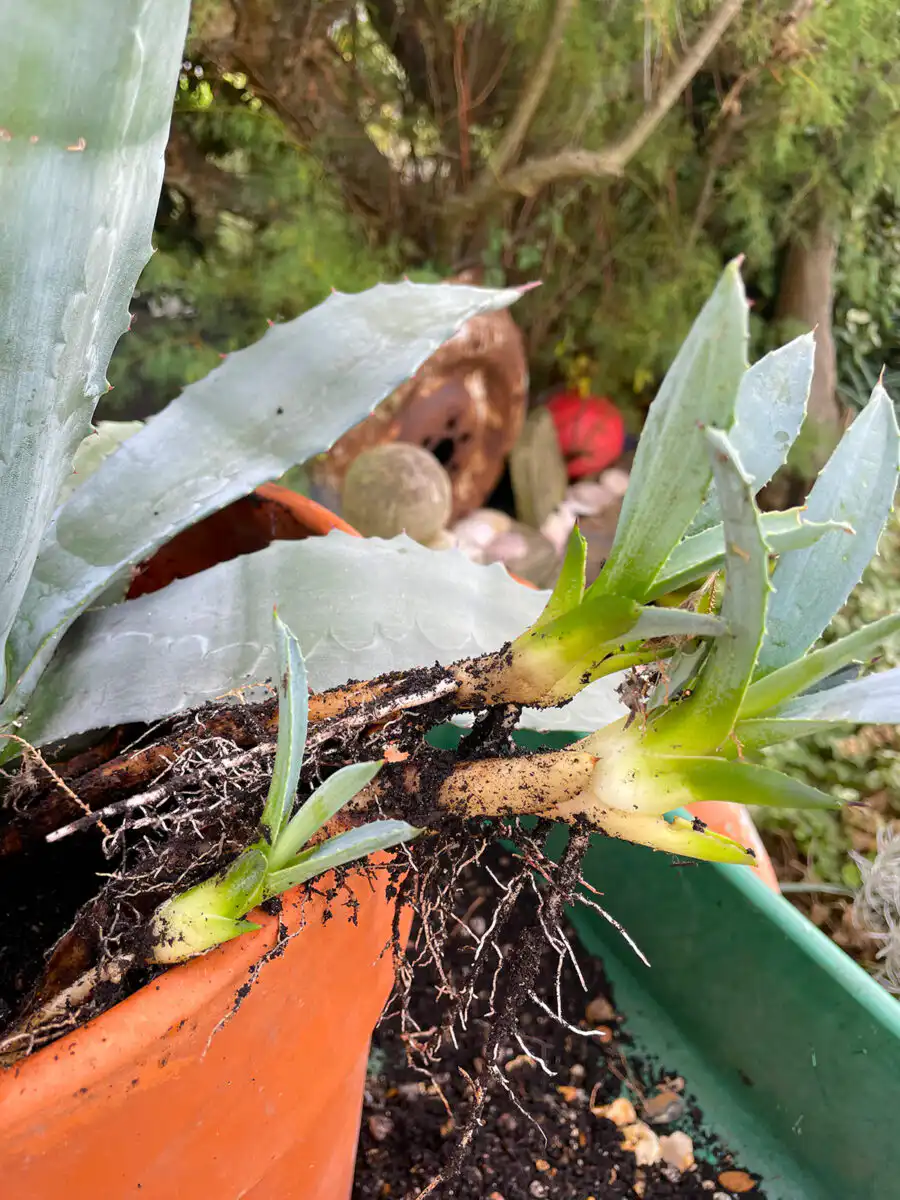
Once again, they are very easy to propagate by taking cuttings in the spring. Pick young slender shoots as they root more easily and ensure you take from healthy shoots. Hold the stem in hand, make a clean cut with sharp secateurs. Make sure you place to one side for a few days and allow a callous to form on the cutting. Pot up in 50% mix of potting grit and compost, give them a light water and wait for them to root. A worry many of my visitors have is that the rosettes drop their bottom leaves through the summer months, this is quite normal as they go dormant, conserving energy by shedding old leaves. However, rapid loss can signal issues like overwatering (leading to root rot), under watering, too much intense sun, or pest problems (mealybugs/ants), so check soil moisture, light, and inspect for pests if the drop is excessive or the plant seems unhealthy. One of my all-time favorites is Aeonium ‘Sunburst’.
Perfect for pots
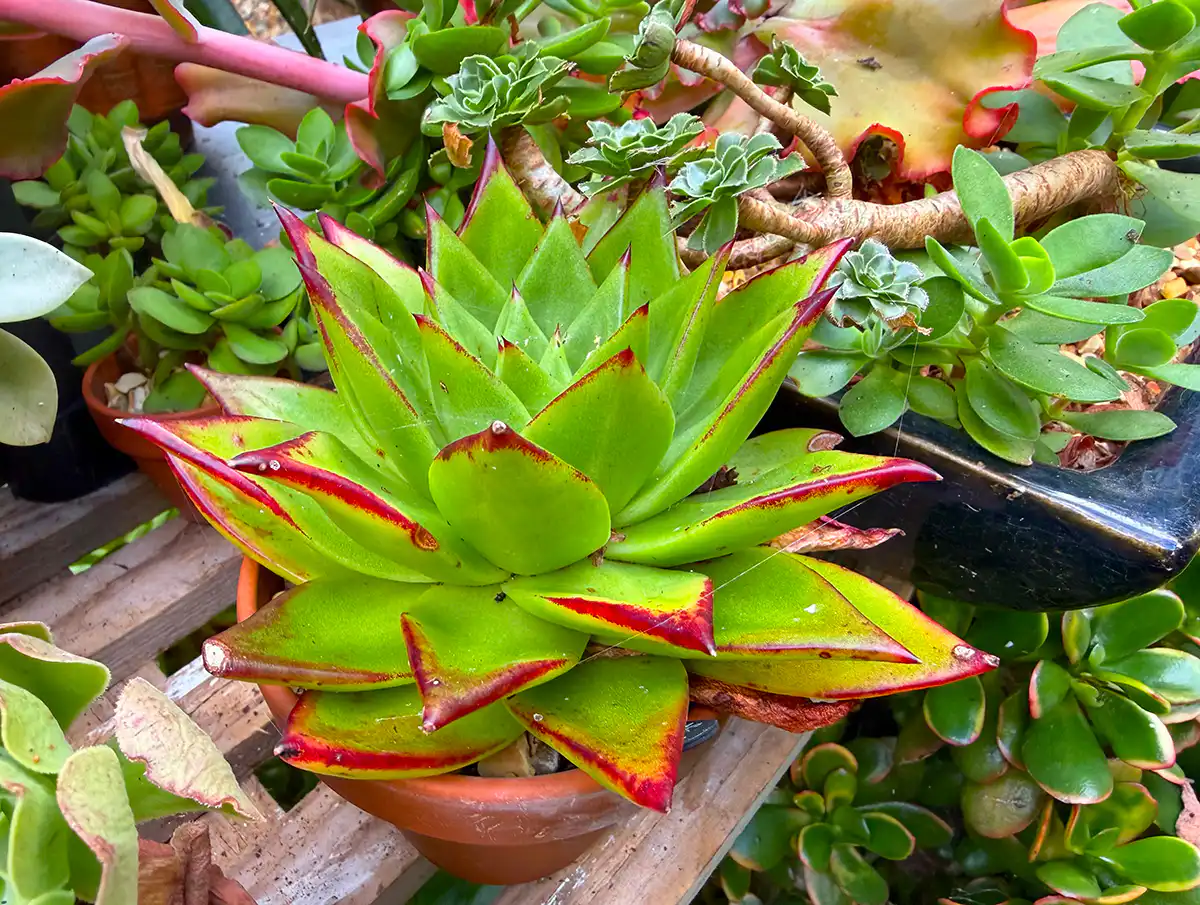
Echeveria is another wonderful addition to any succulent collection. They are rosette-forming evergreen plants, native to Mexico and central and southern America and are ideal for a hot, sunny spot. They too thrive on neglect and cope well in drought conditions. They are perfect plants for containers both inside and out. Smaller varieties are often used as part of carpet bedding schemes in gardens. One of my favorites is Echeveria agavoides ‘Lipstick‘, which I have growing on its own in a container, placed out in the garden in the summer in a display of various succulents.
Tough with dramatic flowers
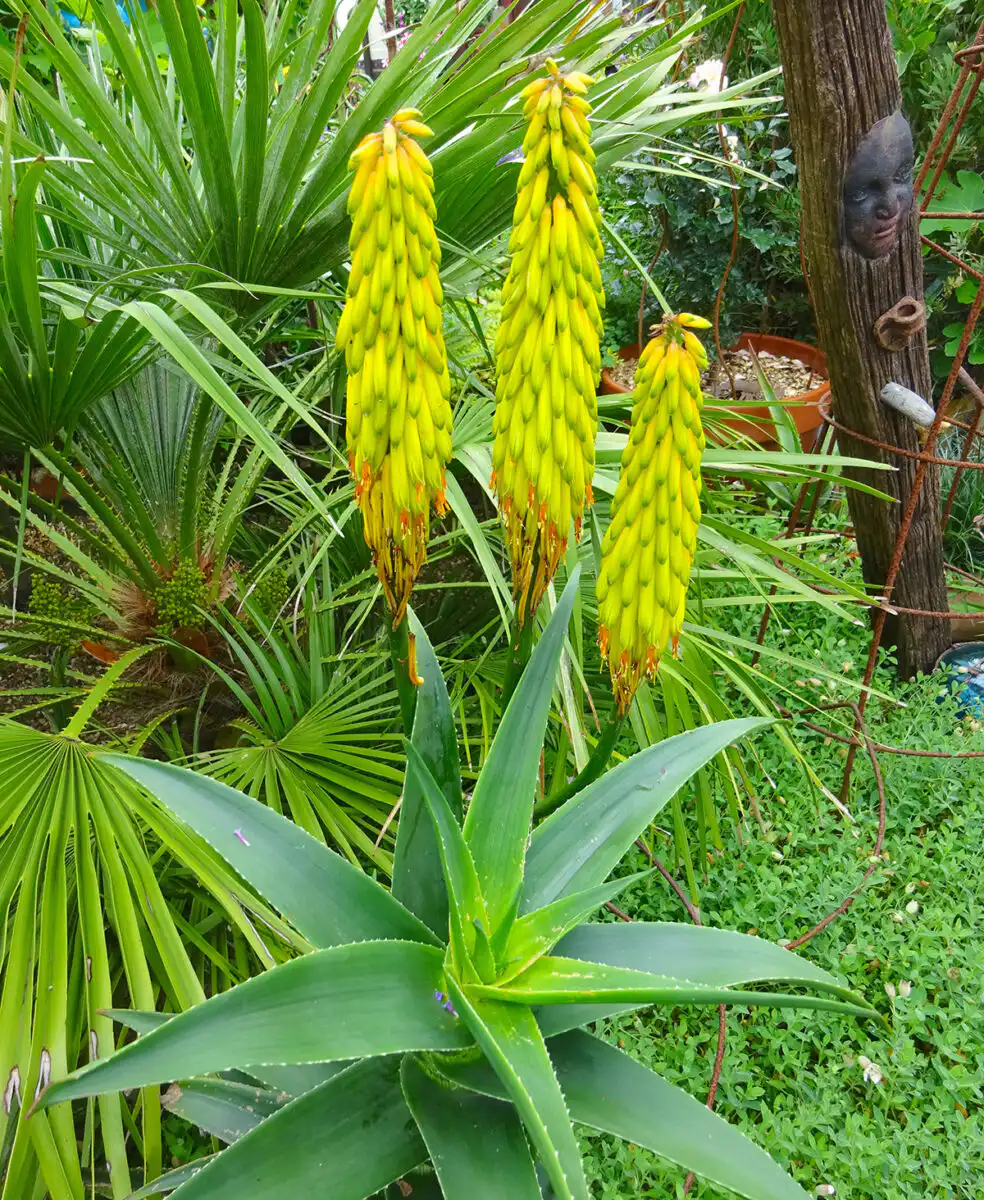
If you are looking for the perfect succulent, that is hardy all year around (down to -10 degrees) then you must get an Aloiampelos striatula (striped stemmed aloe). They are native to the mountains of South Africa, where summers are hot and dry and winters are very cold. An incredibly hardy aloe, can be grown outside all year round in most parts of the UK and has a sprawling, scrambling habit and may even climb if given support. In summer it bears tall, dramatic flower spikes not dissimilar to those of red-hot pokers. They form a branching, woody trunk perfect for growing in a dry, gravel garden, where you don’t have to worry about getting it through winter. Deadhead spent blooms and tidy up foliage when necessary. In very cold winters the foliage may shrivel but it quickly puts on new growth in spring. No need to protect at all.
General Succulent care
- Usually require a small amount of water Spring to Autumn.
- Always check before watering.
- Let compost dry out between watering.
- Can tolerate some neglect.
- Ideally water from base to avoid leaf rot and form stronger root system.
- Mulch over compost with crushed shells or horticultural grit to avoid damp compost touching leaves
- Overwatering results in yellowing, soft mushy leaves and stems.
- Most succulents need frost protection above 5 degrees
- Some can be left out with protection
- Don’t like to get wet through winter months
- Need all the light they can get
- Try and open greenhouse doors regularly for good air circulation
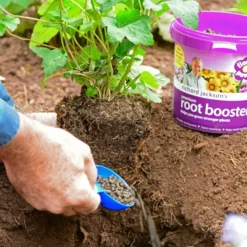
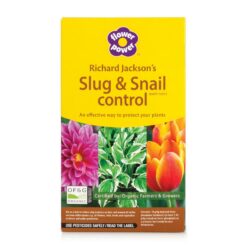
Many visitors ask me what I plant my succulents in and the answer is always the same, I use a 50% mix of potting grit and ordinary bought garden compost, works for me every time. I do give them a feed of Richard Jackson’s Flower Power at the start of the season to give them a head start.
I can honestly say I have had very little experience of pests and diseases on any of my collection over the years, they are all wonderfully reliable plants to use in the garden, their only downfall, the need to protect from frost in the winter.
If in Sussex, do book a visit to see the collection, between 1st June and 2nd August, and enjoy home-made tea and cakes in the garden too. Email [email protected] to arrange or check the garden web site www.driftwoodbysea.co.uk