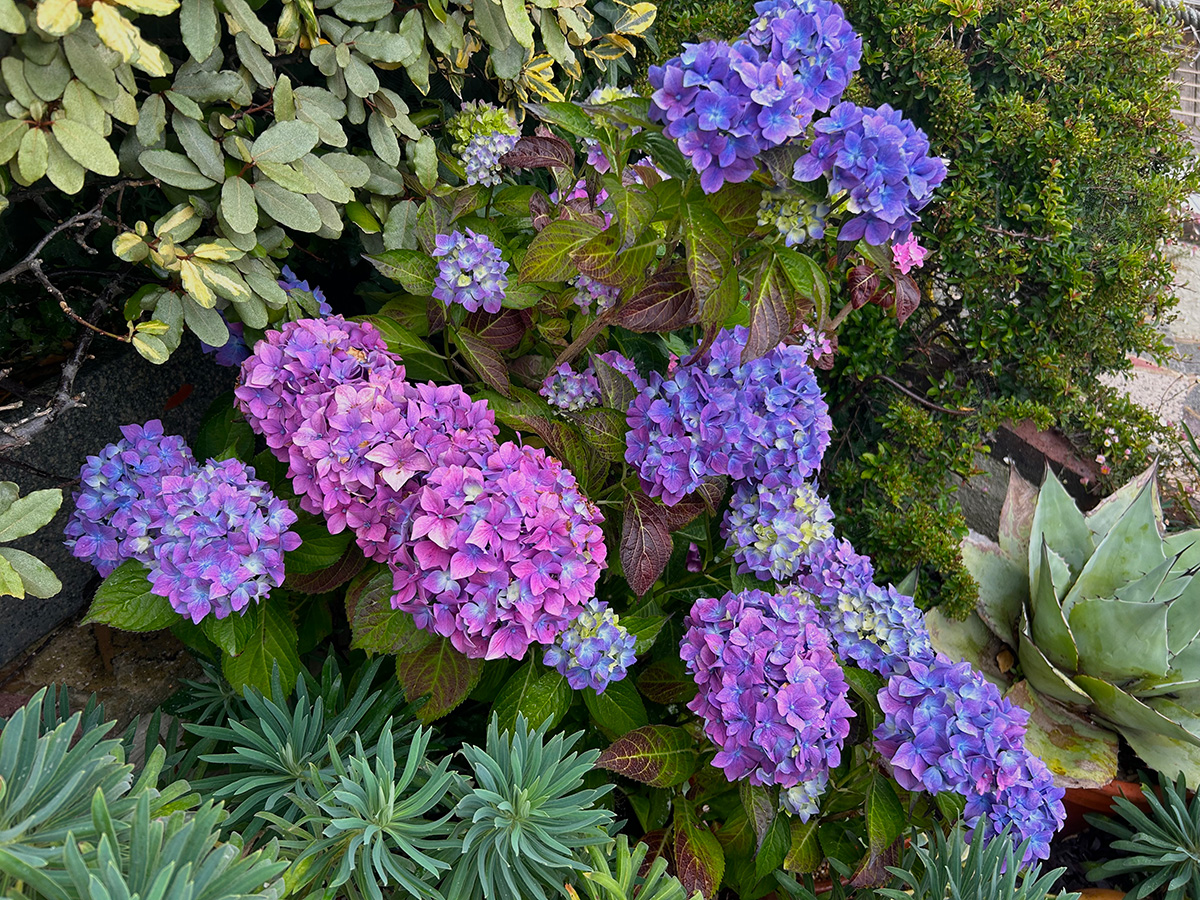
Whether for the garden, house or flower arrangement, hydrangeas are hugely fashionable now and rightly so, but, nothing flaunts old-fashioned charm like their immense flower heads. The blue ones in my front garden were there when we arrived 22 years ago, so, sadly I’m unaware of their names. I have a very vivid childhood memory of my maternal grandmother’s front garden in Cleveleys, near Blackpool back in the late 1950’s and early 1960’s, it was full of utterly stunning blue hydrangeas and that image has always remained with me.
Unrivalled beauty
These irresistible, unrivalled shrubs are native to southern and eastern Asia and the Americas. Most tend to be between 3 and 9 feet tall, while some are small trees and others climb up trees. They can be either deciduous or evergreen, though the most common species are deciduous and flowers can be white, pink, red, purple or blue. The acidity level of the soil can affect the colour. Leaves can be solid green or variegated with white or yellow. The amazing flower heads can be shaped like a big pom-pom (called mophead), a flat, lacy top (called lacecap) or a panicle. From mop tops to lace caps, dwarf to climbing, and variegated to oak-shaped leaves, there has to be a hydrangea for everyone, so, maybe it’s time to plant one in your garden!
Versatile beauties
Hydrangeas are perfect for gardens because they flower for many weeks, often for months, providing continuous colour from mid-summer into autumn. They create big impact with their large, showy flower heads and create a bold focal point in borders, containers, or shady spots. Their versatility shines in both sun or shade (depending on variety), in filling gaps in borders and being able to be grown in pots for patios. Many types, like Hydrangea arborescens, thrive in difficult, shady spots where other plants struggle. They can add year-round interest as the dried flower heads look attractive even in winter, adding texture, and some varieties offer nice autumn leaf colour too. In summer their abundant blooms are a magnet for bees and other beneficial insects.
Personally, I have a dozen or so different ones growing in my garden. They can be long-lived shrubs, sometimes for up to 50 years if properly cared for. The plants enjoy morning sun and afternoon shade, but they need frequent watering during the growing season. In my opinion, hydrangeas are the unsung heroes of the flower world, they are versatile, emotional, and always in bloom when it matters.
Hydrangea care
I suppose that their one down side is that hydrangeas need a consistent supply of water, but they can have too much of a good thing. If your hydrangeas are constantly wet, their roots can rot and the entire plant may die. This can usually be avoided if you plant in soil that has good drainage. It can be difficult to get water right. As they are quite picky about the amount they require, it’s said, if you don’t get the water quite right, they won’t bloom very well.
Here are 5 of my favourite hydrangeas currently growing in my garden at Driftwood by Sea.
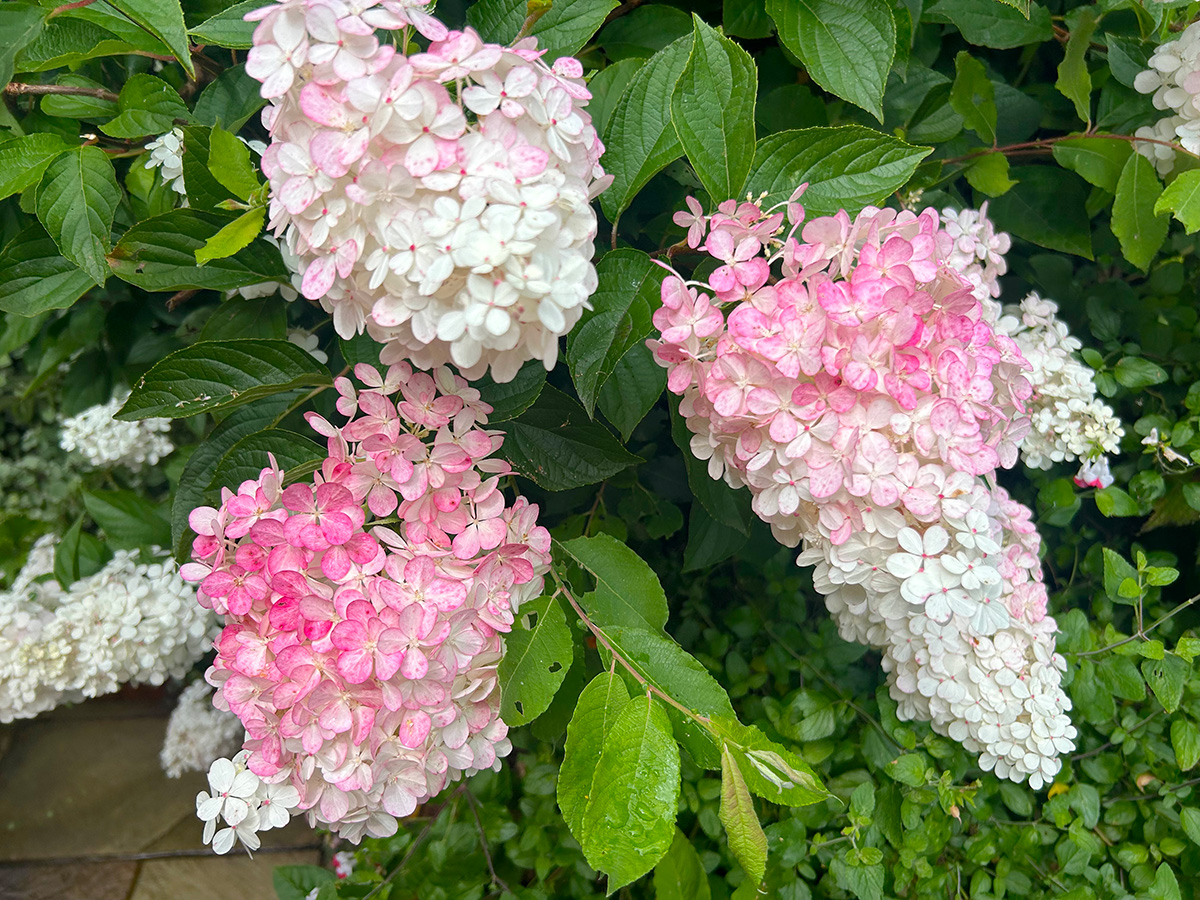
Vanilla Fraise. Hydrangea paniculata ‘Vanille Fraise’ (Vanilla Fraise) is a popular, hardy deciduous shrub, known for its large, cone-shaped flowers that change colour from creamy white to pink, then deep raspberry-red, over summer and autumn. It features attractive red stems and dark green foliage, thrives in full sun to partial shade in moist, well-drained soil, and is excellent for hedges, borders, or as a specimen plant, offering long-lasting color. This particular one pictured was given to me by my mother back in 2010.
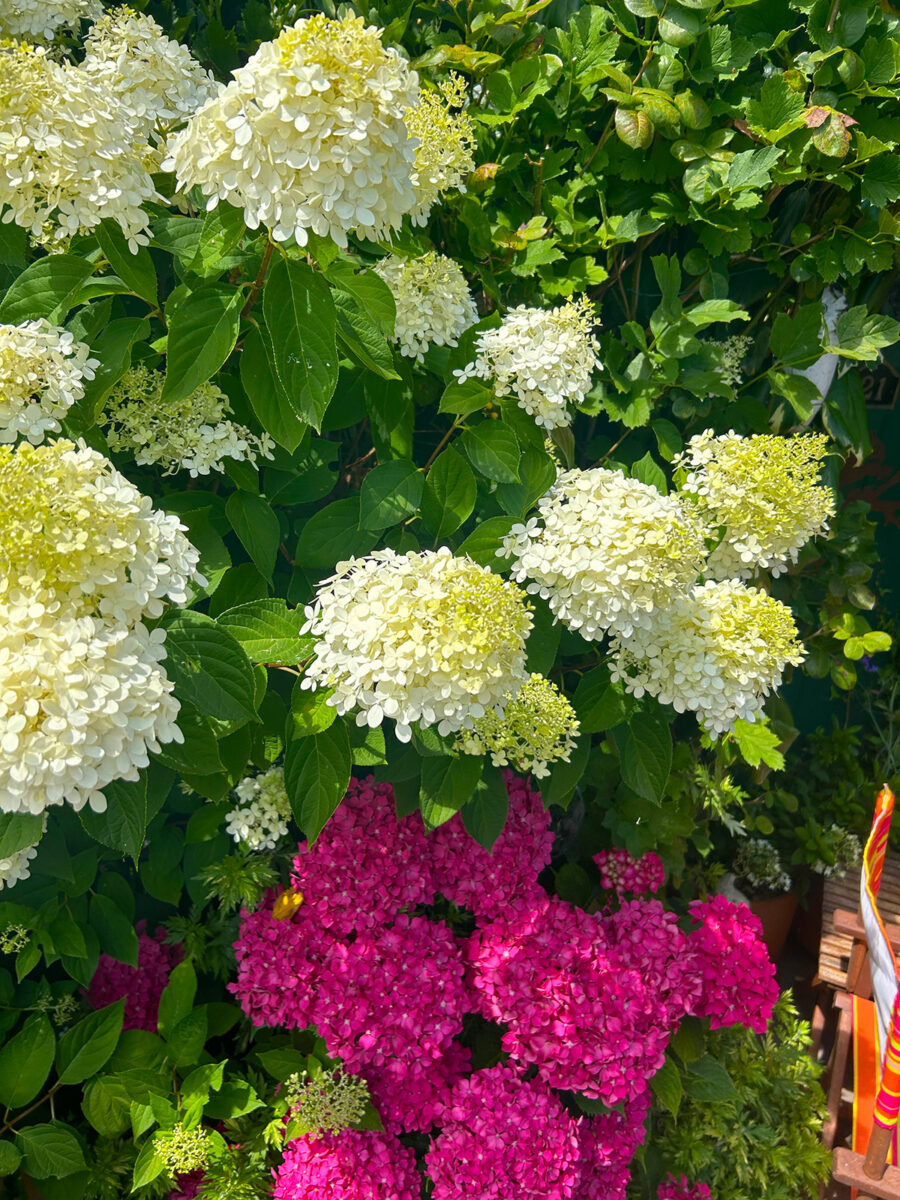
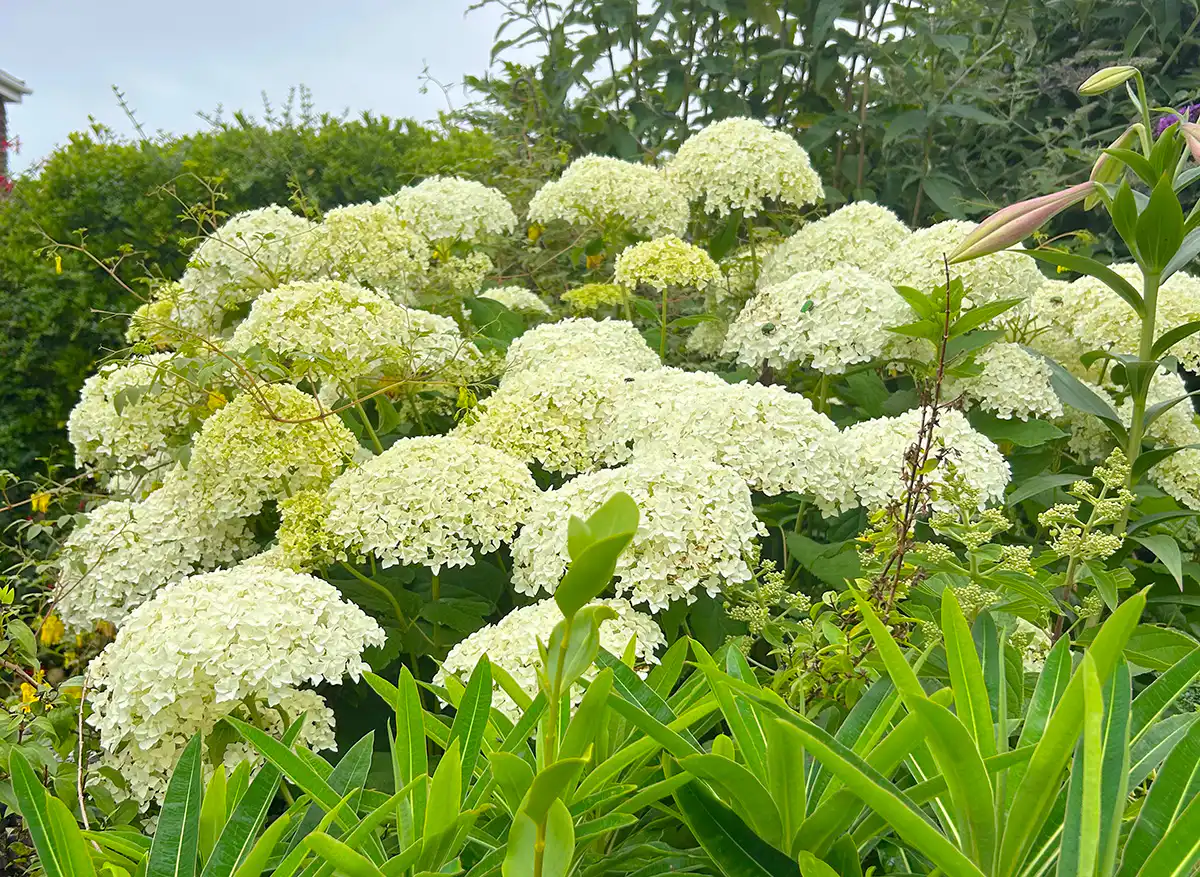
Annabelle (main image). This Hydrangea aborescens is a large bushy North American shrub bearing fabulous large and beautiful flower heads. These flowers can be up to 30cm across. The shrub will grow in full sun to partial shade, is hardy but late frosts can damage the flower buds, so, ideally, grow it in a sheltered corner or against a warm wall in cold gardens. Mine is growing behind a tall wall made from old railway sleepers. Regular pruning keeps the naturally open plants dense and compact.
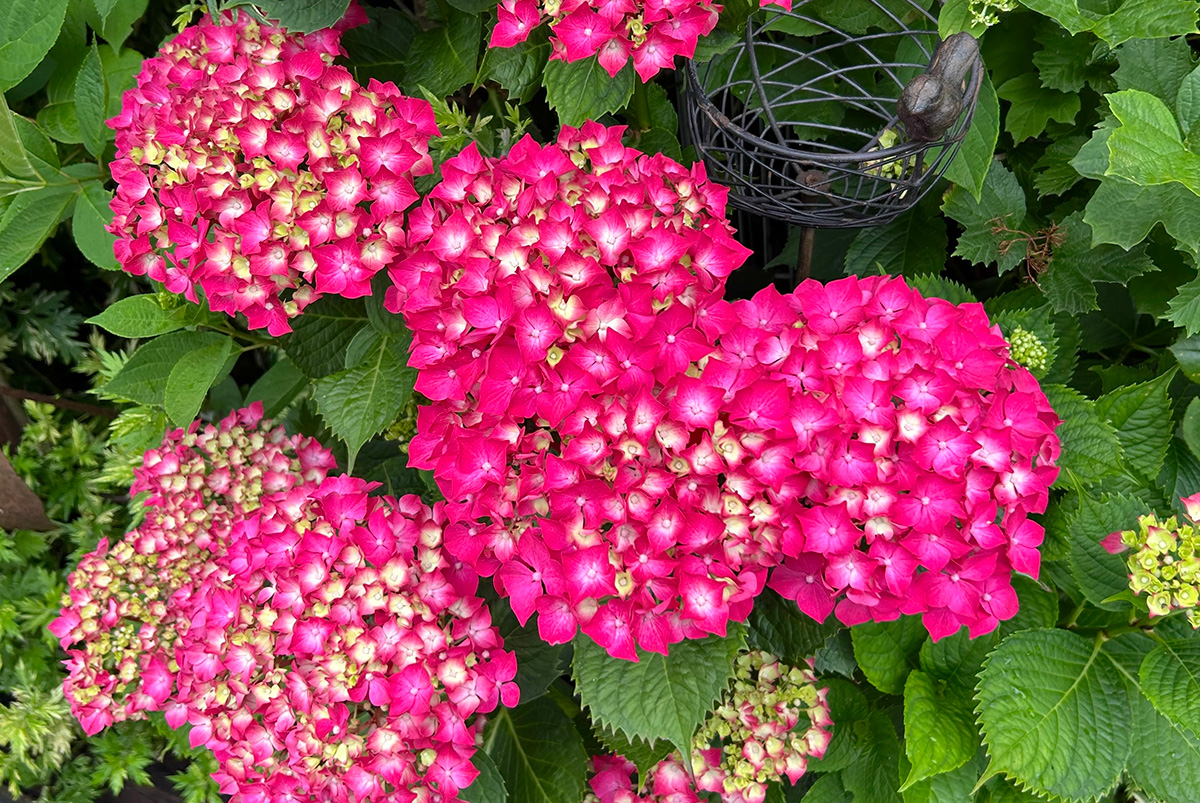
Red Baron. Hydrangea macrophylla ‘Schöne Bautznerin’ also known as ‘Red Baron’ is a mophead hydrangea with rosy-red flowers produced in abundance. The flowers on this hardy, easy to grow, compact shrub change their colour as they age into a subtler red. Due to its growth habit it also suits container growing and flowers from July to September. It prefers a sunny or semi-shaded position, with shelter from cold, drying winds.
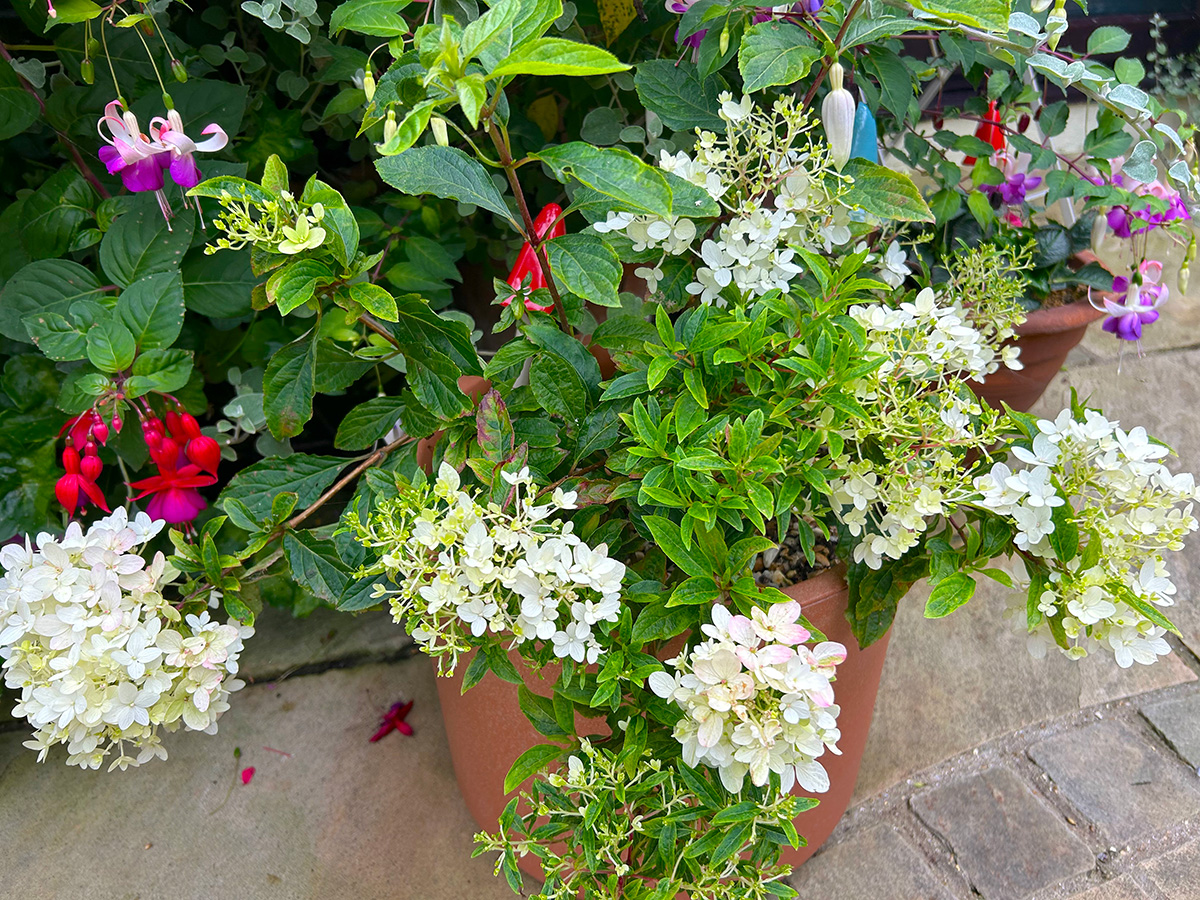
Groundbreaker Blush. Hydrangea paniculata ‘Groundbreaker Blush’ is ideal for those who love hydrangeas but don’t have too much space to play with. This is a wonderful dwarf shrub which reaches a more petite height and spread of around 40-50cm, perfect for containers, on balconies or patios as well as planted in open ground. Its gorgeous blooms emerge from July to November and the flowers are both pink and white in varying degrees, depending upon the maturity of the blooms. You can even cut stems for vases, making the most of this beauty inside your home too. It benefits from either full sun or partial shade and is a fully hardy, deciduous shrub which will not need any additional winter protection throughout the majority of the UK. I bought three plants a couple of years ago and love them in containers on my rear patio.
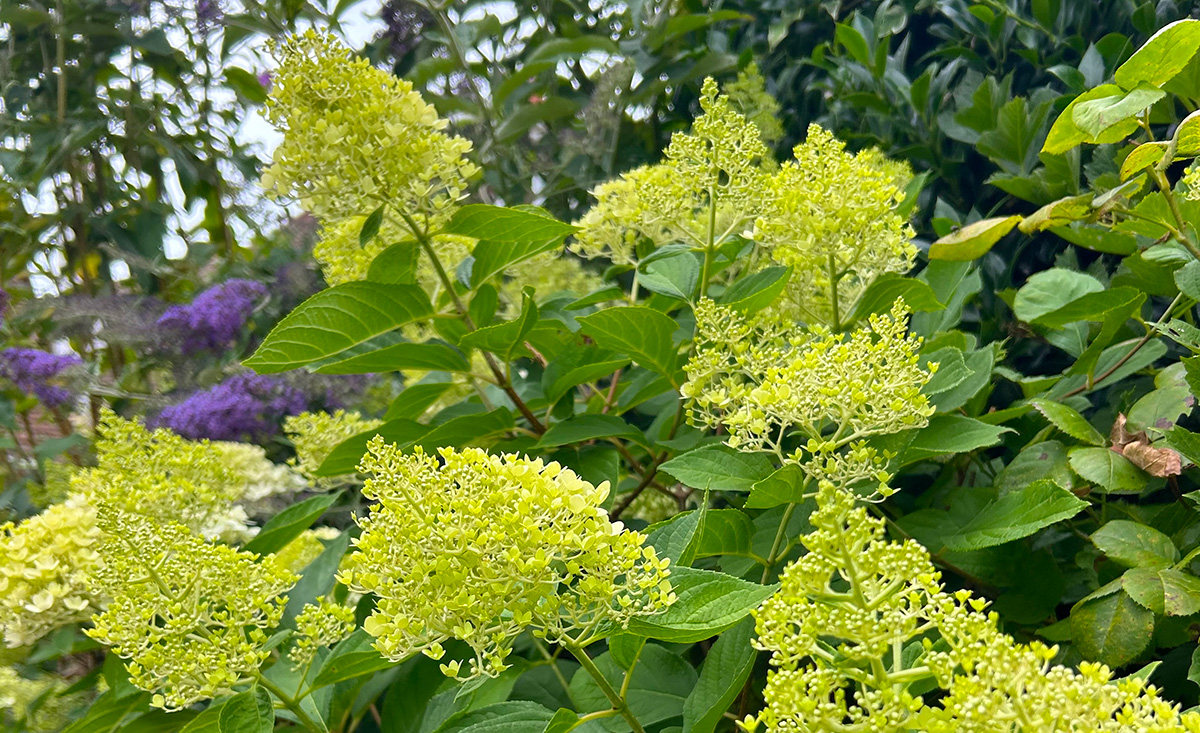
Limelight. Hydrangea paniculata ‘Limelight’ has dense clusters of long-lasting flowers that emerge in mid-summer lime green, fade to cream and finally turn shades of deep pink in autumn. The flowers are held upright on sturdy stems and the flower heads are quite large, and range between 15-30cm long. They are ideal for using in cut flower displays, both fresh and dried. I have two large plants, side by side in a bed with a blue buddleja growing up and though them and the two Red Baron growing beneath them.
Hydrangea care
Hydrangeas tend to thrive in moist, fertile, well-drained soil but are adaptable to a range of soil types, including clay, loam, and sand, provided they are properly amended for moisture retention and drainage. I’m on chalk and have had no problems growing a range of them in my garden at all.
Pruning hydrangeas will depend on the type you are growing. Old wood bloomers like Lacecaps need light pruning after flowering in summer, or leave faded blooms for winter protection, then trim old stems in early spring to strong buds. New wood bloomers like arborescens and paniculata get pruned hard in late winter/early spring, cutting back stems to a few inches or lowest buds for big summer flowers on new growth. Always remove dead wood and thin out congested stems for healthy airflow, cutting at an angle above a bud.
Let’s hope this might have inspired you to plant some hydrangeas in your garden.