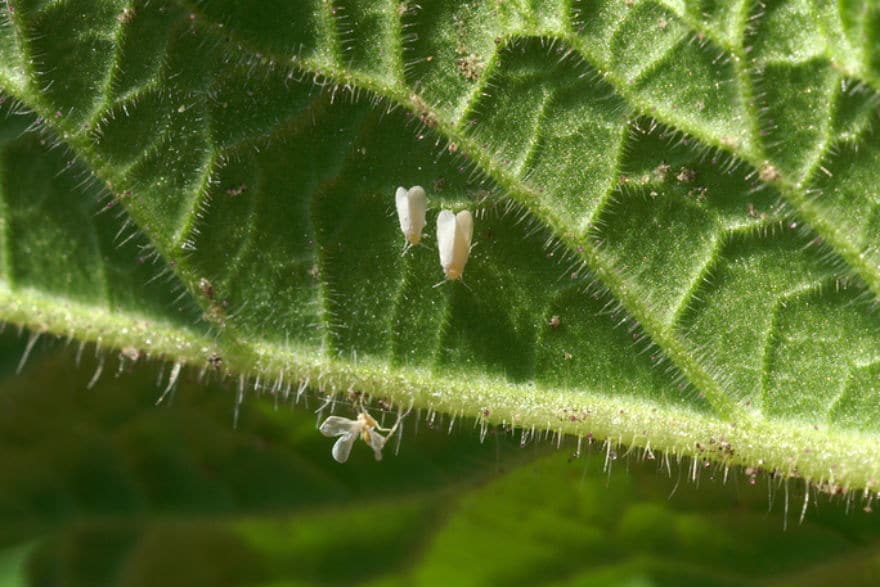
If you’re met by a cloud (even a small cloud!) of tiny white flying insects when you go into your greenhouse….you’re in trouble! These are glasshouse whitefly a scant 2mm long and with white wings and an amazing capacity to breed. Whitefly love plants in protected places like greenhouses, cold frames and conservatories and if you look closely you may spot the immature stage of young on the lower surfaces of the leaves. They are immobile, greeny-white, elliptical scale-like creatures with no visible head, legs or antennae and both they and the adult whitefly feed by sucking the plants’ sap.
Sap suckers
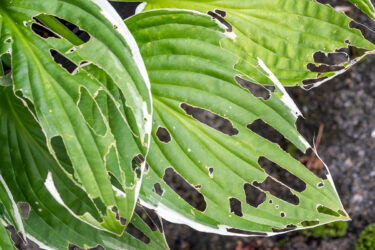
The damage whitefly do is considerable, a bit like draining someone’s body of blood, they cause weakening, poor growth and sometimes distortion of the leaf too. But the first symptom you’re likely to notice is the sticky excreta that they flick out all over the foliage of leaves (and anything else) beneath where they’re feeding. This sticky stuff is known as ‘honeydew’ and because its sugar content is so high it allows black sooty moulds to grow, soon resulting in the plants looking as if someone has dusted them with soot. Certainly not good for the plants and the sooty mould and honeydew don’t make edible plants too appealing either.
Gentle but effective control
The best way to control these pests is to use a tiny parasitic wasp, Encarsia formosa. It’s a type of biological control that is safe and free from pesticides. You can introduce these wasps into the greenhouse or conservatory and they set about seeking out the young stage of the whitefly. Once located the miniature wasps lay their eggs in the scale, so killing them. A young wasp then develops within the scale and hatches out to carry on the good work. The idea of putting wasps into your greenhouse may not appeal, but these are really tiny and totally harmless unless you’re a whitefly – there is no risk of them attacking you, the cat, the dog or anyone else come to that.
This biological control works really well between mid-spring and mid-autumn and you can find out more and get yourself some of these super-wasps at Pippa Greenwood’s website. For the best results introduce the Encarsia as soon as you’ve noticed the whitefly but before their numbers have got too high – the wasps, once released will need to breed and build up their numbers so that they can be effective.
You can monitor your greenhouse for whitefly by installing some hanging yellow sticky traps and checking them regularly to see if there are any whitefly present. As soon as you spot them, order the Encarsia. I always suggest removing the traps before introducing the wasps though, as you don’t want to risk trapping them .
Like all biological controls, however brilliant they are (and this does work extremely well) there is one word of warning: don’t use pesticides in your greenhouse. Anything other than a soap-based or oil-based treatment before you introduce the wasps will harm or even kill the wasps before they get a chance to set to work and you will have wasted your time, effort and money.