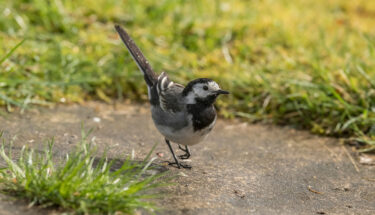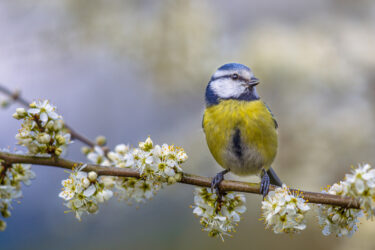
When you look closely at your garden birds, you start to notice some distinct differences between the different species. But there’s also huge diversity within the species and within their life stage. So juvenile birds, like robins and chaffinch can look like other species. Factor in the less flamboyant livery of the females of the species and there’s another layer of little brown birds in our gardens.
We have two species of sparrows in the UK and it’s easy to get them confused. And we have another little brown bird that we sometimes call a sparrow, but actually it’s not a sparrow at all. So, it’s not surprising that when it comes to little brown birds, sparrows and sparrow look-a-likes we can get really confused.
Tree sparrow (Passer montanus)
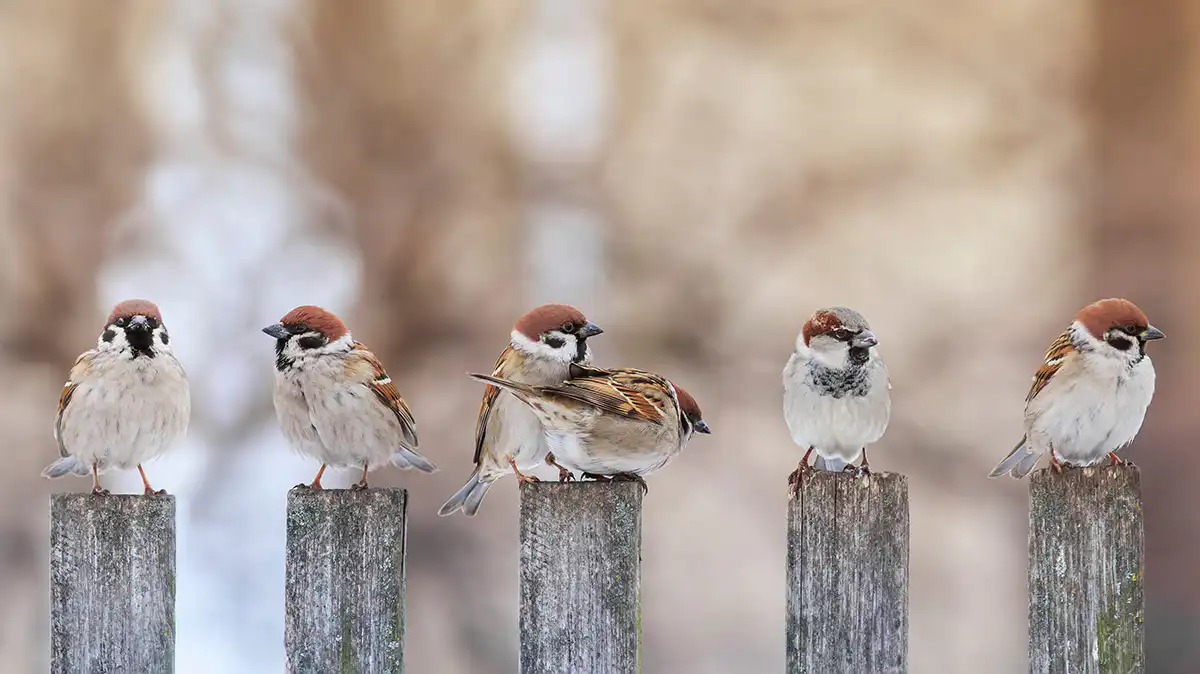
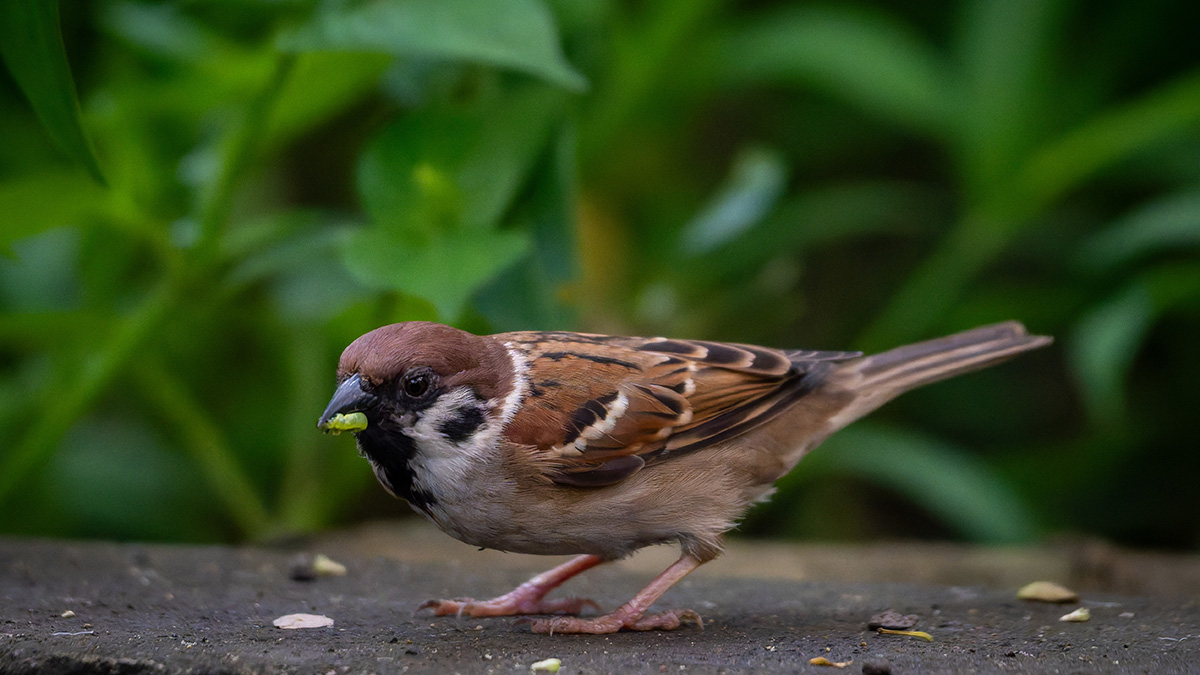
The tree sparrow is a little brown bird and often confused with several other little brown birds, especially the house sparrow. The easiest way to tell them apart is to look at their heads. The tree sparrow has a chestnut-coloured cap and nape. Unlike the house sparrow, the males and females look pretty much the same. It’s smaller than the house sparrow, and is more common in woodland and hedgerows. Statistics estimate that since 1970 the tree sparrow population has plummeted by 93%, despite the fact that these birds, which mate for life, can raise two or even three broods of chicks each year. Tree sparrows eat seeds and insects.
House sparrow (Passer domesticus)
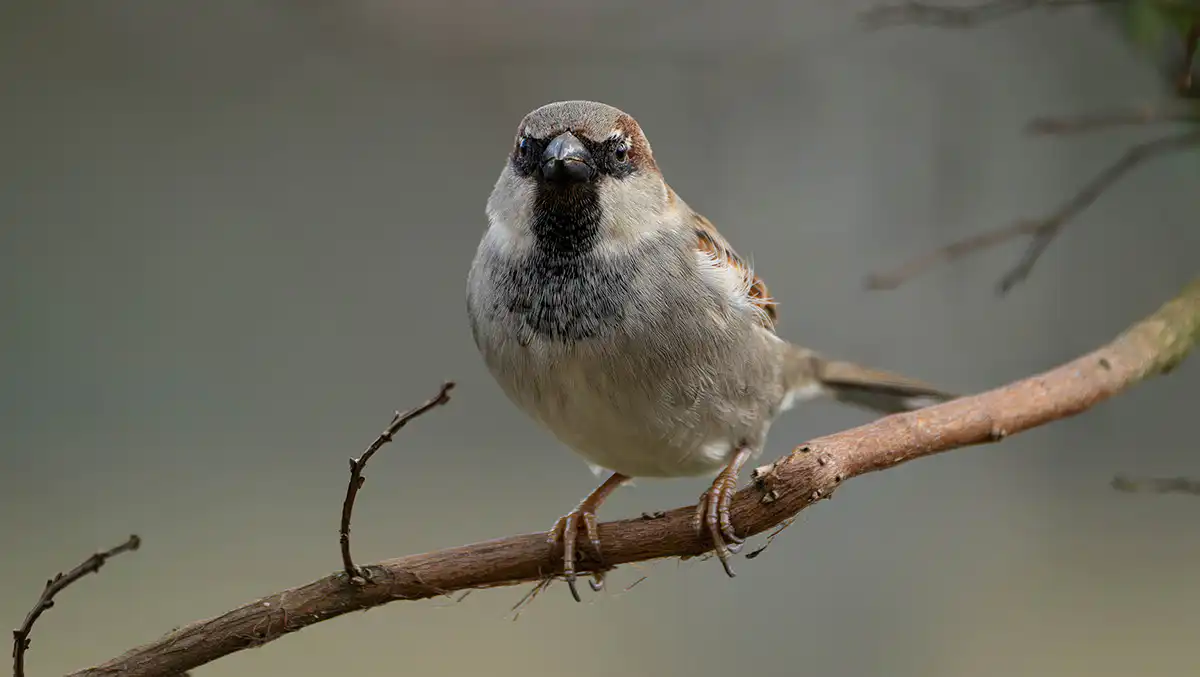
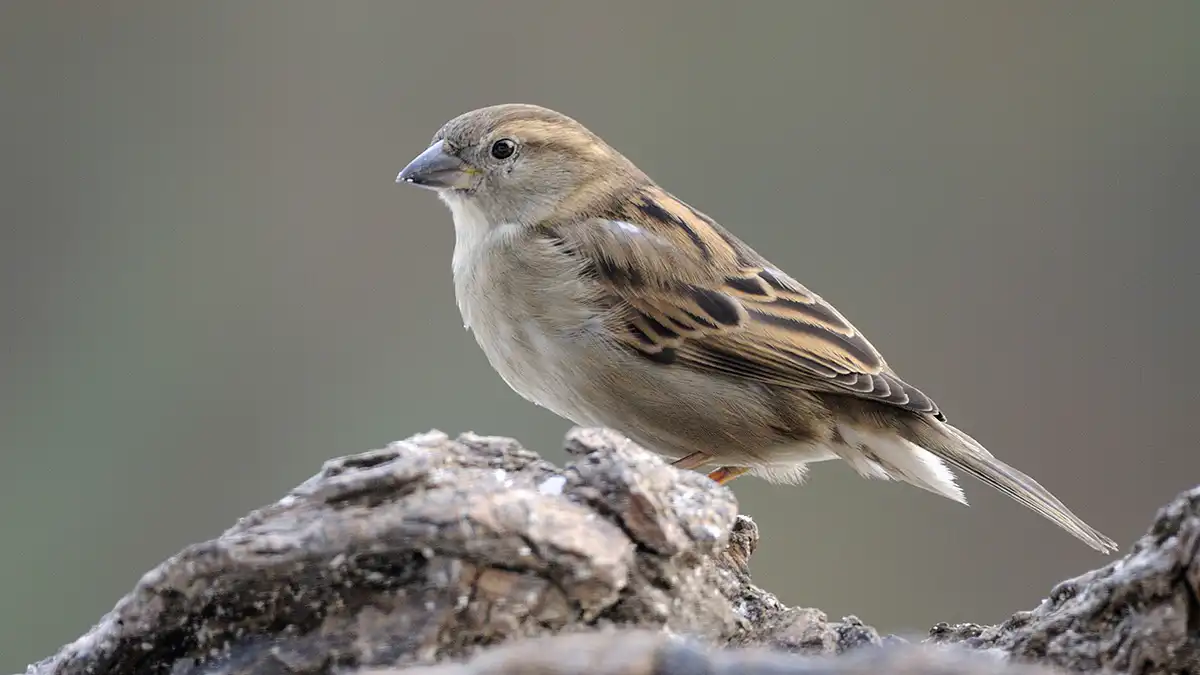
The house sparrow, like its name suggests is more common in urban environments. It’s a bird that nests together in loose, but social colonies, forming noisy communities. They nest under the eaves of house roofs or in cavities and holes and will share an entrance with other house sparrows. House sparrow nest boxes mimics their social needs with several small nest boxes in a terrace. There’s quite a few differences between the male house sparrow and the female. The males have a grey cap and black around their eyes. They also have a black tunic that runs from beneath their chin and over their chest. The female house sparrow has a buff-coloured cap and doesn’t have the black markings around their eyes and chin.
The house sparrows seem to benefit from the household scraps in urban areas and will forage beneath café tables and chairs picking up crumbs. They are also seed eaters. Since the 1970’s the house sparrow population has plummeted by a staggering 70%.
Dunnock (Prunella modularis)
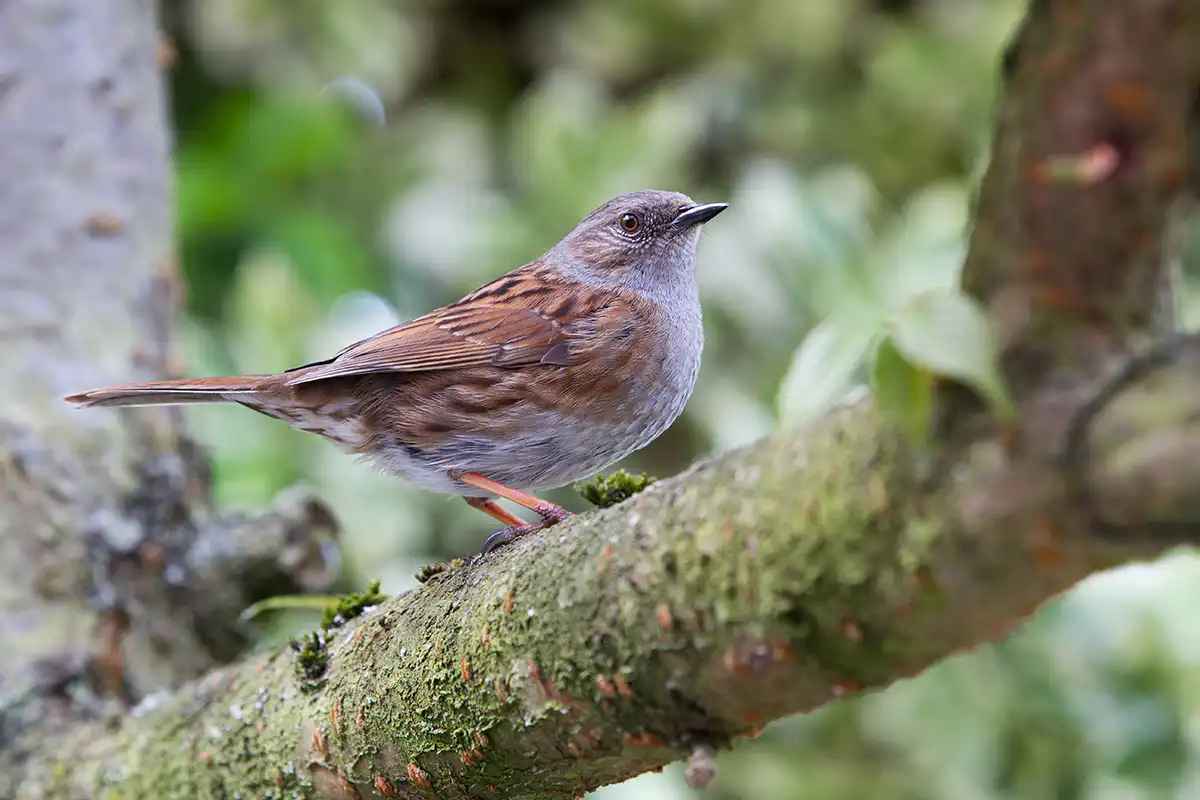
The easiest way to tell the difference between a sparrow (tree sparrow or house sparrow) and a dunnock is to look at the beak. The dunnock eats insects and has a black pointed, sharp and thin needle-like beak for picking insects out of cracks and crevices. The sparrows have a pale coloured, chunky beak for cracking seeds which make up most of the diet, especially in the breeding season. Dunnocks have a predominantly bluey grey uniform with a grey cap (the female has a brown cap), neck and chest. Down the back the plumage is streaky brown colouring. Dunnocks are sometimes called hedge sparrows but they are not true sparrows, though they do frequent shrubberies and hedgerows. Dunnocks are often solitary or may forage in pairs under the hedge.
Spotted flycatcher (Muscicpa striata)
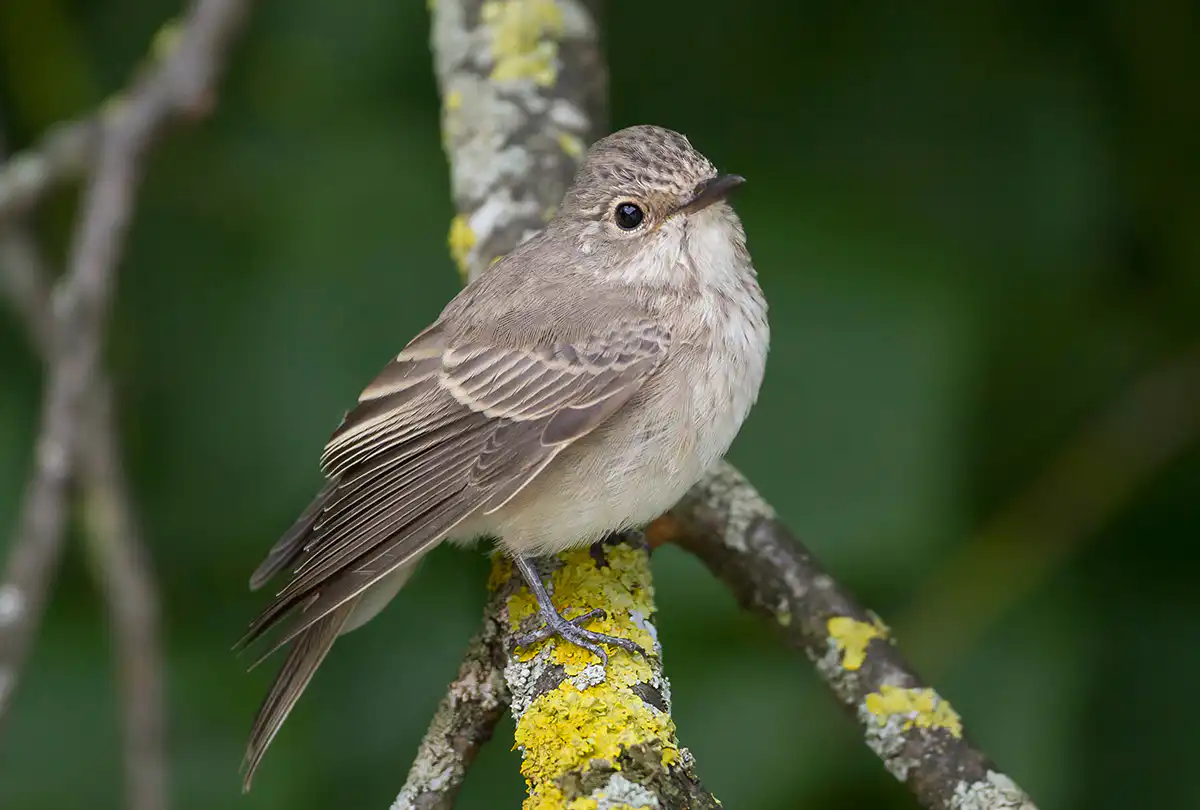
The spotted flycatcher may be present in gardens close to hedgerows and woodlands or with extensive trees and shrubs. It has an understated livery, a beige brown head, wings and tail and a softer, more buffish belly and with brown and grey streaky feathers from mid-chest up towards the head. The males and females look similar and are hard to tell apart. These birds are a similar size to a robin and the juveniles have a spotty appearance, similar to a robin, but more grey in colour. Just as its name suggests, this species eats flying insects, especially flies, but also butterflies, moths and craneflies. It has a pointed black beak.
Siskin (Carduelis spinus)
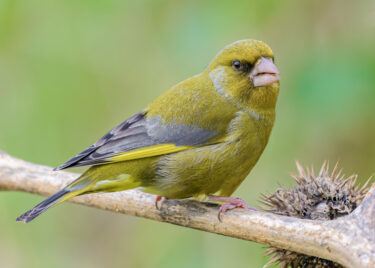
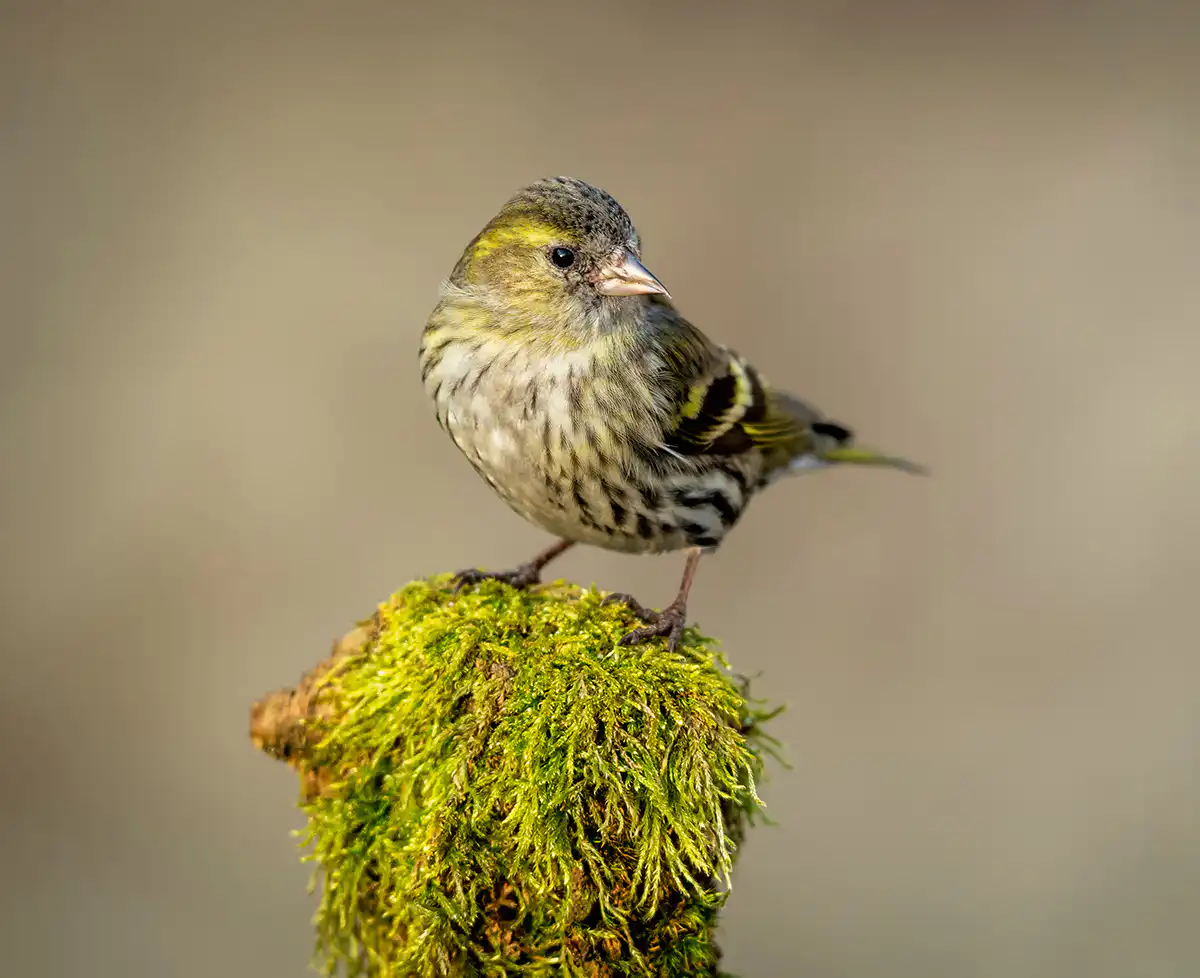
The siskin is a small, lively little bird with yellow and green streaky feathers and a forked tail. It is the female siskin and the fledgling that you might confuse with a sparrow as they have brown streaky plumage and are frequent visitors to our summer gardens. Siskins are seed eaters and love tree seeds like those of the birch, alder, spruce and pine families. The adults have more yellow markings and are easier to identify. Siskins are quite the acrobats and may hang upside down on your feeders. Siskins are a type of finch and are often found feeding in flocks, especially around conifers.
-
Subscribe & Save 20%Select options This product has multiple variants. The options may be chosen on the product pagePrice range: £9.99 through £34.00