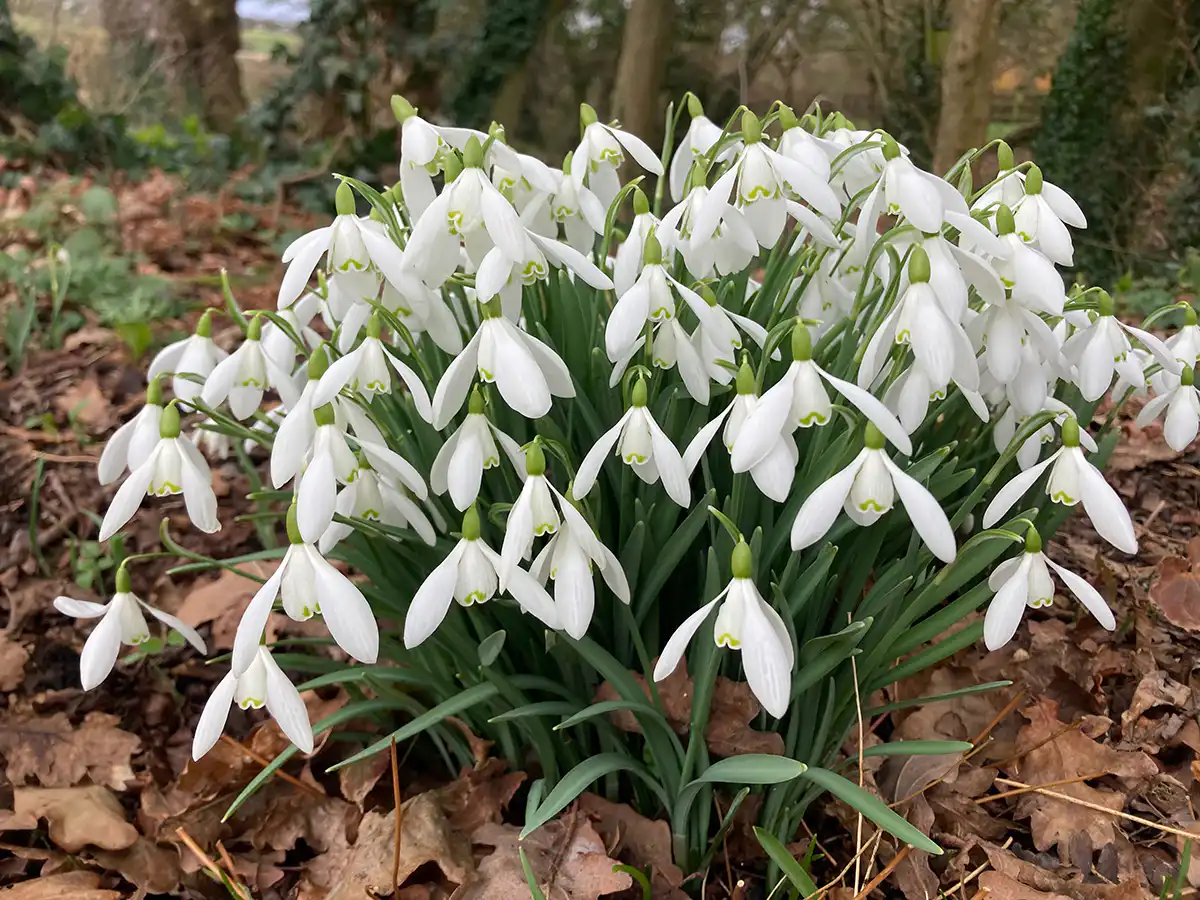
I don’t think there is another flower that brings such promise as snowdrops. Once we get into the heart of winter and finally some cold weather knocks the garden for six, one of the first flowers to rise like a phoenix from the ashes is the snowdrop. Its pure white petals have come to symbolise purity and innocence but also sympathy and new life as they are often found growing in cemeteries.
The latin name for the common snowdrop (although it is hard to describe any snowdrop as common) is Galanthus nivalis meaning “milk flower of the snow.” Snowdrops were introduced to the UK sometime during the 16th century but we had to wait till 1753 to be botanically named by Carl Linnaeus as part of the Amaryllidaceae family.
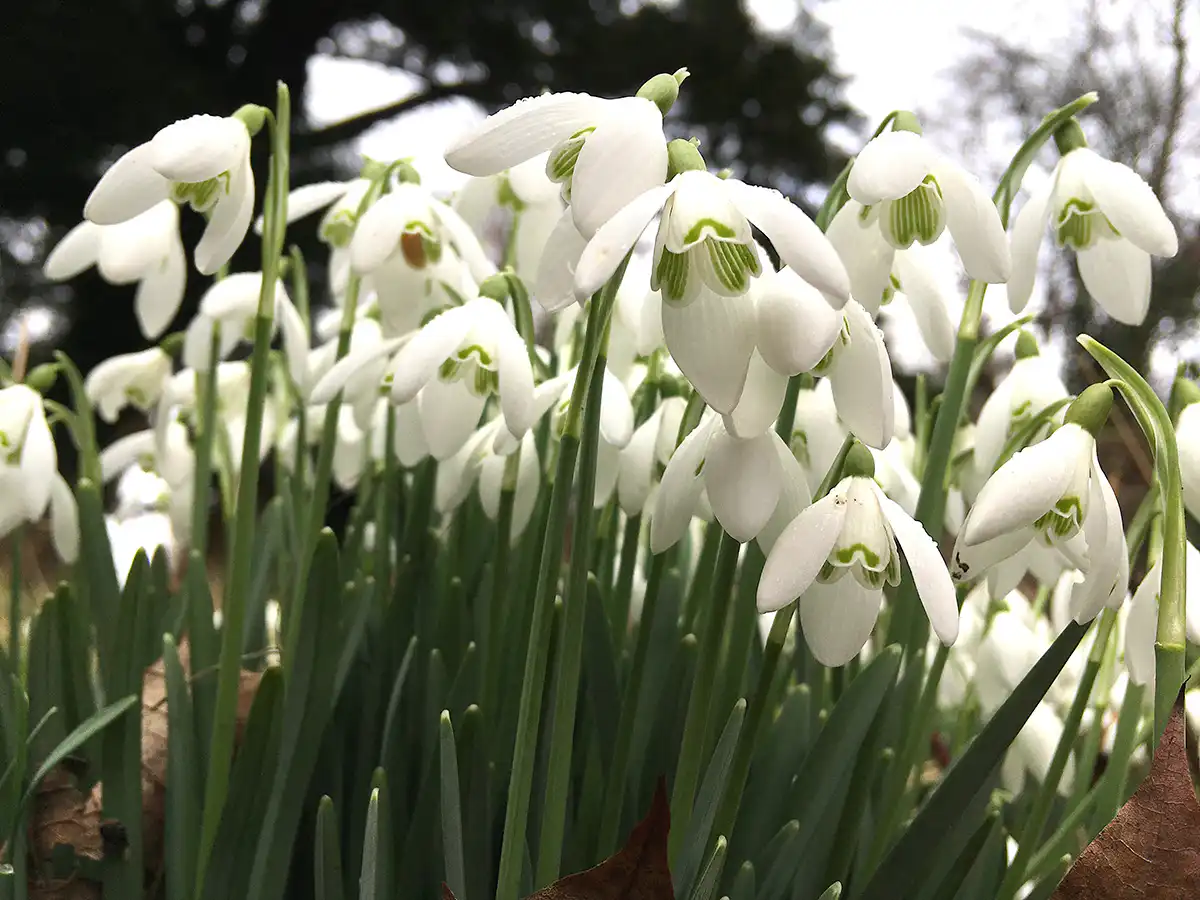
Snowdrops are a genus of 20 wild species. These bulbous, herbaceous perennials usually have three inner petals with green markings surrounded by three outer petals; not to be confused with Leucojum vernum, spring snowflakes, which are similar in appearance; with bell-like bowing heads they are the epitome of grace.
Flower Power
Ever since my Mum gave me a copy of ‘Flower Fairies of the Winter’ by Cicely Mary Barker I have been enthralled by the magic of snowdrops; the serene snowdrop fairy adorning the book’s front cover captured my heart.
“Deep sleeps the Winter,
Cold, wet, and grey;
Surely all the world is dead;
Spring is far away.
Wait! the world shall waken;
It is not dead, for lo,
The Fair Maids of February
Stand in the snow!” © Cicely Mary Barker
Snowdrops do in fact possess magical properties although I cannot confirm if fairy magic is involved, but they do contain natural ‘anti-freeze’ proteins which protect the plant cells from forming damaging ice crystals during freezing temperatures; foliage may droop but will quickly recover once temperatures rise – like magic!
Planting tips
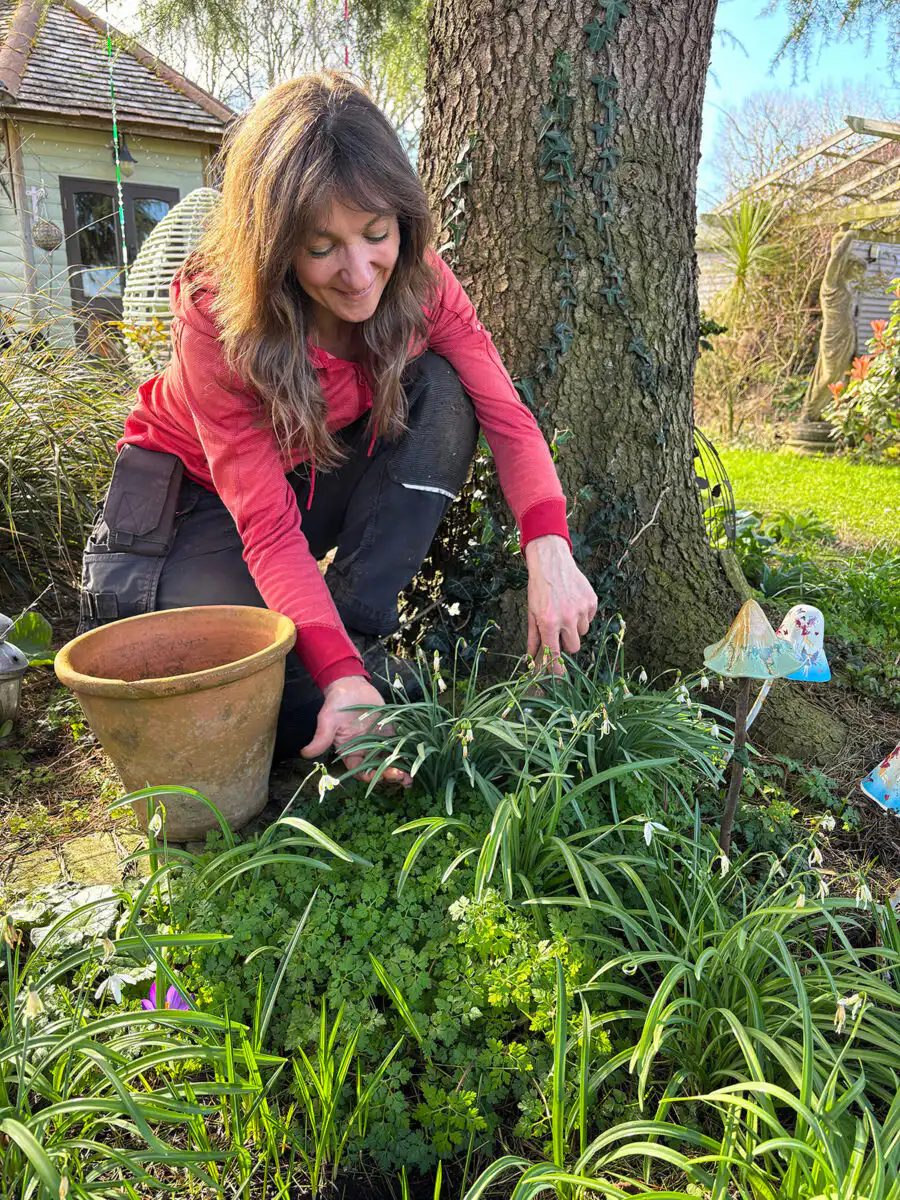
One of the easiest ways to introduce snowdrops to your garden is planting them ‘in the green’, this simply means after flowering when the bulbs still have foliage before it has all died back; these prove easier to establish over dried bulbs. March is an ideal month to get them in the ground; over time they will naturalise and spread.
Plant the white section of the leaf stem underground and make sure the green section is above ground. Snowdrops thrive in woodland conditions with dappled shade; something to bear in mind when trying to recreate this feeling in our own garden.
If you want to speed up the process you can lift existing clumps of snowdrops and simply divide them into smaller groups and re-plant them in different places to encourage bulbs to spread. But don’t despair if you do not have a garden, snowdrops can be potted on for a balcony, patio or terrace; a few blooms planted in a terracotta pot with a top dressing of garden moss looks particularly attractive.
Variety is the spice of life
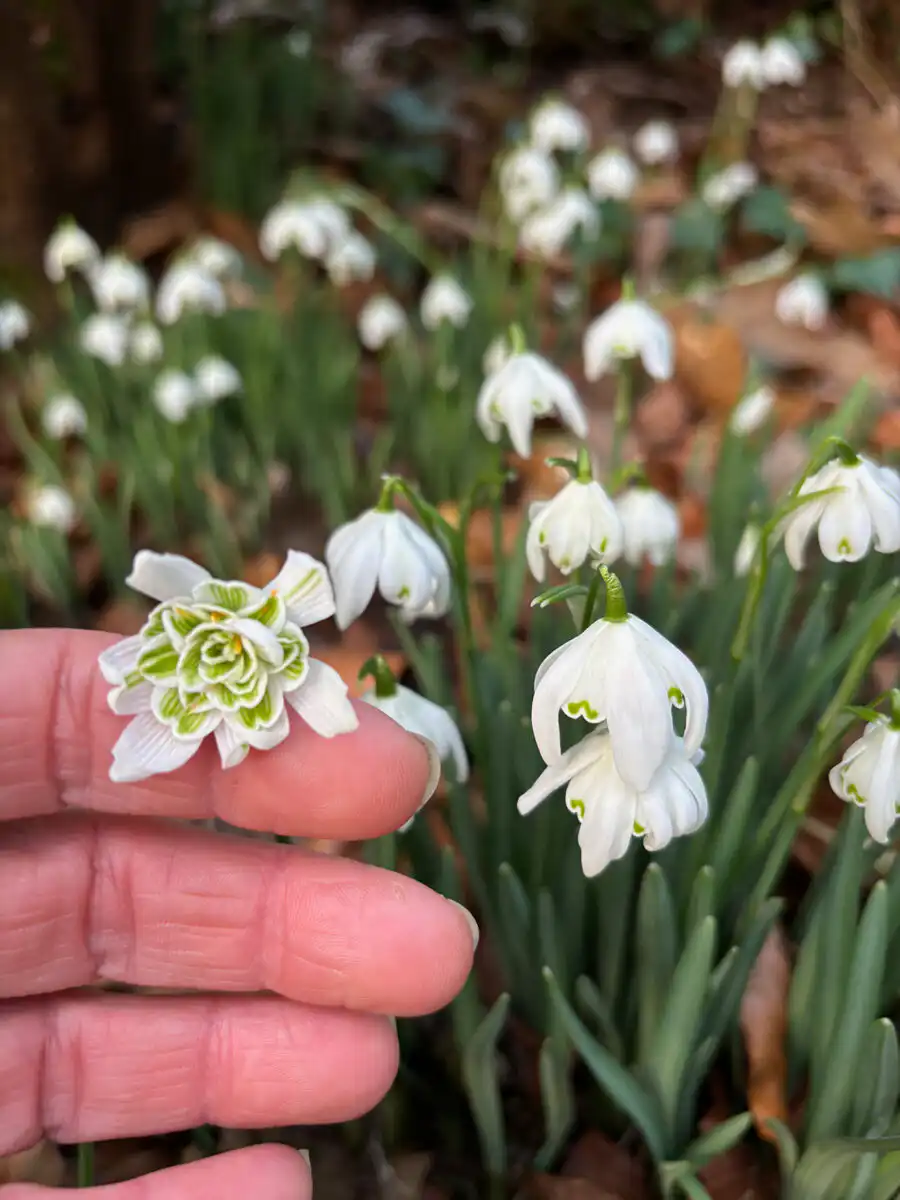
When it comes to variety there is a plethora of choice to suit all tastes with over 2500 prized named cultivars and hybrids for collectors to enjoy. Galanthus nivalis f. pleniflorus ‘Flore Pleno’, is an exceptional bloom whose delicate double flower heads are show-stoppers whereas ‘Walrus’ is a rare, unusual variety with three dramatic ‘tusks’ framing beautiful double petals on stems around 10-15cm tall. For a contrast in height, plant Galanthus elwesii, greater snowdrop, which grows to around 30cm tall. But for all their diversity I take great pleasure in the simplest of snowdrops, Galanthus nivalis, as to me all snowdrops are special.
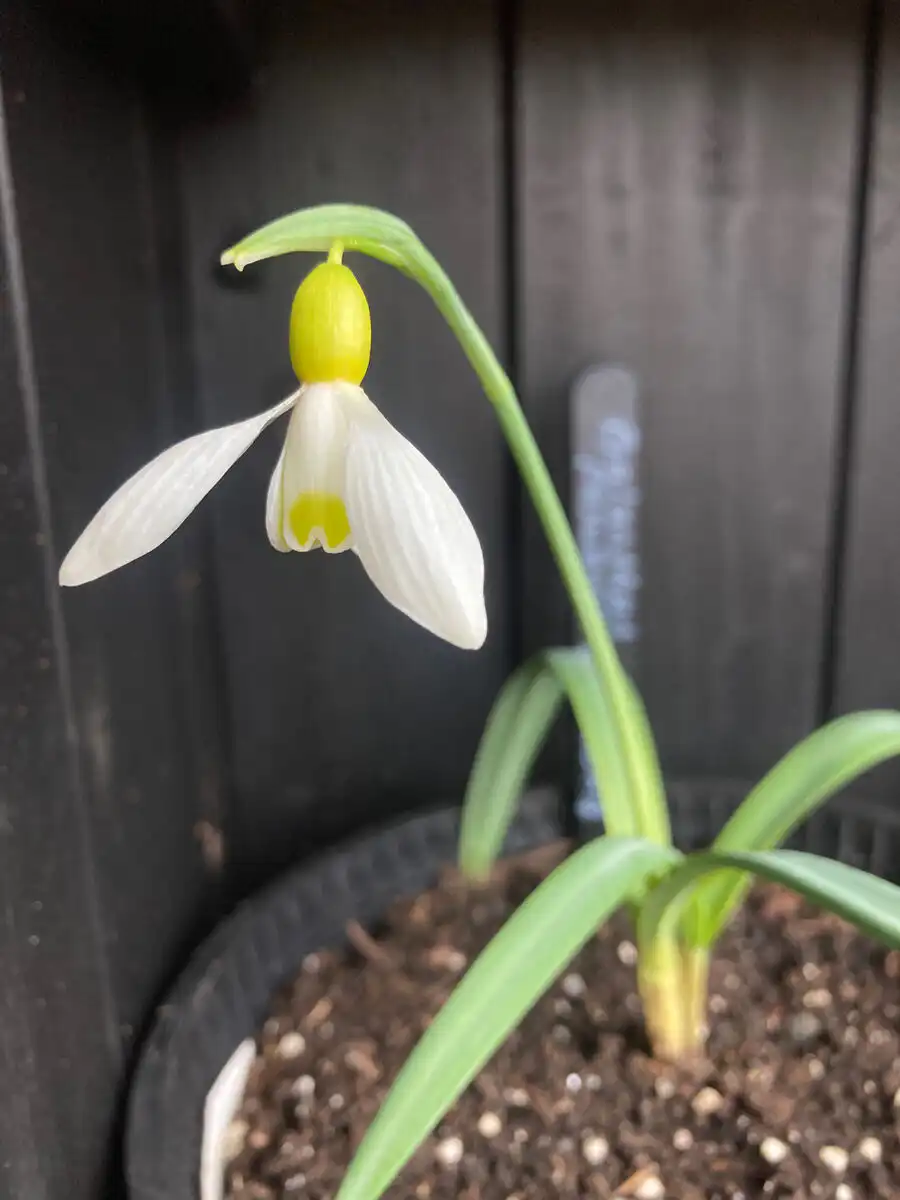
Collectors, or Galanthophiles, have been driving up the prices of snowdrops over the years creating the phenomena ‘galanthomania.’ Cambridgeshire nurseryman Joe Sharman, ‘Mr Snowdrop’, owner of Monksilver Nursery, smashed his own record in 2022 selling Galanthus ‘Golden Tears’ on eBay for a record-breaking £1,850 having stunned growers seven years previously with the breeding and sale of snowdrop ‘Golden Fleece’ for a staggering £1,390 in 2015. These high price tags reflect the immense time and effort required to develop new varieties which takes around 10 years to develop and grow.
En masse snowdrops amalgamate into a sea of white but I like to take the time to bend down to the ground and gently lift the delicate petals so I can properly see the underside of the flowers as this is where the magic actually is. Snowdrop varieties can be incredibly diverse but can be easily missed. So next time you pass a clump of snowdrops, stop and take a closer look.
Where can I see snowdrops?
If you get out walking during February you are likely to stumble across drifts of snowdrops in woods and local gardens but if you are looking for more inspiration or to increase your personal collection there are hundreds of snowdrop festivals and events dotted around the country. Living in the South West I am spoilt for choice with venues to visit.
A large event to look out for is The Great Snowdrop Garden Trail of Somerset which showcases a number of exquisite prestigious gardens raising money for the Shepton Mallet Snowdrop Project, of which Landscape Designer Dan Pearson OBE is the Patron. This volunteer-run initiative commemorates the town’s heritage, home to 19th-century “Snowdrop King” James Allen through a programme of fringe events coupled with open gardens.
Explore Yeo Valley Organic Garden, Blagdon, The Bishop’s Palace and Gardens, Wells, Hestercombe House and Gardens, Cheddon Fitzpaine near Taunton, East Lambrook Manor, South Petherton, former home of plantswomen and galanthophile Margery Fish, Forde Abbey, Chard, Dunster Castle near Minehead and Snowdrop Valley, Wheddon Cross near Minehead, a remote, privately owned valley situated in a hidden part of Exmoor – the intrigue of this valley is too much to resist and I will certainly be adding Wheddon Cross to the top of my list for snowdrop visits this month.
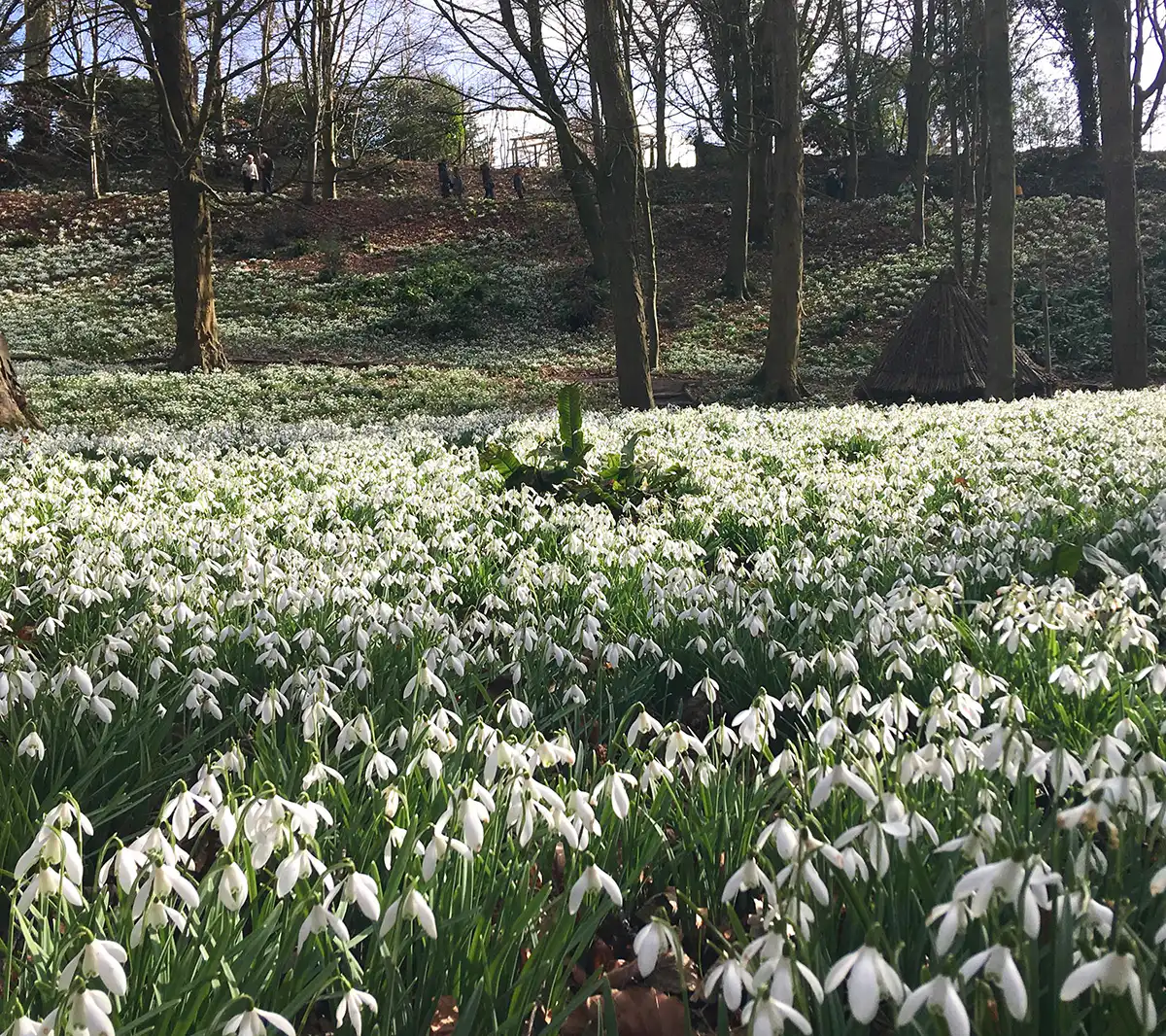
Another breathtaking display can be found at Painswick Rococo Garden near Stroud, Gloucestershire; these historic gardens offer not only the opportunity to see snowdrops en masse but also hellebores and winter aconites. Painswick Rococo Garden is a sight to behold; with over five million snowdrops spanning 15 different varieties carpeting the landscaped gardens and woodland amongst magical follies, the hidden valley and maze.
Also high on my trail list is the Wye Valley Sculpture Garden, Tintern, Wales; providing the perfect fusion of art and horticulture. This privately owned garden is a gem of creativity showcasing contemporary art work balancing formal design with wild woodland to meander. Home to resident sculptor and artist Gemma Wood; expect a warm welcome, glowing fire pits and tranquility from mid January to mid February for as long as flowers are in bloom as well as a choice of over 30 snowdrop varieties to purchase.
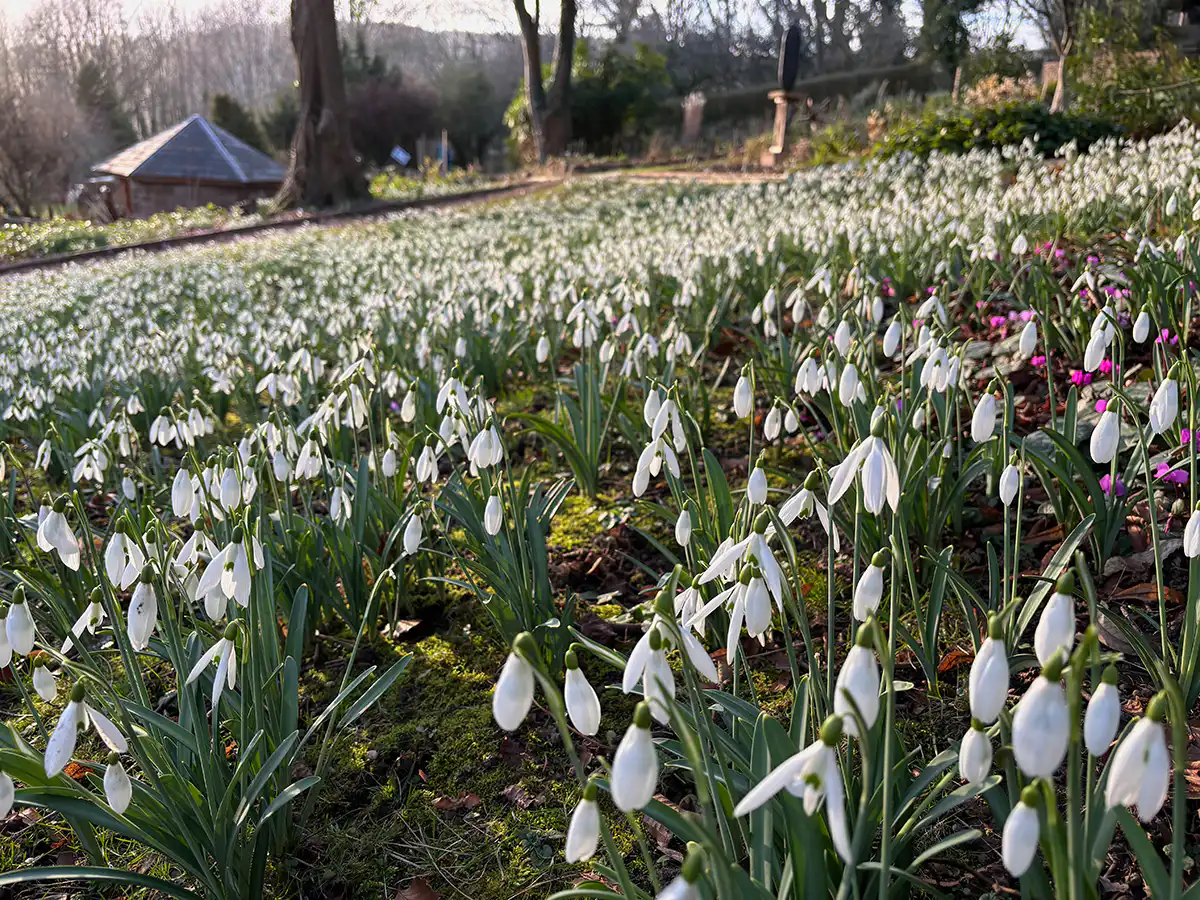
And finally, one event I never miss is the snowdrop trail at Yeo Valley Organic Garden, which hosts an enchanting swath of snowdrops and hellebores throughout the 6.5 acre farm and an irresistible array of homemade cakes which is always a draw!
All the venues offer carpets of dainty blooms which should brighten up winter days and keep even the most die-hard galanthophiles satisfied. The trails create a good excuse to leave the warmth of our homes, stick on some wellies and most likely waterproofs too and get outside for some uplifting, invigorating walks.
I always feel the snowdrop festivals kick off the new gardening season. As people emerge from their winter chrysalis it gives everyone the opportunity to join together once more and celebrate the start of the new year, the emergence of new growth and friendships with like-minded plant-lovers.