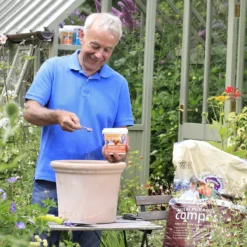
Spring is a great time to apply mulch to your garden borders. In this video, Debi explains how it benefits your garden, the different types of mulch and how to apply.
How to mulch and why
Read the transcript
Spring is a good time to mulch your borders while the soil is warming up and still moist. Mulch is a layer of material spread over the soil. It helps regulate soil temperature, retain moisture and suppress weeds. Organic mulches also feed the soil, improve its structure as they break down and provide habitat for insects and earthworms.
Choose your mulch. Use garden compost, chipped bark, mineralised straw, leaf mould or well-rotted farmyard manure. You can make mulch from garden waste or buy it ready to spread.
Clear the border. Hoe or dig out larger weeds. With perennial weeds such as bindweed, remove as much of the root as possible. Break up any lumps in the mulch before spreading it.
Spread an even layer. Apply about 5–8 cm of organic mulch around the plants. Spread it with a spade, fork, rake or by hand. It will help protect roots, condition the soil and reduce weeds.
Keep stems clear. Leave a mulch-free ring around the base of each plant. Think of a doughnut shape. If mulch is piled like a volcano against a stem, pull it back so moisture doesn’t build up and cause rot.